Even Teachers Cleared of Child Abuse Allegations Are Referred to Public Prosecution Office; Jeju Teachers’ Federation Calls for Legal Revision
- Input
- 2026-11-08 11:40:55
- Updated
- 2026-11-08 11:40:55
【Financial News, Jeju = Jeong Yong-bok】 A call has emerged in Jeju to amend the law requiring even teacher-related cases to be referred to Public Prosecution Office prosecutors when the superintendent has submitted an opinion that the activity was legitimate and police have found no grounds to suspect child abuse. With 63 cases of recognized infringement of educational activities in Jeju last year and incidents of teachers being assaulted and classrooms being entered without authorization this year, the need to improve protections for teachers is growing.
The Jeju Special Self-Governing Provincial Federation of Teachers’ Associations (Jeju Federation of Teachers’ Associations) said on the 8th that it had issued a statement on the 6th, urging the National Assembly to amend the Special Act on the Punishment of Child Abuse Crimes to allow police not to refer cases when they find no grounds for suspicion in child abuse reports for which a superintendent’s opinion has been submitted.
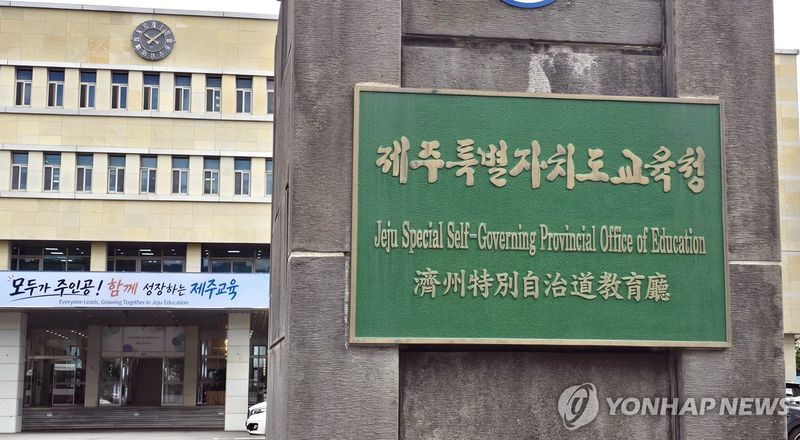
The Jejudo Office of Education recorded 63 recognized cases of infringement of educational activities in the province last year, up 5 from 58 the previous year. Including the 70 cases in 2023, the total reached 191 over the past three years.
The most common type of infringement last year was insult or defamation, with 17 cases. This was followed by 11 cases involving acts that caused sexual humiliation or revulsion, 10 involving deliberate obstruction of legitimate student guidance, and 8 involving injury or assault.
In April this year, a student receiving separate guidance at an elementary school in Jeju City assaulted the teacher in charge. According to the Jeju Teachers’ Union, the injured teacher was diagnosed with injuries requiring two weeks to heal and experienced psychological distress after the incident.
At an elementary school in Seogwipo, an outsider entered the same classroom without authorization twice, in April and June. The Korean Federation of Teachers’ Associations and the Jeju Federation of Teachers’ Associations called for improved school access controls and security systems, as well as protection for the affected teacher.
Nationwide, a legislative issue is how far criminal proceedings should go in cases involving teachers reported for child abuse. According to the Ministry of Education, of 993 nationwide reports of child abuse involving teachers for which a superintendent’s opinion was submitted between September 2023 and February this year, 898 (90.4%) were closed without a case being opened, without referral to prosecutors, or with a finding of no suspicion.
The key issue is the all-case referral rule in Article 24 of the Special Act on the Punishment of Child Abuse Crimes. The provision requires police to promptly investigate child abuse crimes and refer the cases to a prosecutor.
Amendments to laws concerning the protection of teachers’ rights in 2023 introduced a system for superintendents to submit opinions. However, those opinions serve only as material for investigative agencies to consider and did not expand police authority to close cases.
The referral obligation remains in place even after the Prosecutors’ Office was abolished and the Public Prosecution Office was launched on October 2. Current law requires cases to be “referred to a prosecutor,” with prosecutors at the Public Prosecution Office who receive the cases deciding whether to indict and taking other relevant decisions.
The Jeju Federation of Teachers’ Associations said, “If even cases in which police find no grounds for suspicion are referred to the Public Prosecution Office, teachers could be tied up in criminal proceedings for a long time and face psychological and financial burdens.” It said that teachers’ absences from work due to investigations could also affect students’ right to learn.
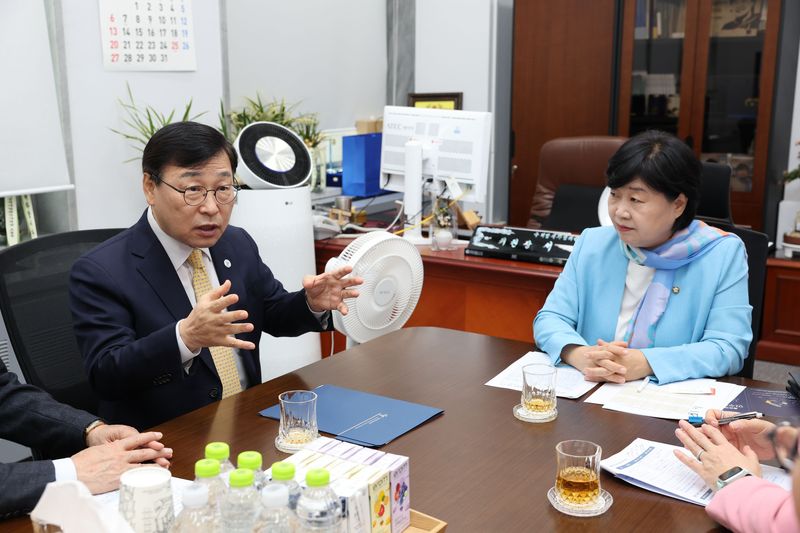
The Korean Council of Superintendents of Education also visited the National Assembly on the 4th and asked Seo Young-kyo, chair of the Legislation and Judiciary Committee, to expedite consideration of the relevant bill. The Jeju Federation of Teachers’ Associations called for substantive discussion at the committee’s Bill Review Subcommittee on the 19th.
However, the possibility that expanding the scope of cases not referred could weaken protection for child victims must also be considered. The impact of superintendents’ opinions on the independent judgments of investigative agencies, as well as fairness in comparison with other professions, are also legislative issues.
In a report published last September, the National Assembly Research Service proposed separating the early closure of criminal cases from child protection procedures. The proposal aims to revise the system so that, even when police decide not to refer a case, they separately assess whether the child needs protection and continue any necessary protective measures.
The council of superintendents also maintains that safeguards should remain in place after a decision not to refer a case, including checking on the child’s safety, notifying local governments, allowing complainants to file objections, and permitting prosecutors to request reinvestigation. It also proposed standardizing the criteria for preparing superintendents’ opinion letters to make decisions more objective.
The Jeju Federation of Teachers’ Associations also called on the Jejudo Office of Education to revise the standards for preparing opinion letters, establish a system for promptly investigating cases, and strengthen legal and psychological support for affected teachers. The aim is to improve the response systems of local education authorities alongside legal reform.
Jang Jeong-hun, chair of the Jeju Federation of Teachers’ Associations, identified teacher protection and school safety as urgent priorities for education in Jeju. Jang stressed that schools and education offices should respond collectively to parents’ complaints rather than leaving them to individual teachers, saying, “We must reestablish the self-evident principle that ‘education is possible only when teachers are safe.’”
[email protected] Jeong Yong-bok Reporter