“There are plenty of empty seats—why can’t I sit in one?” ... Why a U.S. Airline Flight Attendant Refused
- Input
- 2026-11-08 11:13:47
- Updated
- 2026-11-08 11:13:47
[Financial News] A passenger complained after being denied a seat change on a flight operated by U.S. airline Southwest Airlines, where roughly half the seats were empty, because they had not paid an additional fee. Online, opinions were divided over whether the airline’s seating policy was fair.
The passenger argued that it was hard to understand why access to empty seats would be restricted because of a fee even after takeoff. Online commenters were split, with some saying, “That’s only to be expected under the paid-seat policy,” while others criticized the airline, saying, “It’s excessive to block off even empty seats.”
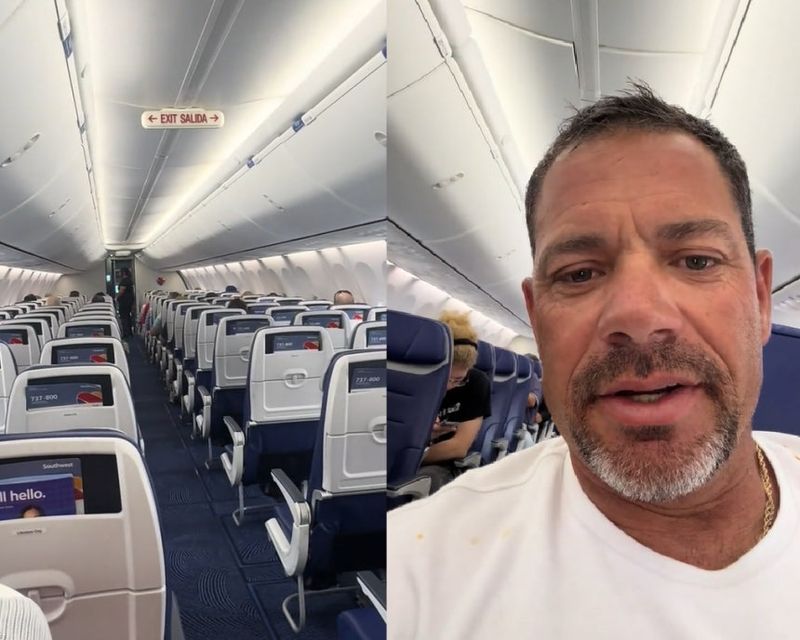
On the 2nd (local time), a man shared on social media (SNS) his experience aboard a Southwest Airlines flight from Los Angeles to Reno, Nevada. He also posted video footage filmed in the cabin at the time.
The video showed several unoccupied seats in the cabin. The man said that after takeoff, he asked a flight attendant if he could change seats but was refused on the grounds that those seats required an additional fee.
He also described his conversation with the flight attendant. The man said, “I asked if I could change seats once the plane had taken off, and the flight attendant replied, ‘No. That seat requires an additional fee.’”
The man expressed frustration that he could not move to a seat farther forward even though no more passengers were boarding. He said, “There were no more passengers to board, but I was told I couldn’t move up front because those seats cost more,” and sarcastically added, “Apparently, they think it’s better to let the elderly couple sitting next to me hear me snore than to make things more convenient for passengers.”
The restriction on passengers changing seats stemmed from Southwest Airlines changing its seating system starting this year.
Last January, Southwest Airlines ended its previous open-seating policy and switched to assigned seating. Previously, passengers could choose the seats they wanted, starting with those who boarded first. Now, passengers select their seats when booking their tickets.
Seats are divided into three categories: Standard, the regular seats; Preferred, the preferred seats; and Extra Legroom, which offers more space to stretch your legs. Passengers must pay an additional fee for Preferred and Extra Legroom seats.
Some interpret the restriction on changing seats after boarding as a way for the airline to maintain its policy of selling seats for an additional fee. If passengers who have not paid extra could freely use empty paid seats after takeoff, they might have less reason to purchase those seats in advance.
Indeed, Southwest Airlines’ official seating policy says that passengers must select their seats when booking most tickets. It also states that passengers cannot freely move to the seats they want after boarding.
Online commenters who heard about the incident were divided between those who said the paid-seat policy should be followed and those who felt the airline’s response was excessive.
Those who defended the airline’s response argued that passengers should pay to use paid seats, asking, “Do you think you have the right to enjoy a service you haven’t paid for?” and saying, “It may be unfair to passengers who paid extra for better seats.”
Some commenters, however, asked whether there was any need to prevent passengers from moving to seats no one was using. They sympathized with the man’s complaint, saying, “It’s excessive to stop people from moving when there are empty seats,” and “Other airlines sometimes allow passengers to move to empty seats after takeoff.”
[email protected] Han Seung-gon Reporter