KOSPI barely holds the 5,000 mark... Eyes on U.S. CPI and foreign investor flows [Weekly Market Outlook]
- Input
- 2026-11-08 16:01:22
- Updated
- 2026-11-08 16:01:22
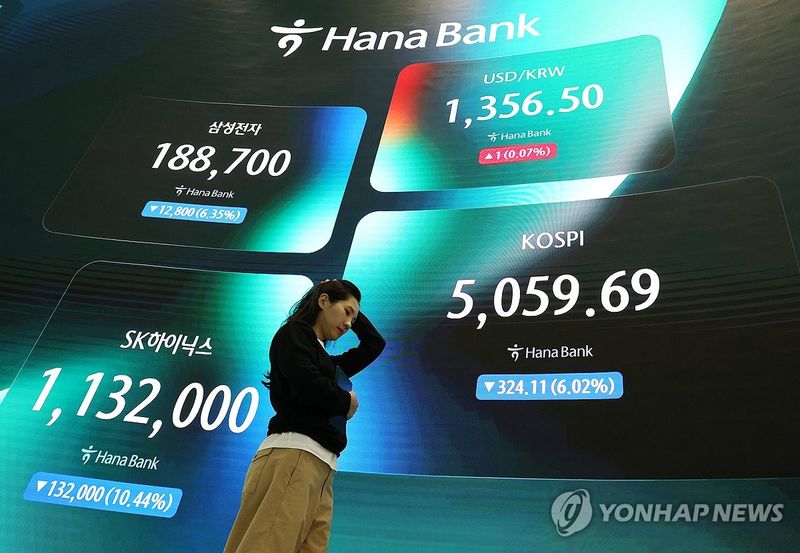
[Financial News] After the U.S. midterm elections, the KOSPI plunged more than 11% amid concerns over regulation of AI data centers and foreign selling. This week, investors will watch U.S. inflation data and foreign investor flows to gauge whether the index can defend the 5,000 mark and rebound. Securities firms forecast a range of 5,000–6,000 points for the KOSPI this week.
According to the Korea Exchange (KRX) on the 8th, the KOSPI fell 11.71% last week (November 2–6), from 5,730.74 to 5,059.69. Over the same period, the KOSDAQ also dropped 11.06%, from 724.38 to 644.27. Foreign investors were net sellers of about 11 trillion won. Institutions and individual investors were net buyers of 4.8 trillion won and 4.2 trillion won, respectively, but could not absorb foreign selling. Foreign investors continued to be net sellers for six consecutive trading days starting on the 30th of last month.
The sharp drop has been attributed in part to concerns that regulation of AI data centers could tighten after the Democratic Party secured majorities in both the House and Senate. The Philadelphia Semiconductor Index in the United States plunged more than 12% on the 5th (local time), also spurring panic selling. During trading on the 6th, a Level 1 circuit breaker and a sell-sidecar were triggered, pushing the KOSPI down to 4,911.28.
The key variable this week is U.S. inflation data. The October consumer price index (CPI) will be released on the 10th local time, followed by the producer price index (PPI) on the 13th. Lee Kyung-min, a researcher at Daishin Securities, said, "If inflation comes in above expectations, the likelihood of additional rate hikes by the Federal Reserve will rise, weighing on the stock market." He added, "If inflation is confirmed to be slowing, stabilizing interest rates could pave the way for a rebound led by oversold stocks and growth stocks."
Na Jeong-hwan, a researcher at NH Investment & Securities, forecast that "the direction of the domestic stock market this week will depend on the election results and foreign investors’ futures flows." He added, "Whether foreign investors continue to be net buyers of futures and whether the market basis returns to contango will be key factors in determining whether the market turns toward a rebound." The MSCI regular review and the expiration of domestic options contracts fall on the 12th, which could increase short-term volatility.
Heo Jae-hwan, a researcher at Eugene Investment & Securities, said, "Given that the domestic stock market has already fallen sharply, it is necessary to refrain from joining the panic selling at this point."
[email protected] Han Young-jun Reporter