Amid semiconductor boom, high-value deposits over 1 billion won near 1,000 trillion won
- Input
- 2026-11-08 08:55:02
- Updated
- 2026-11-08 08:55:02
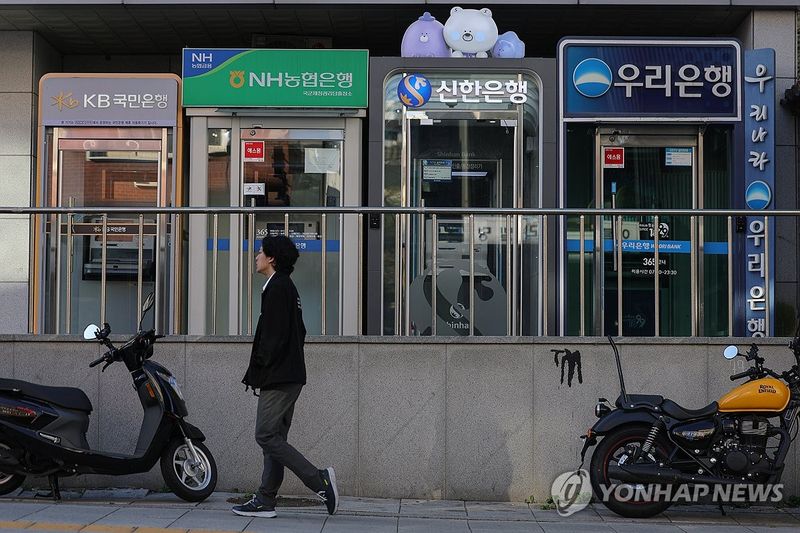
[Financial News] The balance of high-value deposits exceeding 1 billion won at domestic banks topped 960 trillion won, a record high. The share of high-value deposits in all time and savings deposits also exceeded half for the first time in four years. This is attributed to a sharp improvement in corporate earnings, driven by strong exports from key industries including semiconductors, which led to a significant increase in the surplus funds those companies placed with banks.
According to the Bank of Korea’s Economic Statistics System (ECOS) on the 8th, as of the end of June this year, total deposits in accounts with balances exceeding 1 billion won among time and savings deposits at domestic deposit-taking banks stood at 960.115 trillion won. This was the largest amount since the relevant statistics began in 2002.
That was an increase of 91.635 trillion won (10.6%) from the end of last year (868.48 trillion won), and a rise of 138.702 trillion won (16.9%) compared with the end of June last year (821.413 trillion won). The increase over the six-month period was also the largest on record.
The balance of high-value deposits exceeding 1 billion won surpassed 700 trillion won at the end of June 2021 and 800 trillion won at the end of 2024, before entering the 900-trillion-won range for the first time this year. The number of high-value deposit accounts also climbed from 100,000 at the end of last year to 102,000 at the end of June this year, a record high.
High-value deposits accounted for 50.6% of the balance of all time and savings deposits, again exceeding half for the first time in four years since the end of June 2022.
By deposit type, the balance of time deposits exceeding 1 billion won rose 58.987 trillion won (9.7%) from the end of last year to 666.162 trillion won. Corporate free deposits, where corporations and sole proprietors place temporarily surplus funds, increased by 30.469 trillion won (12.3%) over the same period to 278.078 trillion won.
The expansion of companies’ financial capacity is also reflected in the BOK’s flow-of-funds statistics. In the second quarter of this year, nonfinancial corporations’ net lending rose sharply to 67.1 trillion won, from 20.8 trillion won in the previous quarter. This was the largest amount since the relevant statistics began in 2009.
Net lending is the amount left after subtracting funding, such as borrowing, from the acquisition of financial assets, and indicates companies’ financial capacity. The amount companies placed with financial institutions also surged, from 17.8 trillion won in the first quarter to 84.3 trillion won in the second. The BOK cited higher corporate profits resulting from strong semiconductor exports as a key factor.
As inflows of export proceeds increased, foreign-exchange-related transactions at major commercial banks and corporate dollar deposits also rose significantly.
According to the financial industry, the five major banks—KB Kookmin Bank, Shinhan Bank, Hana Bank, Woori Bank and Nonghyup Bank—handled $621.79 billion in incoming remittances from January to October this year, up 30.1% from the same period last year. Over the same period, their purchases of foreign exchange (export bill negotiations) also rose 31.5% to $140.72 billion.
Incoming remittances are funds sent from abroad to Korea. Export bill negotiation refers to a transaction in which a company transfers to a bank foreign-currency receivables, such as those due from export proceeds, and receives payment in advance. Both indicators are used to gauge the inflow and collection of companies’ export proceeds.
In particular, the year-on-year growth rate for incoming remittances accelerated from 17.6% in the first half of this year to 48.2% from July to October. The amount of export bills negotiated in October also rose 84.2% year on year to $20.24 billion.
Corporate dollar deposits at the five major banks stood at $64.55 billion at the end of October this year, up $19.73 billion (44.0%) from a year earlier ($44.82 billion). They were also up 21.3% from the end of last year. Companies accounted for 89.3% of the total increase in dollar deposits over the same period.
Corporate dollar deposits increased 31.7% in just three months, from $53.07 billion at the end of June this year to $69.9 billion at the end of September. They fell 7.7% in October from the previous month, but were still 21.6% higher than at the end of June.
The balance of corporate foreign-currency deposits, including yen deposits, also rose 42.5% year on year to $76.88 billion at the end of October.
[email protected] Jang Min-kwon Reporter