Once topping 1 million... Next year's elementary school entrants set to fall below 300,000
- Input
- 2026-11-08 08:31:45
- Updated
- 2026-11-08 08:31:45
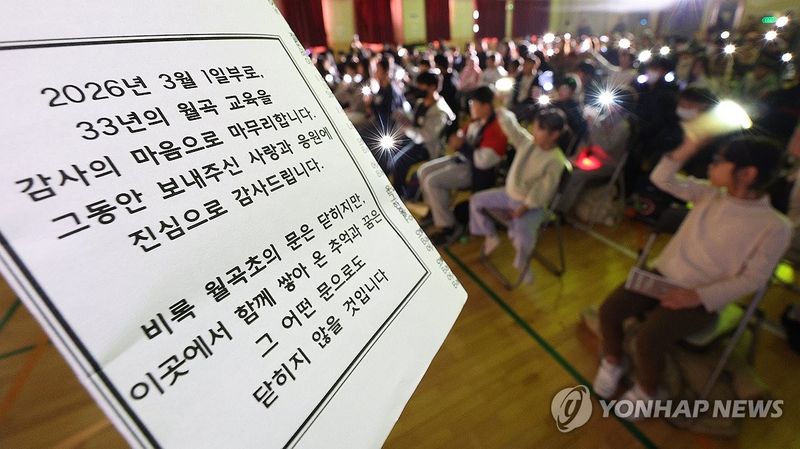
[Financial News] In the wake of the low birth rate, the number of children entering elementary school next year is expected to fall below 300,000 for the first time. This comes just three years after the figure fell below 400,000; compared with about 60 years ago, it will have dropped to a quarter of its previous level. Concerns are growing that the decline in the school-age population could deepen school consolidation and regional education gaps, and lead to greater concentration in the Seoul metropolitan area and a lower potential growth rate.
According to a compilation of data from the Korean Statistical Information Service (KOSIS) and education statistics from the Korean Educational Development Institute (KEDI), among other sources, the number of children set to receive elementary school admission notices starting next month is likely to be in the 200,000s, a record low.
This is because births plunged in 2020, the year children of next year's elementary school entry age were born, bringing the figure into the 200,000s for the first time since related statistics began in 1970.
According to the Ministry of Data and Statistics, 272,337 children were born in 2020, the birth cohort reaching elementary school entry age next year, down 10.0% from 302,676 a year earlier.
The number of children entering elementary school this year was 301,442, the lowest since statistics on new entrants began in 1964, and is expected to fall even further.
There were 301,442 and 324,079 elementary school entrants this year and last year, respectively—1,234 and 2,743 fewer than the numbers of births in 2019 and 2018, the corresponding age cohorts for school entry.
The number of elementary school entrants was in the 900,000s when related statistics began in 1964, then climbed to a record 1,055,632 in 1968.
The figure fell into the 800,000s in 1982, the 700,000s in 1983, and the 600,000s in 1991, but fluctuated; it still stood at 610,769 in 2007.
It fell into the 500,000s for the first time in 2008, at 540,799, and dropped into the 400,000s the following year, in 2009, at 469,592, but generally remained in the 400,000s.
Then, from 2023 through this year, the figure fell for four consecutive years, with the pace of decline also steep as the rate of decrease remained around 10%.
In 2024, the figure fell into the 300,000s for the first time, reaching 353,828.
If the figure falls into the 200,000s next year, it will be just a quarter of the peak reached 59 years earlier.
As the school-age population changes due to the low birth rate, schools outside the Seoul metropolitan area could rapidly shrink in size.
This could worsen the educational environment by limiting opportunities for interaction among peers and making it harder to run a variety of educational programs.
This could accelerate the concentration of families with school-age children in the Seoul metropolitan area.
School consolidation is expected to be inevitable. Universities, too, are expected to close one after another around the time these children reach university age.
The low birth rate and decline in the school-age population will inevitably burden future generations as well. The old-age dependency ratio—the number of people aged 65 or older that every 100 people aged 15 to 64 must support—is 31.3 this year but is projected to rise to 103.3 in 2070. In other words, every 100 people of working age will have to support more people.
Economically, the potential growth rate is likely to decline as the labor force shrinks.
In response, the government plans first to abolish, after 55 years, the system linking the Local Education Grant to domestic tax revenue, and to channel the additional funds made available by the reform into early childhood, higher and lifelong education, which have received relatively little investment.
[email protected] Jang Min-kwon Reporter