France’s anti-government protests enter fourth week: turnout falls, but clashes erupt in several areas
- Input
- 2026-11-08 08:22:43
- Updated
- 2026-11-08 08:22:43
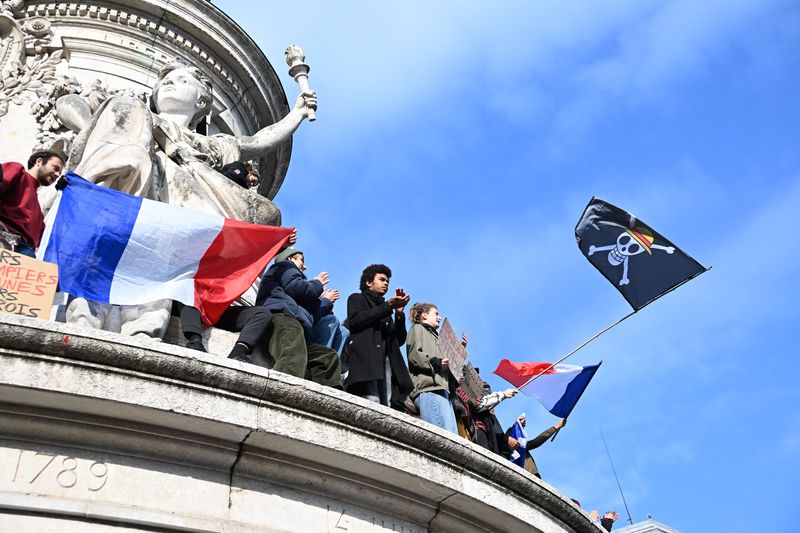
Foreign media reported on the 8th that protesters from France’s major labor unions and student groups, as well as the Yellow Vest movement—which spearheaded anti-government protests against high prices eight years ago—began gathering at major downtown squares on the morning of the 7th (local time).
However, perhaps because the demonstration followed a protest held two days earlier alongside a union general strike, which drew about 600,000 people according to authorities and 1.6 million according to unions, turnout that day was noticeably lower than at the previous three weekends’ demonstrations.
France’s Interior Ministry estimated that 146,000 people took part nationwide, including 46,000 in the capital, Paris. Labor unions, by contrast, counted 250,000 participants nationwide and 75,000 in Paris.
Although the size of the crowds had fallen considerably, authorities prepared for possible unrest, including arson and looting of shops like that seen on the 17th of last month. They deployed 70,000 police officers nationwide and mobilized armored vehicles and water cannons.
Police said they carried out about 15,000 identity checks at train stations and other locations in the suburbs of Paris before the main march began, and arrested 18 people.
Tensions mounted around Place de la Concorde, near the Élysée Palace, the French president’s official residence, and the National Assembly, after Yellow Vest protesters said they would hold a separate, unauthorized gathering apart from the unions and student groups. Authorities deployed a large police force and maintained tight security to prevent demonstrators from approaching the square.
Even so, police surrounded around 100 protesters who reached the square, and some leaders of the Yellow Vest movement were also arrested in the process.
The Yellow Vest movement said the authorities were suppressing people’s right to protest with their hard-line response. In protest, it vowed to go ahead with the banned gathering and called for “civil disobedience.”
French authorities are conducting dozens of internal investigations into allegations of police violence after facing public criticism that they responded excessively harshly to protests by high school students angry about poor educational conditions in late September, resulting in numerous injuries.
Clashes also broke out in Lyon, France’s third-largest city, where authorities had banned a gathering on safety grounds. Police fired tear gas at protesters demonstrating against high prices.
The protests in France, sparked by high school students, have spread nationwide as university students, workers and civil servants protesting high prices, and ordinary citizens have joined in, and they have shown no sign of letting up for weeks. Student and teachers’ groups called for a new demonstration on the 10th to increase pressure on the government, demanding a larger education budget.
With far-right forces surging and less than six months to go before the presidential election, the French government needs to calm public anger as soon as possible. However, its massive national debt leaves it without the means to fully meet the protesters’ demands.
Prime Minister Sébastien Lecornu is scheduled to meet with representatives of labor unions and employers’ associations on the 10th to discuss issues including wage increases and prices.
[email protected] Jang Min-kwon Reporter