18-year-old boy taken by the People's Army becomes U.S. ABC reporter after serving in the ROK military
- Input
- 2026-11-08 07:00:00
- Updated
- 2026-11-08 07:00:00
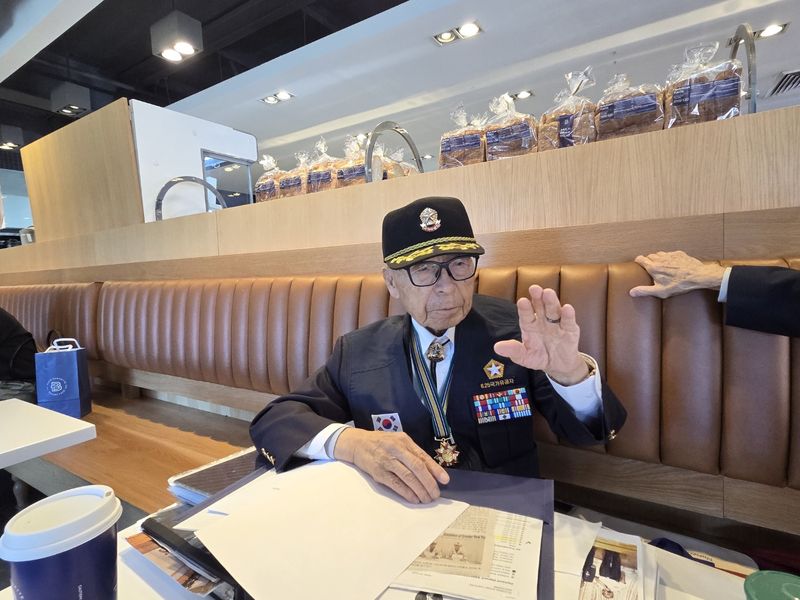
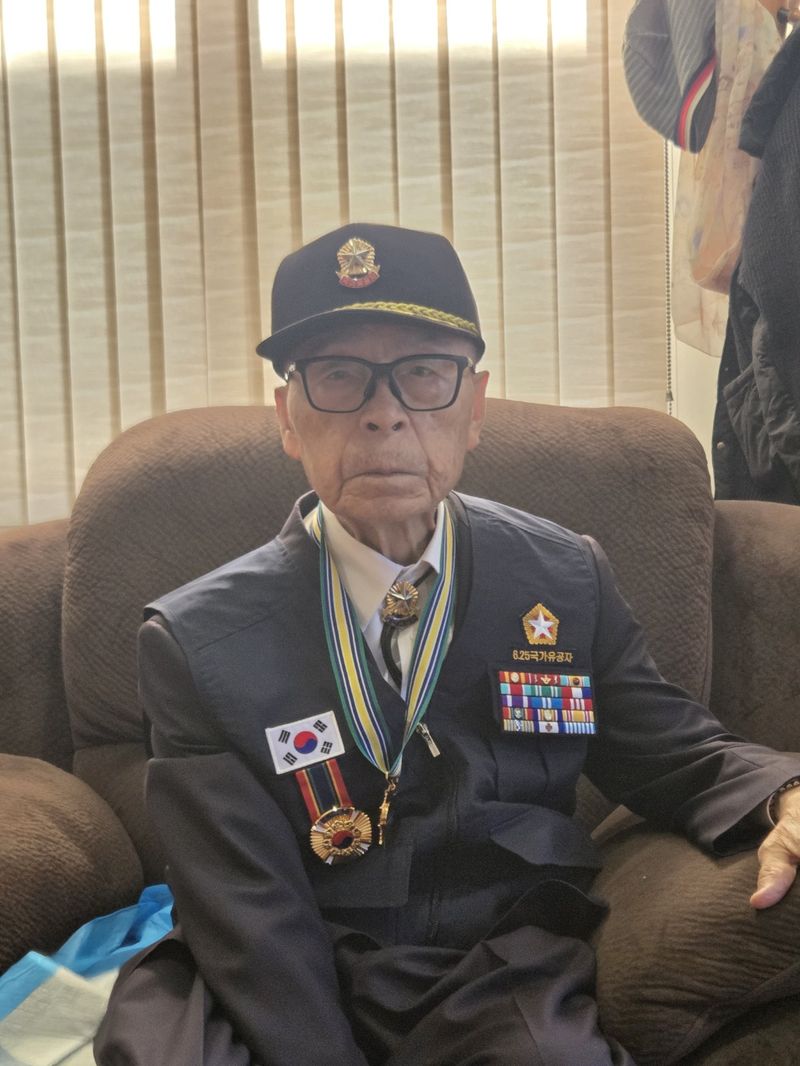
The battlefields of the spring of 1951 remain vivid in the memory of Korean War veteran and chairman Kang Seok-hee, 94. He was 19 at the time and fought on the front lines as a member of the Republic of Korea Armed Forces’ 1st Division reconnaissance unit. He had to dig into the frozen ground to make a place to sleep and stave off hunger with cold rice hardened like a rock. His only goal was to survive each day amid bullets and shells that could come from anywhere at any time.
But in the end, death did not pass him by. In May 1951, he was caught in an explosion while attacking a hill near Munsan, Gyeonggi Province. A flash brighter than sunlight burst before his eyes, followed by the pungent smell of gunpowder. His ear was torn, and one eye was badly injured. The blast sent him tumbling down a precipice and also broke his leg. When he regained consciousness, he was in a hospital. Rumors that he had been killed in action had already spread in his hometown.
Kang, whom we recently met in New York, recalled what happened 75 years ago and said, “I really was someone who died and came back to life.” He founded a Korean War veterans’ organization in New York in 2004. Of the 176 members it had at the time, only 8 are still alive. That is why, even well past 90, Kang continues to share his memories of the war.
An 18-year-old boy went out to find rice and was taken by the People's Army
Born in Seoul in 1932, Kang was a ninth-grade student living in Changcheon-dong, Seodaemun District, when the Korean War broke out in 1950. Middle school at the time was a six-year program.
The war began on June 25, 1950, when North Korean forces invaded the South, and Seoul fell just three days later. Unable to flee in time, Kang spent about three months in Seoul under North Korean occupation.
The event that changed his life happened when he went out to find rice to eat. He was seized by North Korean troops on the street and taken away as a conscript.
“There was nothing to eat, so I went around looking for rice. Then I was caught on the street. I didn’t even have time to tell my family.”
The North Korean troops took him and the other students as far as Anyang. They were about to be sent to the battlefield when something unexpected happened: U.S. fighter planes appeared and began bombing.
“The U.S. planes started bombing, and the people taking us away were thrown into confusion. That gave the students a chance to escape. I took advantage of the opportunity and got away, too.”
It was an escape that put his life at risk. He had no idea what would happen to him if he were caught. He spent time hiding, and was only able to return after Seoul was recaptured by the Republic of Korea Armed Forces.
But the war was not over. With the People's Liberation Army entering the war, the front was pushed south again. Kang could no longer live as an ordinary student.
In November 1950, he enlisted in the military in Daegu. He was 18 at the time.
“There was nothing to eat, and the country was at war. Under the Second National Guard Service, everyone had to go once they reached a certain age.”
He was assigned to the 1st Division reconnaissance unit of the Republic of Korea Armed Forces. He was a boy with no combat experience who had never even handled a rifle properly.
His military training lasted just 20 days. He learned how to disassemble and clean a rifle and practiced basic movements. The M1 rifle he was issued at the time was a challenging weapon for a young soldier to handle.
“My shoulder hurt a lot when I fired the M1 rifle. It was big and heavy.”
After he was assigned to the reconnaissance unit, his weapon was changed to an M1 carbine. But a slightly lighter rifle did not make the burden of war any lighter.
Frozen trenches were home... Surviving the winter on lumps of cold rice
Kang was deployed to the front in December 1950 and began taking part in full-scale combat the following January. At the time, the Republic of Korea Armed Forces and UNC forces were in continuous retreat under pressure from the People's Liberation Army's offensive.
Kang first saw combat in the Suwon area.
The reconnaissance unit had a different mission from regular infantry. It moved at the very front of the unit, locating the enemy and monitoring its movements, and clearing the way for the main force to advance. It was a dangerous assignment that meant they were bound to be the first to encounter the enemy.
“We were a reconnaissance unit, so we were always out in front. Once a target was set, we had to go in first and check whether the enemy was there. We moved while keeping in touch with headquarters by radio.”
The soldiers’ lives at the time were as harsh as the fighting. Even in the middle of winter, they had no proper barracks or shelter. The trenches they dug in the ground became their homes.
“It was winter, but we had to dig into the ground. That was our home. We dug a trench and slept in it. We couldn’t cook, so we ate cold rice, and it was hard as a rock.”
The combat rations supplied from Japan included roasted grain powder, cigarettes and hardtack. But when the fighting continued, even getting a meal was difficult.
Even harder to endure was the fear of death.
“At first, it was hard even to stick my head out of the trench. You never knew where a bullet might come from. You can’t even see the bullets, can you?”
But as the battles continued, a strange change came over him.
“Eventually, you get used to even that. The fear goes away. I was hungry and tired, and I thought, if I die, I die.”
Kang said that, as a young man facing death, the first person who came to mind was his mother.
“When I went to the battlefield, I thought about the things I’d done wrong in the past. I remembered how I’d talked back to my mother, and thought I’d been a bad son. I thought that if I made it back alive, I’d call her ‘Mother’ and be a good son to her.”
Across the Han River to Munsan... The reconnaissance unit fought at the very front of enemy lines
As the Republic of Korea Armed Forces and UNC forces launched a counteroffensive in early 1951, Kang’s unit also began advancing north.
The unit set out from Suwon, crossed the Han River and entered Seoul. Kang recalled that during the Han River crossing operation, the reconnaissance unit crossed first to assess the enemy’s movements.
“We had to cross first, you know. We needed to find out where the enemy was. The radio operators carried heavy batteries on their backs, and we moved with small radios.”
The fighting intensified again as they passed through Seoul. In the Munsan area, they also conducted joint operations with U.S. airborne troops.
Kang also recalled using parachutes to keep warm at the time.
“When U.S. parachutes came down, we’d tear them up and wrap them around our necks. They were soft and warm. We also ate the combat rations attached to the parachutes.”
The unit advanced past Munsan to the Jangdan and Imjin River areas. Kang said he crossed the Imjin River and spent about a month near Kaesong carrying out reconnaissance operations.
But the situation changed rapidly when the People's Liberation Army launched a major offensive in April 1951.
Kang was in the Gorangpo area near the Imjin River.
“I was out at night, and something felt strange. I could see a lot of enemy troops moving. Then I saw them coming down in a dark mass.”
The People's Liberation Army was advancing south in large numbers. The reconnaissance unit had to retreat.
The danger to their lives continued even as they crossed the river. Kang also remembered a time when friendly aircraft mistook the reconnaissance unit for enemy troops and attacked them.
“We were trying to cross the river when a plane attacked us. Even the boat we were going to use to get back came under attack. The reconnaissance unit didn’t wear its insignia properly, so they mistook us for the enemy.”
He said they had to contact headquarters, identify themselves as friendly forces and get the attack stopped.
Pushed back by the People's Liberation Army's offensive, the unit retreated as far as the Susaek area of Seoul. Then the counteroffensive began again.
Kang remembered advancing north with support from U.S. artillery.
“There were big guns in front of the Central Government Building in Seoul, too. When the 155-mm guns fired, the shells flew right over our heads. Trees snapped and everything around us was smashed.”
The front line shifted back and forth several times a day. Then, in May 1951, the battle that changed Kang’s fate took place.
“A flash brighter than sunlight”... He died and came back to life on a hill in Munsan
It was a hill near Munsan. Kang’s reconnaissance unit was attacking a hill occupied by the enemy, with support from a U.S. tank unit.
The odds were against them. The People's Liberation Army had dug in on high ground, while the Republic of Korea Armed Forces had to climb up from below. There were few trees, so there was nowhere suitable to take cover.
“The enemy was hidden on the hill, and we were climbing up from below. There was nowhere to hide. We couldn’t move forward because machine-gun fire kept raining down on us.”
As they drew close to enemy lines, grenades also came flying at them. Kang requested support from the rear, and U.S. tanks helped the attack by firing their guns directly at the target.
“The tanks’ guns went bang, bang. We advanced with their support.”
But the closer they got to the hill, the more intense the fighting became.
Machine-gun fire and grenade attacks from the enemy continued. Kang fought back, throwing grenades himself.
Then it happened.
“Suddenly, there was a flash right in front of me. It was brighter than sunlight. The smell was awful, too.”
The force of the explosion tore his ear and badly injured one eye. His body fell down a precipice. His leg was broken, too.
“If it had exploded just a little closer, I would have died right there.”
He lost consciousness on the spot.
When he opened his eyes again, he was in a hospital near Seodaemun. He was later transferred through a military medical facility in the Yeongdeungpo area to an Army hospital in Daegu.
“When I woke up, I was covered in blood. There were signs that I’d been treated here and there.”
His injuries were so severe that rumors spread in his hometown that he had died.
“There were rumors that I’d died. But I survived.”
Kang received treatment and underwent surgery several times. He lost one eye, and the scars of war remained on his body. He said that even now, when he touches the ear he injured then, he can feel the scar.
He was eventually discharged from the military in the winter of 1951. His rank at the time was private first class, but he was promoted one rank to sergeant upon discharge.
Even after the war ended, there was no home to return to
He had survived the battlefield, but he could not return to an ordinary life.
After his discharge, Kang stayed at a convalescent home for disabled veterans in Busan. It was a place where soldiers who had lost limbs or suffered serious injuries in the war gathered.
The family home in Seoul had already burned down in the war.
“We had no home. When I went back later, my parents and younger sibling were living in an air-raid shelter. The family had been scattered in every direction.”
He took on the job of helping other disabled veterans at the convalescent home. As head of general affairs, he also obtained relief supplies from the U.S. military.
Life was miserable for disabled veterans at the time. Those who had lost limbs had to take to the streets to make a living. Kang saw up close how people who had survived the war faced another kind of suffering after it ended.
But his life took an unexpected turn.
After moving to Seoul in 1953, Kang became involved in broadcasting-related work for the United Nations Command, which was run by the U.S. military.
At the time, UNC was waging psychological warfare against North Korea. Its activities included broadcasting to the North and dropping leaflets.
“There was something called the UN broadcast. It was a place that broadcast to the North and conducted psychological operations. We sometimes dropped leaflets from planes or let them drift out to sea.”
Kang worked there as a civilian for about 13 years.
Later, when the Vietnam War broke out, he took a job with an American company and went to Vietnam. There, he was responsible for transporting airmail and the bodies of fallen soldiers, among other things.
“It was dangerous work. But they needed people, and it was something you could do if you had courage.”
In Vietnam, a connection began that would change his life again. He met people from the U.S. ABC network, which led him into journalism.
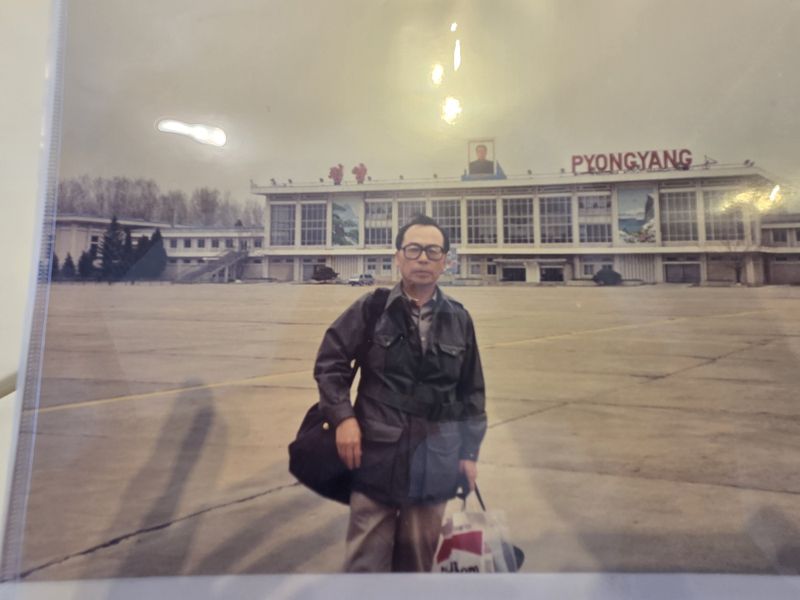
After moving to New York in 1973, Kang began working for ABC. He later also worked with NBC and pursued a career in journalism. During the interview, he took out and showed the press credentials he had used at the time and several photographs from the field.
The boy soldier who survived the Korean War had begun a new life as a journalist in the United States.
From 176 to 8... Veterans are disappearing
Kang founded a Korean War veterans’ organization in New York in 2004.
Although more than half a century had passed since the war ended, he believed an organization was needed to remember the sacrifices of Korean veterans living in the United States and to look after one another.
The organization had 176 members when it was founded.
But as time passed, the members began to die one by one.
“When we first set it up in 2004, there were 176 of us. But they’ve all passed away, and now there are only eight of us left.”
His voice carried a note of sadness.
There is a reason Kang devotes himself to recording veterans’ memories and telling people about the horrors of war: he feels guilty about the comrades who fought alongside him on the battlefield and never returned.
“At first, I felt bad when my comrades died. That’s why I do this now.”
He did not regard his own survival as simply a matter of luck. He believed it was the responsibility of those who survived to remember their fallen comrades’ sacrifices and protect their honor.
“How much longer do I have to live? But we have to protect our comrades’ honor and our dignity.”
Kang was particularly saddened by the fact that younger generations tend to see war merely as history in textbooks.
“When I was young, even when I learned about history like the Imjin War, I thought of it as a story from long ago. But after experiencing the Korean War firsthand, I learned how brutal war is.”
He stressed that war was by no means a story from the distant past.
“History can repeat itself. That’s why we have to teach people how terrifying war is. We have to let them know that war must be eliminated.”
This is also why he has led the veterans’ organization for more than 20 years.
“War is not a story in a history book”
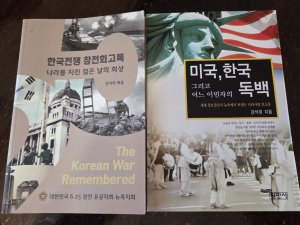
As the interview drew to a close, Kang took out again some of his writing and old photographs. They included records from the war and materials he had kept during his career as a journalist.
For him, the Korean War is not simply a war fought from 1950 to 1953. It is an event that completely changed the life of an 18-year-old boy, and a memory that remains with him, in body and mind, 75 years later.
The boy who thought of his mother as he faced death on the battlefield has now become a man in his nineties. Most of the comrades who fought alongside him have already passed away.
Kang described himself as someone who puts the country before political ideology.
“I’m neither left nor right. I’m a patriot. I’ve lived by my own convictions.”
To him, patriotism is not a grand slogan. It means remembering comrades who lost their lives in war, protecting the dignity of veterans who survived, and passing their stories on to future generations so that the same tragedy is never repeated.
Kang concluded by warning against letting the memory of war disappear.
“We know how brutal war is because we experienced it ourselves. We have to tell people that. We must not forget that war could become a reality again.”
[email protected] Lee Byung-chul, Correspondent Reporter