U.S. 'Blue Wave' Shock Wipes 4,800 Trillion Won Off Global Market Cap in a Day
- Input
- 2026-11-07 14:00:02
- Updated
- 2026-11-07 14:00:02
According to an analysis published on the 7th by Nihon Keizai Shimbun (The Nikkei), based on data from global financial data analytics platforms QUICK and FactSet, the total market capitalization of global equities stood at $154 trillion (about 210.025 quadrillion won) as of the 5th, down $3.5 trillion from the previous day.
Concerns about tighter regulation of the AI industry are spreading after U.S. Democrats took control of both the House and Senate in the midterm elections. The so-called “Blue Wave” shock further increased the amount wiped from global stock market capitalization.
The three major U.S. stock indexes plunged across the board on the 5th (local time), led by AI-related technology stocks. The market capitalization of companies in the Nasdaq index fell by about $2.5 trillion (about 3,400 trillion won), the largest daily decline on record. However, the New York stock market rebounded on the 6th (local time) as bargain hunters moved in after the previous day’s sharp drop.
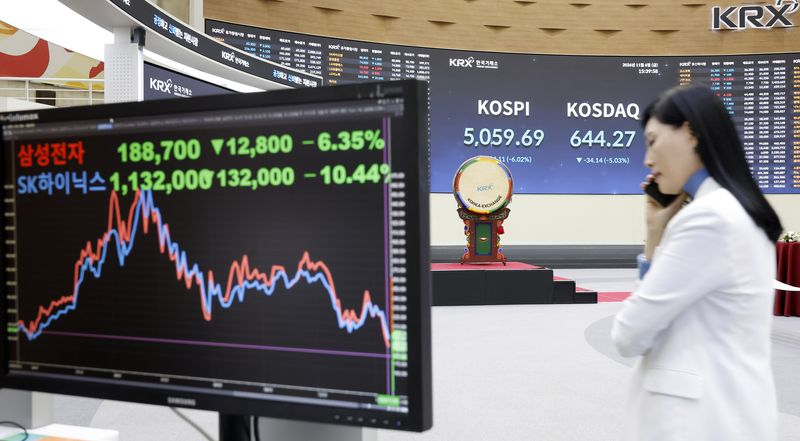
The shock originating in the United States also spread to Asian markets. On the 6th, 77 trillion yen (about 663 trillion won) in market capitalization disappeared from the Prime Market of the Tokyo Stock Exchange. Markets across Greater China, including Taiwan, also plunged that day. The Taiwan Capitalization Weighted Stock Index (TAIEX) fell 8.99% shortly after opening, marking the largest intraday drop in Taiwan stock market history. TSMC, the world’s largest foundry (contract semiconductor manufacturer) and Taiwan’s largest company by market capitalization, fell as much as 9.82% shortly after the opening, close to its daily lower limit, extending its losing streak to seven consecutive trading days.
South Korea’s stock market also took a direct hit. Samsung Electronics and SK hynix, the market’s leading stocks, plunged together on the 6th, and total KOSPI market capitalization fell by more than 3,000 trillion won from its peak.
Investment enthusiasm for AI-related stocks, which have led global market gains so far, is cooling rapidly amid concerns that U.S. Democrats will tighten regulations on data centers. Since ChatGPT, developed by U.S.-based OpenAI, was unveiled in November 2022, global market capitalization has grown to 1.6 times its previous size.
Markets do not expect investor sentiment to recover easily in the short term. Takayuki Ishibashi, a vice president at Goldman Sachs Securities, told The Nikkei, “It is difficult to expect catalysts that could trigger a sharp rebound in stock prices, as in past market downturns, so investors are, in effect, in a mood of resignation.”
[email protected] Lee Hyun-jeong Reporter