Joseph Yun: “U.S. Midterm Fallout Could Stall Talks on Wartime OPCON Transfer and Nuclear-Powered Submarines”
- Input
- 2026-11-07 09:00:21
- Updated
- 2026-11-07 09:00:21
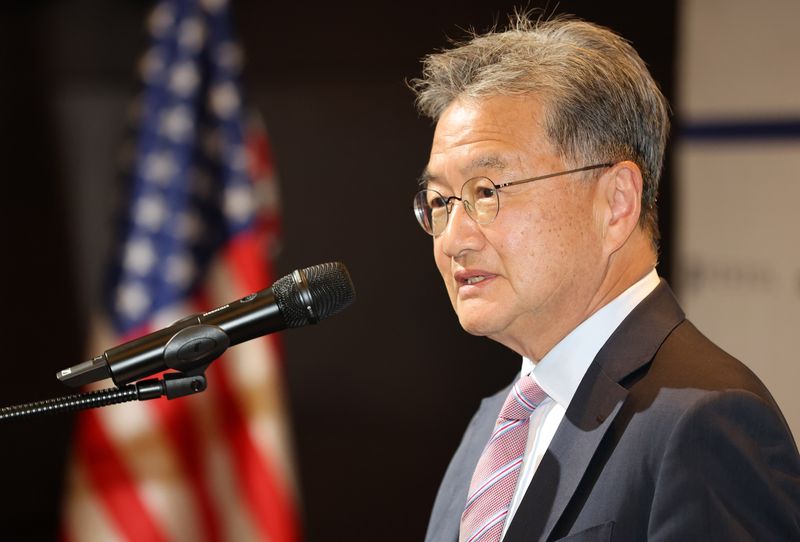
[Financial News] With Democrats taking control of both the House and the Senate in the U.S. midterm elections, a forecast has emerged that discussions between South Korea and the United States on transferring wartime operational control (OPCON) and introducing nuclear-powered submarines may make no progress over the next two years. They say the alliance’s basic framework for cooperation will remain in place, but pursuing new security cooperation initiatives could prove difficult.
According to Voice of America (VOA) on the 7th, Joseph Yun, a former U.S. State Department special representative for North Korea policy, made the remarks in a video interview about the impact of the U.S. midterm election results on the ROK-U.S. Alliance.
Yun predicted that the election results would have little impact on core alliance issues such as extended deterrence, as both the administration and Congress are committed to bipartisan cooperation on them. He noted, however, that momentum could weaken for new areas of cooperation, including the transfer of wartime OPCON and the introduction of nuclear-powered submarines.
“I think some of the new initiatives could be put on hold, with little progress over the next two years because one side or the other lacks the momentum,” he said. “I think there could be difficulties in pushing new things forward.”
He assessed that the midterm election results would have a limited impact on North Korea policy. The administration has considerable authority over policy decisions, and the United States currently provides no support to North Korea, leaving Congress relatively little scope to intervene, he explained.
He also gave a pessimistic assessment of the prospects for resuming dialogue between North Korea and the United States. “It [the dialogue] did not happen because of a lack of enthusiasm on Kim Jong Un’s side,” Yun said. “I don’t think this election, or anything else, changes that equation.”
He also cited North Korea’s improved relations with Russia and China, among other factors, as evidence that it is in a more favorable position internationally than it was in the past.
“North Korea is doing better in every respect than it was during the first Trump administration—much better,” Yun said. “Strategically, they see no benefit in meeting with the U.S. president again.”
The assessment is that, regardless of shifts in the U.S. political landscape, a lack of incentive for North Korean leader Kim Jong Un to engage actively in dialogue could make a meeting between the North Korean and U.S. leaders difficult to arrange for the time being.
He expected existing policy directions to continue in trade relations between South Korea and the United States. Yun predicted that U.S. trade and tariff policies toward other countries would remain in place, noting that “Congress fully supports investment from friendly countries.”
[email protected] Kim Ye-ji Reporter