U.S. Midterm Election Fallout Fuels Uncertainty Over Nuclear Investment; $10 Billion Upfront Payment Sparks Controversy
- Input
- 2026-11-07 08:40:14
- Updated
- 2026-11-07 08:40:14
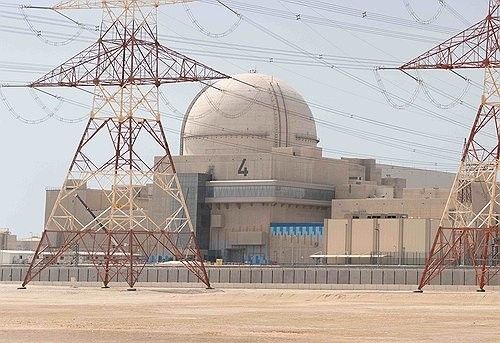
[Financial News] Democrats’ victory in the U.S. midterm elections has intensified controversy over an advance payment of up to $10 billion for a South Korea-U.S. nuclear cooperation project. As concerns grow that Democrats’ efforts to tighten regulations on artificial intelligence (AI) data centers could dampen electricity demand in the United States, calls are being made for a careful review of the project’s viability before making a large-scale investment in nuclear power.
According to relevant government authorities on the 7th, the $10 billion advance payment for the South Korea-U.S. nuclear project is intended to fund advance orders for key equipment needed to build nuclear power plants. The aim is to secure long-lead items (Long Lead Items) in advance—equipment that takes a long time to design, manufacture and deliver—in order to prevent construction delays.
Procurement lead times for major equipment are 54 months for reactor vessels, 57 months for steam generators, and 65 months for reactor coolant pumps and motors. Authorities say that, since securing some equipment takes at least five years, late orders could disrupt the overall construction schedule.
South Korea and the United States previously announced on the 1st of last month that they had agreed on the “South Korea-U.S. Nuclear Energy Framework,” which calls for building eight large nuclear power plants in the continental United States. The project will receive $120 billion—60% of a total $200 billion U.S. investment fund—and is the largest component of the overall investment plan.
The two countries plan to begin construction on two Westinghouse Electric Company AP1000 reactors (1.1-GW class), then pursue construction contracts within six months for two Korean APR-1400 reactors (1.4-GW class) and two U.S.-design reactors. They plan to build two additional AP1000 reactors afterward. At the time of the announcement, U.S. Commerce Secretary Howard Lutnick named Ohio, Tennessee, South Carolina and Kentucky as potential locations for the nuclear plants.
However, Democrats’ victories in Ohio and South Carolina in this midterm election have prompted speculation that conditions for the project could change. Democrats are expected to tighten regulations on AI data center construction, citing strain on the power grid, rising electricity bills for residents and water shortages, among other concerns.
AI data centers are major consumers of electricity and are considered a key source of demand for new nuclear power plants. If regulations curb data center construction, uncertainty could grow over whether electricity generated by nuclear plants can be sold reliably. This has prompted concern that the profitability of nuclear projects could also be affected.
Some in political circles have also called for suspending advance payments until the conditions for the project are reassessed.
Seo Wang-jin, a lawmaker from the Rebuilding Korea Party, said at a press conference at the National Assembly on the 5th, “With the U.S. Democratic Party having taken control of both the House and Senate, conditions for nuclear investment are expected to change,” and urged that “the $10 billion advance payment under the South Korea-U.S. Nuclear Energy Framework be put on hold.”
By contrast, the Ministry of Trade, Industry and Energy (MOTIE) maintains that tighter data center regulations will not necessarily lead to lower profitability for nuclear power projects.
MOTIE believes local residents’ opposition stems from concerns that electricity bills could rise if data centers—which consume large amounts of power—are built without expanding power supply facilities. It says that if large-scale power generation facilities, such as nuclear plants, are built alongside them and provide a stable power supply, this could instead ease upward pressure on local electricity bills and increase residents’ acceptance of data center construction.
The U.S. side has also agreed to notify South Korea of candidate sites for nuclear plant construction after the midterm elections. Once specific locations are finalized, the authorities plan to comprehensively assess conditions for the project. They will also consider the possibility of connecting to the existing transmission grid and whether reliable customers, such as Big Tech companies, can be secured to sign long-term power purchase agreements, and plan their response accordingly.
[email protected] Kim Ye-ji Reporter