Wartime OPCON Transfer Becomes More Difficult During Lee’s Term as Democrats Take Control of Congress
- Input
- 2026-11-06 18:15:28
- Updated
- 2026-11-06 18:15:28
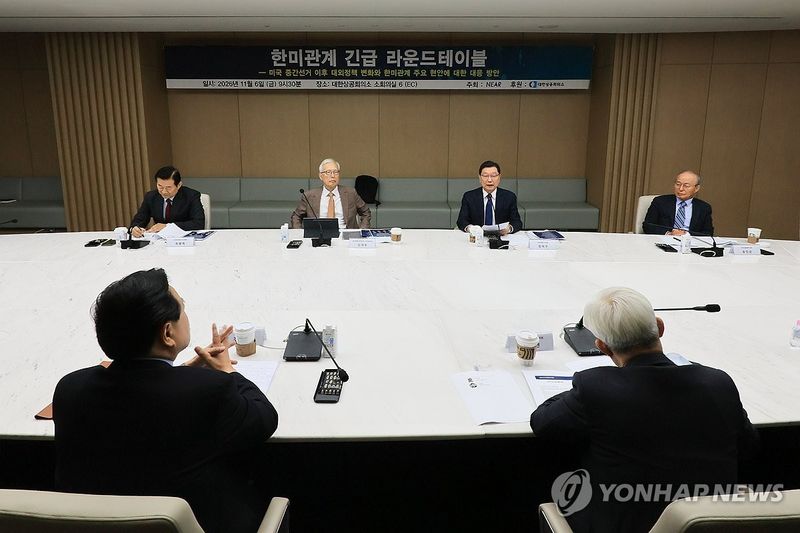
At a roundtable on the U.S. midterm elections hosted by the NEAR Foundation on the 6th, former ROK/US Combined Forces Command (CFC) deputy commander Choi Byung-hyuk warned of the security risks of rushing the OPCON transfer. Referring to the U.S. Senate Armed Services Committee’s drafting in June of the fiscal 2027 National Defense Authorization Act, which requires that progress on the OPCON transfer be reported to Congress every 90 days, Choi said, “Starting next January, the Democrats will become the majority, and Congress will directly control the related budget as well, so the transfer will be affected.”
Former South Korean Ambassador to the United States Cho Hyun-dong also pointed to the possibility of increased congressional scrutiny. “The U.S. Congress will strengthen its monitoring of the OPCON transfer,” he said, adding that Congress could become involved if the transfer does not proceed under conditions agreed upon by South Korea and the United States. He also said that concerns about the Trump administration’s abrupt policy decisions were apparent among working-level officials at the U.S. Department of Defense. Cho predicted, “The transfer may not happen as quickly as the (Lee Jae-myung) government wants.”
Former Minister of Foreign Affairs and Trade Song Min-soon also cautioned against aligning the transfer with a political timetable. “The basic condition for the transfer of operational control is the idea of the driver and front passenger switching seats while maintaining the ROK-U.S. Alliance,” he said. “If it is treated as though operational control is simply taken over and the United States gets off the bus, the transfer is impossible.” He stressed that the various policy-making bodies—including the U.S. White House, the Department of Defense and United States Forces Korea (USFK)—hold different positions on the OPCON transfer. “Rather than hastily setting a (specific) timeline, we should sit down calmly with the United States and work through the issue.”
[email protected] Jiwon Song Reporter