“You couldn’t tell them apart from the driver’s seat”... Same underpinnings, different hearts: Lexus All-New ES [Gittongchan Mobility]
- Input
- 2026-11-07 05:59:00
- Updated
- 2026-11-07 05:59:00
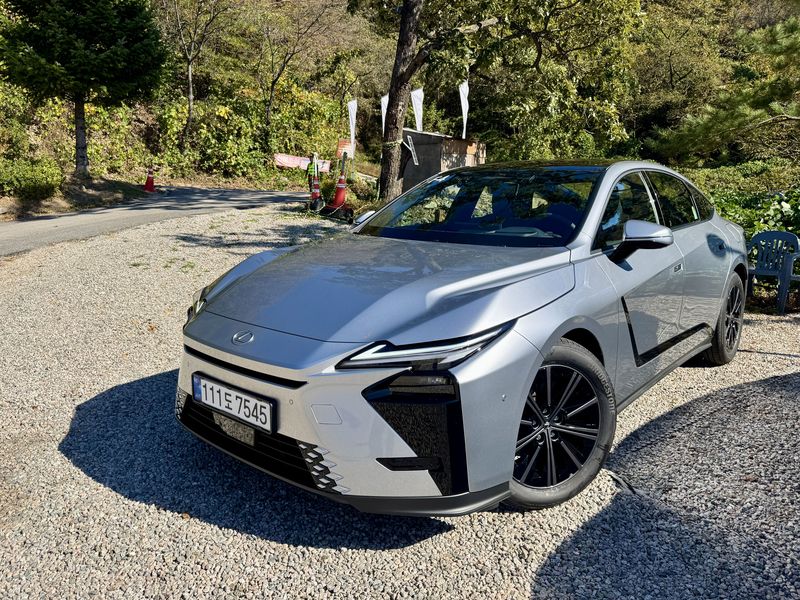
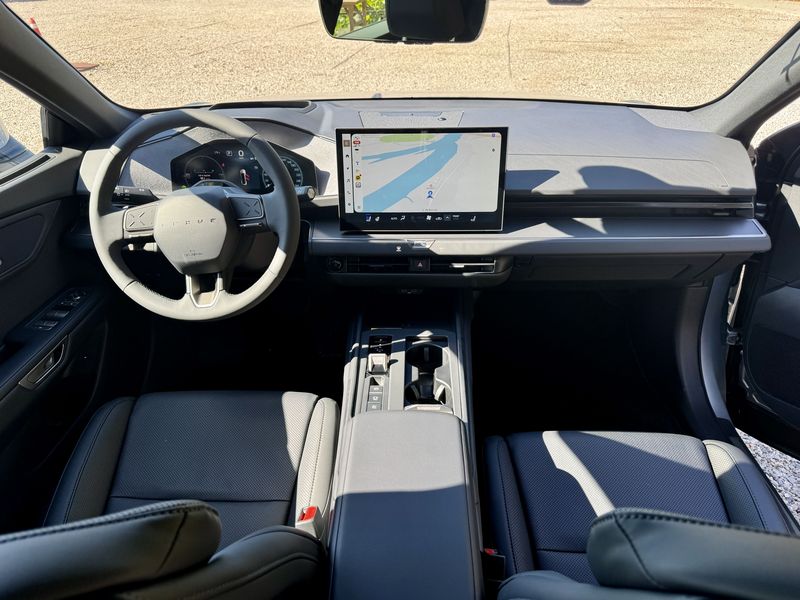
The route was a round trip from CONNECT TO, Lexus’s cultural complex in Songpa-gu, Seoul, to Floating Flow in Nam-myeon, Chuncheon, Gangwon Province. The hybrid was driven on the way there and the battery electric vehicle (BEV) on the way back.
The ES has a long history in Korea. It debuted alongside the launch of Lexus in 1989 and first arrived in Korea in December 2001 as a fourth-generation model. The following year, it ranked first in imported-car sales, and from 2004 through 2006 it held on to the top spot as the best-selling imported model for three consecutive years. In 2012, the first hybrid ES 300h was introduced. After 25 years, the ES has introduced its first model without an engine in its eighth generation. There are nine grades in all: four hybrids and five EVs.
The body has grown substantially. It measures 5,140 mm in length, 1,920 mm in width and has a 2,950 mm wheelbase—up 165 mm, 55 mm and 80 mm, respectively, over the previous generation. At the front, the outline of the spindle grille has been extended across the bumper and hood to create a “Spindle Body,” and the car gets “Twin L Signature Lamps” that combine the daytime running lights and turn signals. At the rear, a single horizontal lamp, integrated with the Lexus logo, stretches across the car.
The new ES has one key challenge: delivering the same ride quality with two different powertrains. Under its “multi-pathway” strategy, Lexus has introduced both hybrid and electric versions. They share the same foundation. Built on a newly designed GA-K platform that accommodates both powertrains, the cars have MacPherson struts up front and, for the first time in an ES, a five-link multilink suspension at the rear. The body joints have been made tighter, and a special adhesive that absorbs vibration has been applied beneath the seats.
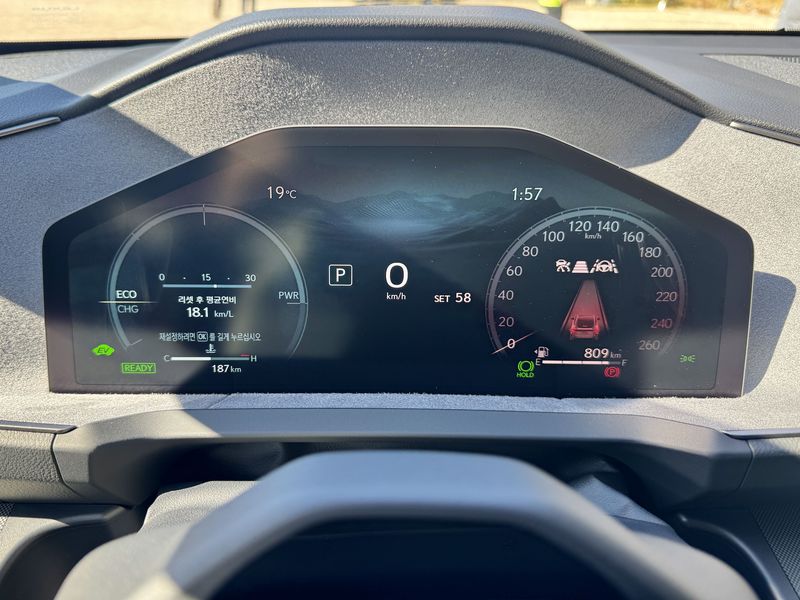
The ES 350h AWD driven on the way there pairs a 2.5-liter inline-four engine with a sixth-generation hybrid system to produce a total system output of 247 hp. It is the first ES hybrid to feature the E-Four all-wheel-drive system. The motor handles most acceleration first, keeping engine revs in check. When the accelerator is pressed, speed builds before the engine noise rises. A dedicated sound-absorbing structure to reduce intake and exhaust noise, along with active engine noise control, keeps the cabin from changing much even when the engine kicks in. Average fuel economy to Chuncheon was 18.1 km/L, close to the official combined figure of 18.3 km/L.
The EV takes a different approach on the return trip. Its 74.69 kWh battery sits low in the floor, and a full underbody cover spanning the entire underside also smooths airflow beneath the car. With no need to block engine noise, the focus is instead on keeping outside sounds out. Acoustic glass is fitted only in the front row of the hybrid, but in both the first and second rows of the EV. The goal is the same, but the sounds that need to be blocked differ, so the treatments have been tailored accordingly. The underside also features Lexus’s first UMVG fin.
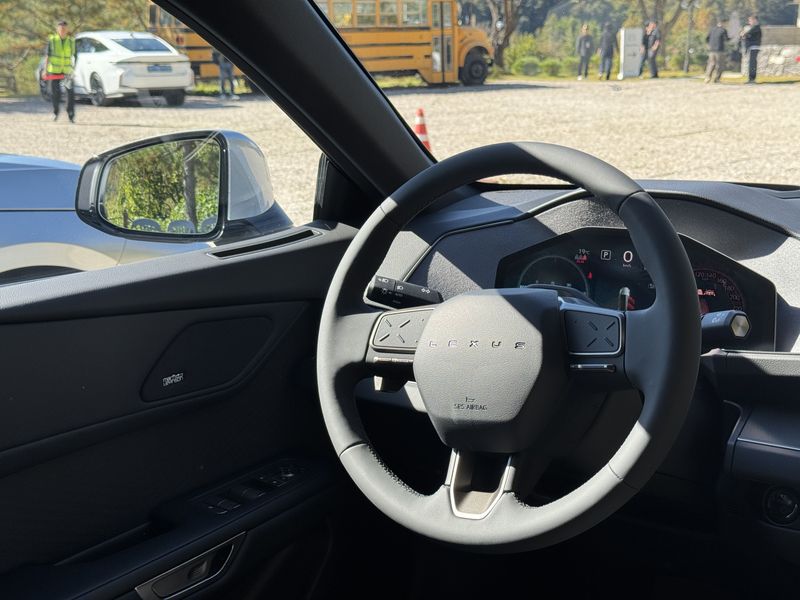
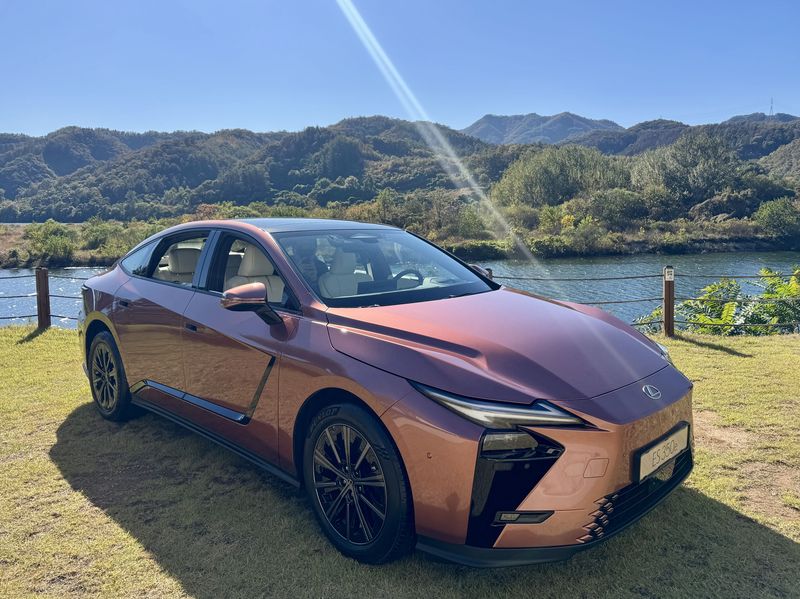
What stood out about the EV was what happened when I lifted my foot off the accelerator. The car didn’t immediately dip forward. Deceleration built steadily over several beats. I switched straight to it after getting out of the hybrid, but my right foot had nothing new to learn. On winding roads, its low center of gravity became apparent. The body took longer to start leaning, and the car changed direction precisely in response to how much I turned the steering wheel.
The cabin has a 12.3-inch display in front of the driver and a 14-inch center display. The standout feature is the “Responsive Hidden Switch,” which is being introduced as a world first. Normally, it is part of a smooth, seamless surface, but when a hand approaches, a function icon lights up in that spot. Pressing it with a fingertip produces a brief, firm response. That short tactile feedback feels satisfying. When the icon disappears, the surface returns to its seamless appearance, with the panel edges finished in crisp, clean lines. Lexus describes the feature as an expression of its Omotenashi philosophy of hospitality.
There are a few things to keep in mind, though. Even within the ES lineup, the car differs by grade. Electronically controlled suspension (AVS), HD Adaptive High Beam and soft-close doors are available only on EV grades Luxury and above. The head-up display and 17-speaker Mark Levinson system are also reserved for Luxury and above. The Rear Comfort Package, which combines reclining rear seats, an ottoman and massage functions, is exclusive to the ES 350e VIP. Weight also differs. Comparing only the two cars driven, the EV weighs more than 300 kg extra.
The EV is priced at 71.6 million–84.9 million won, while the hybrid costs 72.9 million–80.8 million won (including VAT, based on a 5% individual consumption tax rate). Looking only at starting prices, the ES 350e Premium EV is 1.3 million won cheaper than the ES 350h Premium hybrid. Lexus has also introduced a financing program for 350e Premium buyers that guarantees a 50% residual value (35.8 million won) after three years.
The cars were switched between the outbound and return trips, but from the driver’s seat they were harder to tell apart than expected. What ultimately separates them is outside the driver’s seat: the numbers on the price tag, and whether there’s a charger in the home parking lot.
[email protected] Kim Dong-chan Reporter