Genesis lets BMW close in at home, with the gap plunging from 30,000 to 5,000
- Input
- 2026-11-09 06:29:00
- Updated
- 2026-11-09 06:29:00
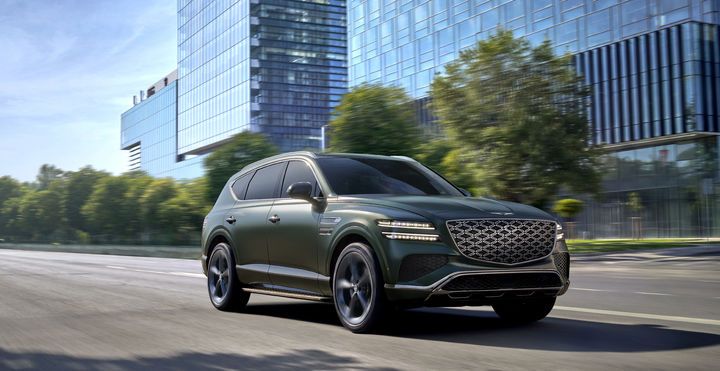
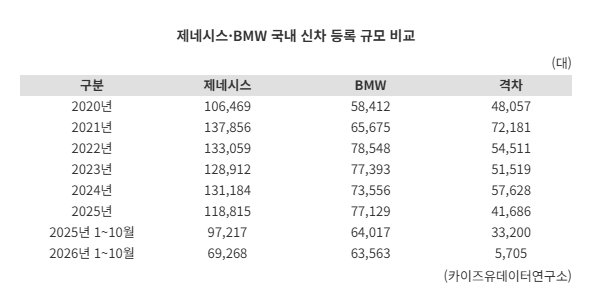
According to the Carisyou Data Research Institute on the 9th, new Genesis registrations in January–October this year totaled 69,268, down 28.7% from 97,217 in the same period last year. The decline far outpaced the 1.9% drop in the domestic passenger-car market as a whole. Hyundai Motor Company’s own sales figures also show that domestic Genesis sales in January–October fell 29.4% to 68,683.
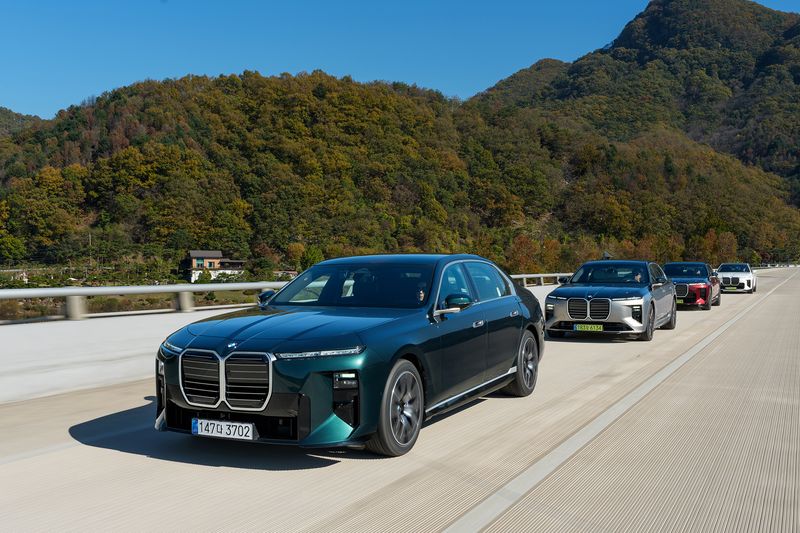
BMW recorded 63,563 units over the same period, holding close to the 64,017 units registered a year earlier, with a decline of 0.7%. The gap between the two brands narrowed from 33,200 in January–October last year to 5,705 this year. By month, BMW first moved ahead of Genesis in May and maintained its lead for four consecutive months, from July through October.
Since 2020, Genesis has sold at least 40,000 more vehicles annually than BMW. Last year, however, Genesis registrations fell 9.4% year on year to 118,815, while BMW’s rose 4.9% over the same period.
Registrations fell across the board among key models, including the GV80 (-35.3%), G90 (-34.3%), G80 (-28.4%) and GV70 (-24.0%). The G80, Genesis’s flagship sedan, trailed the Mercedes-Benz E-Class in monthly registrations for three consecutive months, from August to October. In October, the E-Class recorded 3,683 units, compared with 1,675 for the G80—more than twice as many.
This year’s weakness became particularly pronounced as supply disruptions intensified following strikes in the second half. Earlier, a fire at an engine-valve supplier in the first half had also reduced production of high-margin models, including Genesis vehicles. After wage negotiations stalled in July, the Hyundai Motor Company Labor Union began a partial strike. From July 20, it extended the stoppage to four hours per shift, or eight hours a day. Production disruptions continued as the summer break from August 3 to 7 also took place.
Then, on August 21, the union staged its first full-scale, eight-hour strike since 2016, halting production lines for 16 hours. Including that strike, Hyundai Motor Company’s cumulative production disruption this year is estimated to have topped 55,000 vehicles. As a result, the company’s domestic sales in August plunged 41.1% year on year, while Genesis registrations that month hit a yearly low of 4,441.
Demand from customers waiting for the hybrid launch also had an impact. On the 6th of last month, Genesis launched its first hybrid, the GV80 Hybrid. Hybrids accounted for 26.7% of domestic new-car sales in January–October this year, but Genesis had not previously offered a hybrid lineup. The wait for delivery of the GV80 Hybrid is around three months, making a lag inevitable before the impact of the launch shows up in actual sales.
An industry official said, “Since BMW held close to its level from the previous year, factors specific to the brand weighed more heavily than the market slowdown,” adding, “The year-end ramp-up in GV80 Hybrid deliveries is expected to be the turning point that determines whether Genesis rebounds.”
[email protected] Kim Dong-chan Reporter