U.S. Democrats’ data center regulations won’t last long in the U.S.-China race for AI supremacy
- Input
- 2026-11-06 17:10:53
- Updated
- 2026-11-06 17:10:53
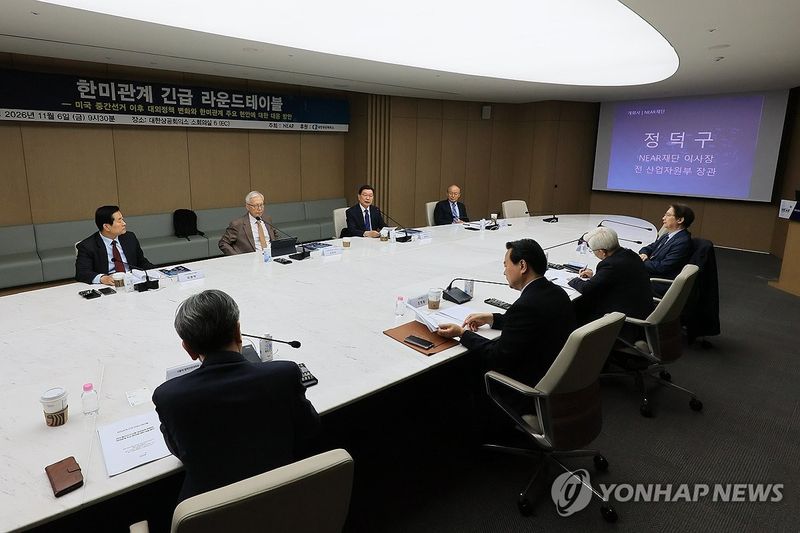
Professor Kim Byeong-yeon of Seoul National University’s Department of Economics said at a discussion on the U.S. midterm elections hosted by the NEAR Foundation on the 6th, “There are predictions that if Democratic governors regulate the construction of AI data centers, semiconductor demand will fall and this could affect the share prices of Samsung Electronics or SK hynix, but I see things somewhat differently.”
Professor Kim said, “Data centers are now at the heart of U.S.-China technological competition—the competition for supremacy,” adding, “If the United States cannot build many data centers, it will fall further behind China in the competition.” He continued, “Voters or the Democratic Party may be calling for regulation now, but as time passes, they will recognize that this is a matter of national survival,” raising the possibility that the political establishment’s stance on regulation could change.
He also cited the case of U.S. financial regulation around 2008. Recounting his experience meeting a U.S. senator who was preparing legislation to regulate Wall Street after the global financial crisis, Professor Kim said, “At the time, the senator said Wall Street was the goose that lays the golden eggs for the United States and asked what politician would regulate it, adding that even if a bill were actually drafted, it would be considerably watered down.” The point was that the more central an industry is to the U.S. economy and national competitiveness, the harder it is for politicians to push through stringent regulations.
He also stressed that technical solutions would be possible even if data center construction were restricted. “If they can’t build large centers, they can build smaller ones and connect them, or move to on-device computing—there are technological workarounds,” Professor Kim said, predicting that tighter regulations would not immediately lead to slower growth in the AI industry.
He also noted that both the United States and China face structural problems such as unemployment, inequality and government debt, making economic growth through AI crucial. “If AI drives rapid economic growth, inequality can also be reduced, and the ratio of government debt to GDP can fall,” Professor Kim said, predicting that immediate restrictions on data centers would be unlikely to impede U.S. technological development over the medium to long term.
[email protected] Jiwon Song Reporter