Semiconductor Rebound or Sector Rotation? Securities Analysts Split on Post-Midterm Market Rout
- Input
- 2026-11-06 15:11:17
- Updated
- 2026-11-06 15:11:17
[Financial News] Views are divided in the securities industry over the path to a rebound in the Korean stock market following the U.S. midterm elections. Democrats’ control of Congress has heightened concerns about artificial intelligence (AI) regulation, but some analysts say restrictions on China’s technology and falling oil prices and interest rates could create an opportunity for Korea’s semiconductor industry. Others urge caution, saying that with policy uncertainty likely to persist, investors should respond to sector-by-sector rotation rather than bet on gains in the broader indexes.
According to financial investment industry sources on the 6th, market experts identified data-center regulation and movements in oil prices and interest rates as key factors for the Korean stock market following the midterm elections. However, they differed in their assessments of the strength of a semiconductor rebound and when to increase investment allocations.
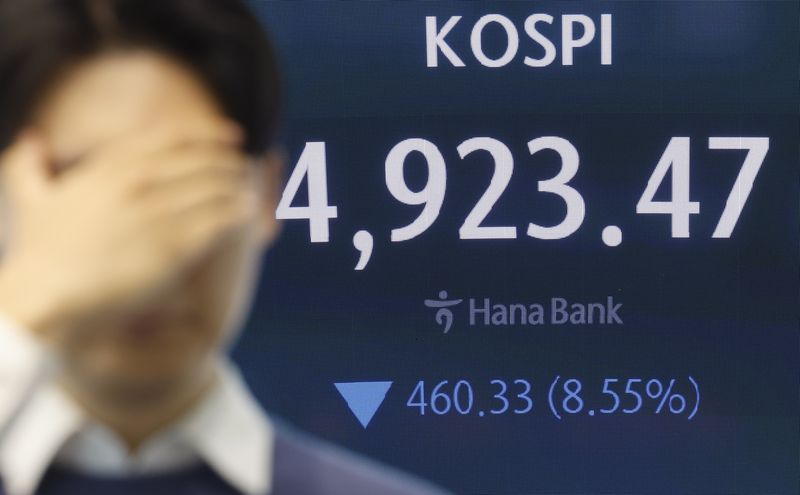
On the 5th, KOSPI and the KOSDAQ index fell 5.28% and 5.11%, respectively. The declines reflected concerns that construction of new data centers could be delayed, as the U.S. Democratic Party took control of both chambers of Congress and Democratic figures replaced governors in major data-center investment locations such as Texas.
At 9:03 a.m. that day, KOSPI fell as low as 4,924.61, down 459.19 points (8.52%) from the previous trading day’s close of 5,383.80, triggering a Level 1 circuit breaker. It was the 11th activation this year and the 17th on record. A sell-sidecar was also triggered in the KOSDAQ market.
Lee Sang-jun, an analyst at NH Investment & Securities, forecast that stock prices would rebound, led by semiconductors, if concerns over data-center regulation eased. He said the temporary suspension of new approvals being pursued by Democratic Party election winners was different from a permanent ban on construction, and that Democrats had little incentive to constrain the development of their own AI industry amid the U.S.-China competition for AI dominance.
The analyst said, “Korea could instead benefit more as technology restrictions on China are tightened,” adding, “If Democrats’ control of Congress gives momentum to discussions of restrictions on China, such as reviews of advanced AI chip exports and limits on Chinese semiconductor companies’ access to equipment, that could improve the competitive environment for Korea’s semiconductor industry.”
Yuanta Securities Korea Co., Ltd. also rejected interpreting the sharp drop in stock prices as signaling the end of the AI investment cycle. Lee Jae-won, an analyst at the firm, said, “It is important to distinguish between delays in construction starts due to tighter regulation and actual cancellations of orders for servers and memory.” He added that “the risk of order delays has increased for companies supplying new facilities, including semiconductor and power-equipment firms, but there may be a gap between the concerns reflected in the market and actual damage to earnings.”
Citing data from semiconductor analysis firm SemiAnalysis, the analyst said that about 75% of the capacity planned for major data centers for 2027 was already under construction. On that basis, he recommended maintaining holdings in core stocks, while deciding whether to increase allocations after checking for downward revisions to 2028 earnings-per-share (EPS) forecasts and signs that credit risks among AI companies had eased.
Daol Investment & Securities Co., Ltd., by contrast, said it was difficult to expect a trend reversal in the Korean stock market based solely on the midterm election results. Cho Byeong-hyeon, an analyst at the firm, said, “Midterm elections are an event that adjusts the intensity of policy, not one that changes its direction.” He added, “Even with Democrats in control of both chambers, there are limits to policy change, since they have not secured the 60 Senate seats needed to overcome a filibuster or a two-thirds majority in both chambers to override a presidential veto.”
Cho forecast a KOSPI range of 5,200–6,400 through the end of the year. He said easing pressure from oil prices and interest rates could support a floor for the market, but that concerns over AI regulation and delays in data-center investment could weigh on sentiment toward semiconductors, warranting a conservative view of the upside when stocks rebound. He also recommended approaching semiconductors through sector rotation and short-term trading rather than expecting an immediate sustained uptrend.
[email protected] Choi Doo-seon Reporter