“To expand public rental housing, LH must receive support for operating costs”
- Input
- 2026-11-06 15:30:49
- Updated
- 2026-11-06 15:30:49
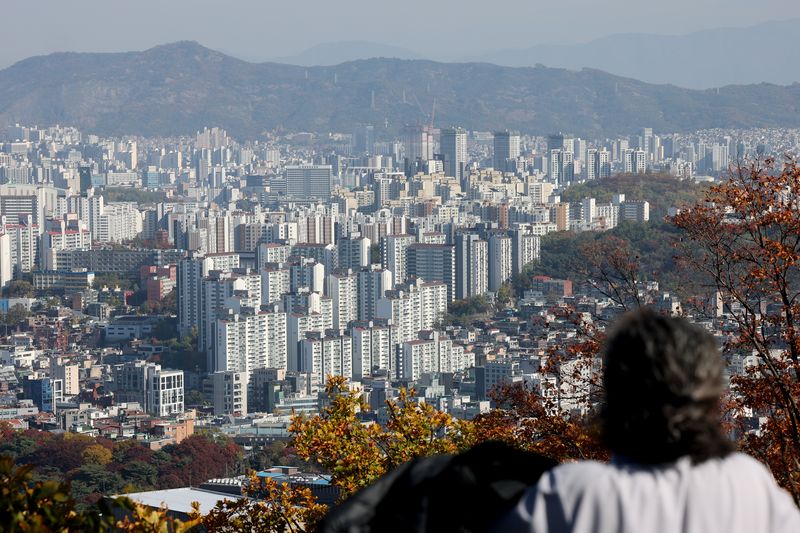
A policy forum on “Ways to sustainably expand the supply of public rental housing,” hosted by Democratic Party of Korea lawmakers Choi Ki-sang, Oh Ki-hyeong and Kim Nam-geun, along with LH, was held on the 6th at the National Assembly Members' Office Building. A fiscal support system to underpin expanded supply was a key topic.
Kim Nam-geun, a member of the National Assembly of the Republic of Korea’s Land, Infrastructure and Transport Committee, said that support from the Housing and Urban Fund covers only 52% of LH’s project costs for purchasing public housing and 57% for construction. He said that covering the shortfall by issuing bonds increases the debt burden and reduces LH’s capacity to pursue additional supply.
Kim said he was seeking a budget increase during the current budget review to raise the share of LH’s public housing project costs covered by support to at least 70%.
The presenters stressed that, alongside increased support during the construction and purchase stages, measures are also needed to address losses that accumulate in the course of operating rental housing.
According to data presented by Cho Seung-yeon, a senior researcher at LH’s Land and Housing Research Institute, LH’s operating losses on rental housing grew about 5.5-fold, from 500 billion won in 2013 to 2.77 trillion won last year. Cumulative losses over the same period reached 18.4 trillion won. The gap between revenue and expenditure widened as costs rose by an annual average of 10.4%, while rental income increased by 5.9%.
The analysis found that support is concentrated on equity contributions and loans during the construction stage, while measures to systematically cover operating losses are lacking. As the number of aging homes increased, repair spending last year reached about 1.6 trillion won, including central government support. Critics also say that the approach of covering rental losses with profits from land sales and housing sales is reaching its limits.
Cho also presented a preliminary estimate that annual operating losses could reach 4 trillion to 4.9 trillion won in 2030. He estimated losses at 4 trillion won if the increase in repair costs eases, and at 4.9 trillion won if the current trend continues.
Bae Gwang-bin, a professor in the Department of Public Administration at Dongguk University, proposed introducing a compensation system based on public service obligations (PSO) as an alternative. The idea is to compensate operators for the portion of the costs required to fulfill their obligations that cannot be covered by rental income or existing public support, given that the government sets the eligible tenants, rents and quality standards, and entrusts operators with running public rental housing.
Bae estimated compensation at about 1 trillion won using a cost-allocation method based on 2025, assuming the government covers all construction costs. Under a method based on the difference between policy-set rents and actual rents, the estimated annual average for 2021–2025 was about 1.68 trillion won. The research team cautioned that the two estimates are difficult to compare directly because they use different calculation concepts and reference periods.
Measures to define and verify the scope of compensation were also proposed. Bae stressed that “compensation should cover efficient net costs, not accounting deficits.” He said that costs and revenue directly related to rental operations should be accounted for separately, and existing support deducted to prevent double compensation. He also proposed establishing standard repair and operating costs by housing type and years elapsed, and having an entity independent of the operator verify the compensation amount.
One proposal was to add provisions on public service obligations and the basis for state compensation to the Special Act on Public Housing, and to require that the calculated compensation be included in the budget. The idea is to introduce the system in stages, starting with rent discounts and repairs to aging homes, while applying common standards to LH and local housing corporations.
There was also a call to assess public rental housing by including the benefits tenants receive. In an analysis of the housing benefits of LH’s newly built and acquired rental housing, presented by Bae, the average annual savings on housing costs for households moving in during 2021–2025 were calculated at 4.05 million won per unit. The figure was based on a comparison between nearby market prices and actual rents; rents stood at 45.5% of market levels.
Kang Mi-na, a senior research fellow at the Korea Research Institute for Human Settlements, called for improvements in location and quality alongside expanded supply. She proposed securing a supply base in the greater Seoul area, near transit stations and close to workplaces, and adjusting project costs to reflect rising construction and land costs. She also said that performance should be tracked at each stage, from supply planning through construction starts, completion and move-ins, and that tenant waiting times and residential satisfaction should be assessed along with the volume of supply.
[email protected] Kim Hyeong-gu Reporter