“60% say they’d consider working for an SME”—but why isn’t the annual salary disclosed?
- Input
- 2026-11-07 07:00:00
- Updated
- 2026-11-07 07:00:00
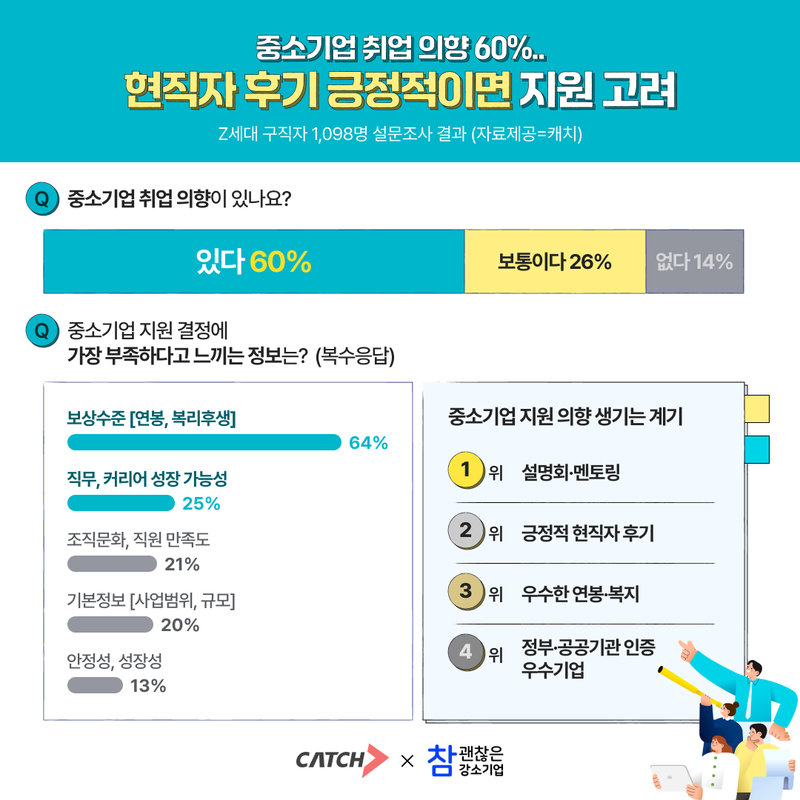
According to a survey on willingness to work for SMEs, conducted by the Korea Federation of SMEs and recruitment platform Jinhaksa Catch among 1,098 university students and job seekers, 60% of respondents said they were willing to work for an SME. Fourteen percent said they were not, while 26% said they were undecided.
However, a lack of information proved to be an obstacle when it came to deciding whether to apply.
When asked which information they felt was lacking when deciding whether to apply to an SME (multiple responses allowed), the largest share, 64%, cited “compensation (salary and benefits).” This was followed by “job and career growth potential” (25%), “workplace culture and employee satisfaction” (21%), and “basic company information (business, size and location)” (20%). Another 13% said information about business stability and growth was lacking.
Difficulties during the hiring process also centered on problems with information and communication.
The most common response, at 38%, was “insufficient information about the hiring schedule and process,” while 33% said “it is difficult to confirm employment terms after receiving an offer.” These were followed by insufficient information on results and feedback (21%); a lack of information about the company and role (20%); the burden of attending interviews, including travel and costs (15%); and difficulty coordinating interview schedules (15%).
Salary was also the most important factor job seekers considered when applying to SMEs. Benefits, a stable financial structure, career growth potential, and technological strength and competitiveness followed. In other words, they weigh not only pay but also the conditions for working long term and the company’s growth prospects.
Direct contact with a company was the factor that turned interest in an SME into an actual application. The most common reasons job seekers became willing to apply to an SME they had not previously been interested in—each cited by 32%—were “getting to know the company firsthand through an information session or mentoring” and “positive reviews from current employees.” These were followed by good salary and benefits (24%); recognition as an outstanding company by the government or a public institution (22%); and the opportunity to work in a field or role of interest (20%).
Kim Jeong-hyeon, head of Jinhaksa Catch, said, “For job seekers to decide whether to apply to an SME, they need to be able to find sufficient information not only about salary and benefits but also about the company and the role.” He added, “It is important to introduce companies up close through information sessions, mentoring and content featuring current employees, clearly explain hiring schedules and procedures, and share the results of applications without exception to provide a positive hiring experience.”
Meanwhile, the Korea Federation of SMEs operates the “Really Good Small Giants” platform to connect outstanding SMEs with young job seekers. It selects companies based on factors such as financial indicators, pay levels, number of employees, years in business, and new-hire and employee turnover rates, and provides company and recruitment information. About 13,000 companies were selected this year.
[email protected] Lee Ju-mi Reporter