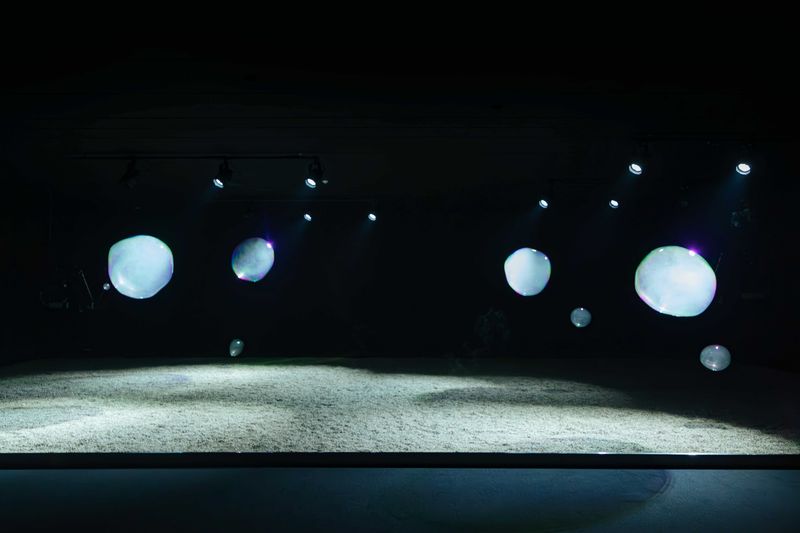
A.A. Murakami’s ‘Beyond the Horizon’ on display at Global Sae-A Art Space at Paradise City in Incheon. Photo: KKACHI-APT, courtesy of Paradise City © A.A. Murakami. Artwork commissioned by M+ Museum. A large soap bubble rises in the darkness and bursts, sending mist scattering into the air. White foam blooms like a flower at the tips of the branches of a tree-shaped structure, then falls. The scene unfolding at Paradise City on Yeongjong Island in Incheon is a moment of nature created through technology.Paradise City said on the 7th that A.A. Murakami’s first solo exhibition in Korea, ‘New Nature,’ is on view at Global Sae-A Art Space. The exhibition, which opened last September, runs through February 10 next year. Its theme is ‘Nature after Nature.’ Through soap bubbles, mist and shell patterns, it explores nature’s emergence, transformation and disappearance.
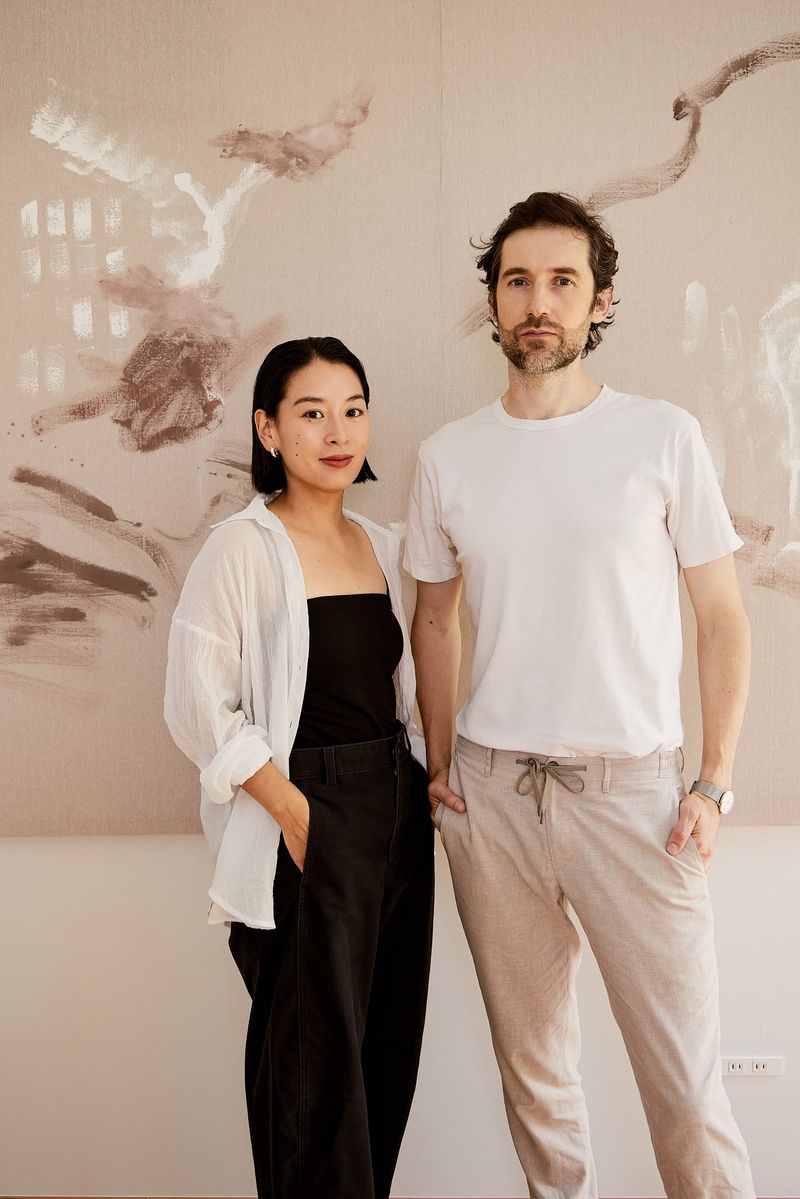
■ Fleeting Moments Shaped by Soap Bubbles and MistA.A. Murakami is a duo comprising Azusa Murakami, who is from Japan, and Alexander Groves, who is from the United Kingdom. Based in London and Tokyo, they call their work combining matter that does not hold a fixed form with cutting-edge technology ‘Ephemeral Tech.’
The two artists bring nature’s ever-changing processes into the exhibition space. Soap bubbles swelling and mist dispersing actually happen in the same space as the visitors. Light joins the movement of the bubbles and mist, changing the scene in the space.
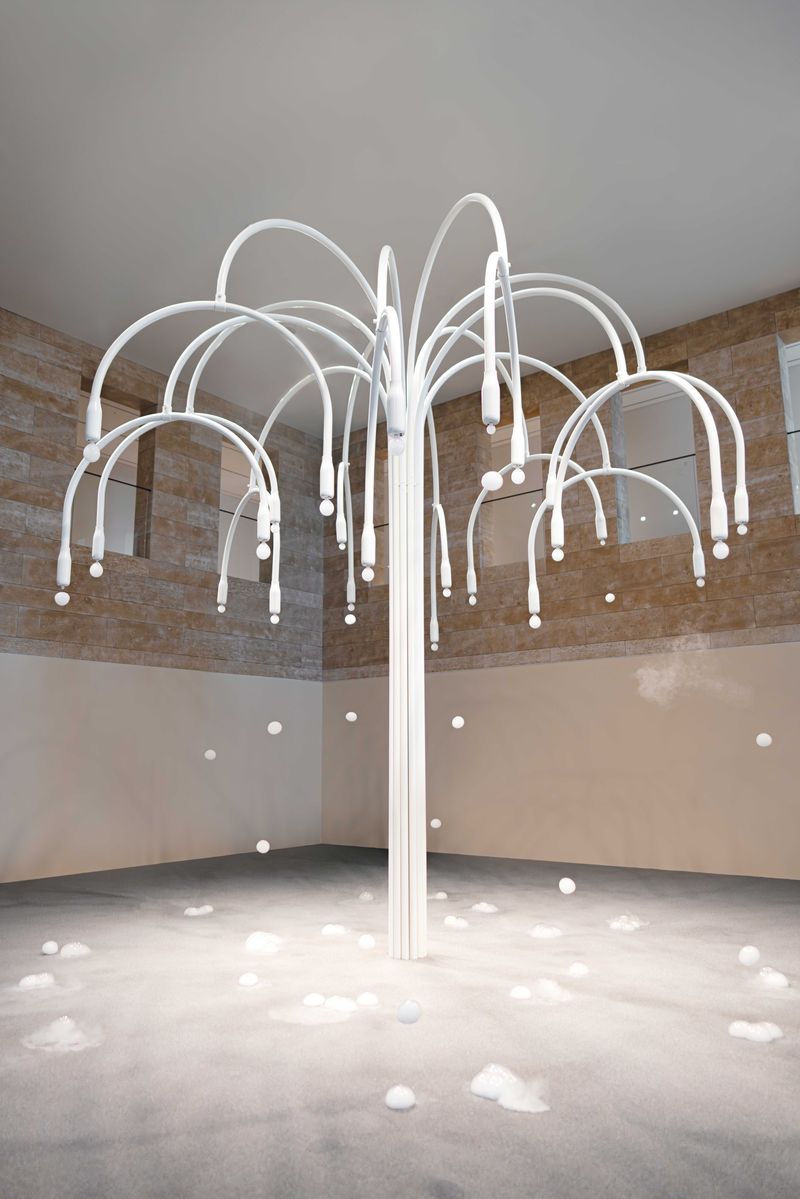
A.A. Murakami’s ‘New Spring,’ installed at Paradise City’s Global Sae-A Art Space. Soap bubbles bloom at the tips of the branches of a tree-shaped structure. Photo: KKACHI-APT, courtesy of Paradise City ‘New Spring’ on the first floor is a tree-shaped structure 6.4 meters tall. Soap bubbles filled with mist bloom at the tips of its 24 branches and fall downward. Inspired by the moment cherry blossoms fall, the work repeatedly shows white bubbles forming and disappearing. It is one of the duo’s signature works, first presented at Milan Design Week in 2017.
In ‘Beyond the Horizon,’ enormous soap bubbles filled with mist drift through a dark space. When a bubble bursts, cloud-like mist spreads and overlaps with light, transforming the atmosphere. The work was commissioned by Hong Kong’s M+ and shown at the 2024 exhibition ‘Floating World.’
Even when the mechanical device repeats the same movement, the shape of the clouds and the appearance of the light change. Rather than following a single completed form, visitors watch changes emerge and disperse before their eyes. The work consists of the soap bubbles themselves and the time it takes for them to disappear.
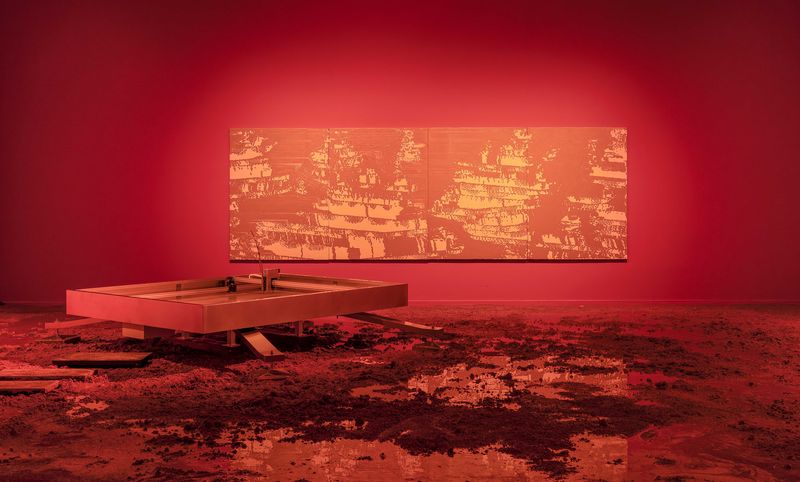
A view of A.A. Murakami’s ‘Mud Paintings From ‘A Thousand Layers of Stomach’ Series.’ Photo: KKACHI-APT, courtesy of Paradise City ■ A Machine That Layers the Time of ShellsOn the second floor, visitors can see ‘Mud Paintings From ‘A Thousand Layers of Stomach’ Series,’ unveiled for the first time anywhere in the world as part of this exhibition. In a reddish-hued space, mud and mechanical devices sit alongside panels bearing layers of patterns.
The starting point was a Manila clam shell the artists found while eating miso soup in Tokyo. The two artists were drawn to the intricate patterns, which vary from one clam to another. They interpreted the way shells form patterns as they grow as a biological algorithm, then translated it into computer code.
The autonomous mud-painting machine in the center of the exhibition space follows this code, laying down patterns layer by layer. A drawing device makes lines across mud reminiscent of a tidal flat, leaving the passage of time as new patterns. The work translates the way clams grow their shells over a long period into the movement of a machine and the surface of a painting.
Azusa Murakami (left) and Alexander Groves of the artist duo A.A. Murakami. Photo: Homin Jang, courtesy of Paradise City If creation and disappearance intersect in fleeting moments on the first floor, the second floor reveals traces of accumulated change. Clouds that quickly disperse and patterns that build up layer by layer show different spans of time. The two floors are connected by the artists’ interest in using technology to realize the principles that drive nature.
Their works are held in the permanent collections of the Museum of Modern Art in New York (MoMA), the Georges Pompidou National Art and Culture Centre in Paris, M+ in Hong Kong and other institutions. Visiting hours are 10 a.m. to 8 p.m., with admission closing at 7:30 p.m. The venue is closed every Tuesday.
[email protected] Jang In-seo Reporter