“The first criterion is to help patients immediately”: The philosophy of Professor Heo Chang-hoon, a patient-centered pragmatist [Interview with 100 Hair-Loss Experts]
- Input
- 2026-11-07 09:00:00
- Updated
- 2026-11-07 09:00:00
When things that should normally be there are absent, their absence brings a sense of loss. Hair loss, which has emerged as a defining issue of our time, can cause a profound and heavy sense of loss. To face hair loss head-on and overcome it, we are meeting 100 hair-loss experts, beginning with a medical doctor who helped pioneer the first generation of hair-loss treatment. We hope you look forward to the new stories that will unfold beyond the two words “hair loss.” [Editor’s note]
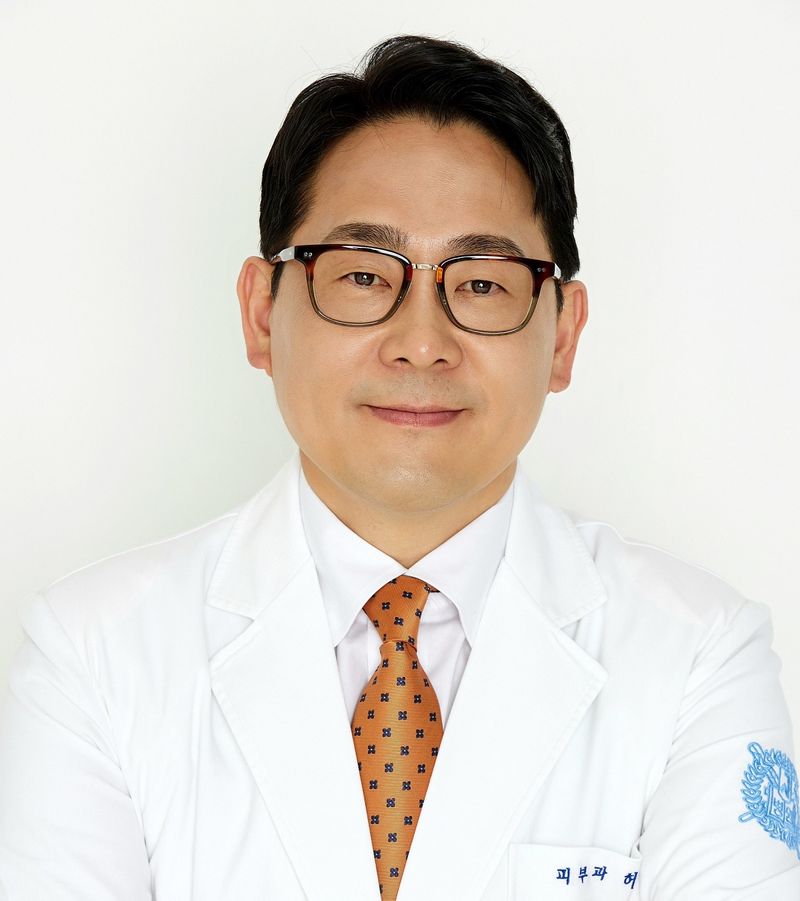
[Financial News]“We must always ask ourselves: Are we providing patients who walk through the doors of our clinics with an environment where they can receive treatment comfortably, effectively and without undue burden?”Professor Heo Chang-hoon of the Department of Dermatology at Seoul National University Bundang Hospital thinks from the patient’s perspective. He considers the side effects patients sitting before him must endure, the high cost of treatment, and even the long waits outside the clinic. He is willing to look into the gaps that existing systems fail to reach and seeks research that can offer patients practical help. These qualities helped lead Professor Heo to the position of vice chair of the world’s most authoritative body in the field, the International Federation of Hair Research Societies. We spoke with Professor Heo—a leading authority in clinical hair research in Korea, a global leader, and a “patient-centered pragmatist”—about the challenges facing hair-loss treatment and the way forward.

First Asian elected IFHRS vice chair... K-medicine becomes a global bridge
— Last September, you became the first Asian to begin a term as vice chair of the International Federation of Hair Research Societies.▲ The International Federation of Hair Research Societies (IFHRS) is an international organization founded by Europe, the United States, Japan, Australia and the Korean Hair Research Society. Like the United Nations (UN), which brings countries together to promote cooperation, it is arguably the world’s most authoritative organization in the field of hair research.A proposal to form an executive board comprising a chair, vice chair, secretary-general and immediate past chair was recently approved, creating the position of vice chair. Last May, I successfully held the World Congress for Hair Research as a co-chair, and was elected vice chair following numerous recommendations citing my extensive clinical experience. This is the first time an Asian has joined the executive board. Since vice chairs are normally next in line to become chair, I will serve on the executive board for the next nine years as vice chair, chair and immediate past chair.— Is there a goal you hope to achieve for Korea, and Asia more broadly, during your term as vice chair?▲ Until now, the chairs of the International Federation of Hair Research Societies have all come from the West. There have been few opportunities for Asia to make its voice heard. Korea, China and Japan are in fact world leaders in basic medicine and clinical research, but because they are non-English-speaking countries, language barriers often prevent them from engaging in sufficient debate and discussion. I hope to serve as a bridge in my role as vice chair. I also expect the executive board to take an open approach toward non-English-speaking countries.— Asia’s voice is growing in medicine. Did you see that firsthand at the World Congress for Hair Research in May?▲ More than 1,700 people attended the World Congress for Hair Research, held in Seoul last May. It was the largest congress in the event’s history, with more than 400 attendees from China alone. That is an overwhelming turnout, considering that typically fewer than 1,000 people attend when it is held in the West. The size of a congress alone cannot be used to make a straightforward comparison of academic standards across continents, but it is encouraging that such a wide range of excellent research was discussed.
As the global popularity of K-beauty shows, Korea’s international standing has risen, and it is now at the global top level, particularly in clinical hair research. Of course, there are still challenges to address in areas such as drug development and commercialization, building on the clinical experience we have accumulated.— What, specifically, are the challenges that need to be addressed?▲ Koreans develop new drugs capable of astonishing the world through their distinctive originality and drive. I feel proud to be Korean. However, our country’s strict regulations can also be a barrier to bringing new drugs into clinical use quickly. For example, off-label use is common in other countries, where doctors are granted a degree of clinical autonomy. In Korea, by contrast, a treatment cannot be used until it has been approved for that indication, even when its efficacy is expected.
Of course, this strict regulatory environment can also be an advantage. As the saying goes, it is better to take the hit first: treatments that pass Korea’s rigorous regulatory system tend to clear approval processes overseas more easily and quickly.
Korea was the first country in the world to approve dutasteride... Treatment advances with low-dose and combination drugs that reduce side effects
— I’d like to hear about hair-loss treatments developed independently in Korea or developed here first.▲ A leading example is dutasteride, which blocks the hormone dihydrotestosterone (DHT), a factor that causes hair loss. Korea was the first country in the world to approve it for the treatment of alopecia. The same is true of the “0.2 mg low-dose formulation,” developed with a reduced dose to take dutasteride’s side effects into account. Korea is also the only country to have approved, for benign prostatic hyperplasia, a combination drug that pairs dutasteride with tadalafil, an ingredient used to treat erectile dysfunction. In addition, long-acting treatments whose effects last for three months after an injection in the buttock, as well as RNA therapies, were first developed in Korea and are now undergoing clinical trials.Other countries have systems that allow prescriptions without approval for a specific indication, so approval itself may be less important there. For patients, however, it matters that they can receive treatments proven through officially recognized research and rigorous clinical trials.— As you mentioned, new treatments and approaches, including low-dose dutasteride, are becoming more common.▲ Treatment for common hair loss—that is, androgenetic alopecia—is divided into hormone-based and non-hormonal therapies. Hormone-based treatments suppress dihydrotestosterone (DHT), which causes hair follicles to shrink, allowing the follicles to thicken.
The problem is that hormone-based treatments cause side effects in 1–2% of patients. I expect future treatments to focus on alleviating concerns about side effects, either by changing the route of administration or combining the treatment with drugs that address those side effects.
Examples include oral medications combining DHT blockers with erectile dysfunction treatments, locally administered injections to reduce systemic side effects, and topical treatments. In Korea, clinical trials are currently underway for a treatment that delivers dutasteride in spray form.
Non-hormonal adjunctive therapies, including lasers and toxins... Cell therapy still faces hurdles over cost-effectiveness and regulation
— Which areas of non-hormonal treatment are worth watching?▲ Minoxidil, a leading vasodilator, is the focus of a recent effort by a U.S. pharmaceutical company to develop an extended-release oral formulation designed to release the drug gradually over a long period. Other options worth exploring include low-level laser therapy (LLLT), which boosts blood circulation around hair follicles and stimulates cells; placental injections rich in various antioxidants and minerals; platelet-rich plasma (PRP), which promotes regeneration and growth; and botulinum toxin injections that inhibit transforming growth factor beta 1 (TGF-β1), a signaling molecule that induces the catagen phase of hair growth.However, non-hormonal treatments are adjunctive therapies that help hormone-based treatments work, so it is difficult for them to produce satisfactory results on their own. Many are also costly.— What are the prospects for stem cells or hair-follicle cloning technology?▲ Hair-follicle cloning was already a major topic 10 years ago. I, too, took part directly in numerous hair-follicle cloning studies, and many universities and companies are still researching it. Personally, I think treatments that involve growing cells outside the body and injecting them will take considerable time to commercialize, both because they must meet stringent requirements such as the donor’s age and because of their economic feasibility. Most cell therapies cost tens of millions of won per dose, don’t they? The challenge is how to achieve what is commonly called “value for money.” Even if mass production becomes possible and makes the treatment cost-effective, there are many legal considerations involved in transplanting another person’s cells. This is a challenge faced around the world.
Urgent need to close coverage gaps for JAK inhibitors... “I will continue clinical research that helps patients right away”
— Treatments for alopecia areata are also advancing rapidly.▲ Alongside advances in treatment, patients still face realities that cause inconvenience and confusion. Until now, treatments for alopecia areata in Korea have included steroids, which suppress inflammation and immune responses, and diphenylcyclopropenone (DPCP), a topical immunotherapy. But because DPCP was classified as a “reagent,” problems arose, including cases where hospitals’ treatment fees were considered unfair profits. University hospitals consequently began discontinuing DPCP treatment one after another, and manufacturers have been reluctant to supply it, leaving few places where patients can receive the treatment. Steroids can be an alternative, but their side effects are a significant concern.The same is true of JAK inhibitors, which were said to have opened a new chapter in alopecia areata treatment. These targeted therapies directly address the autoimmune mechanism and are highly effective, but access for patients in Korea remains very difficult.
Before they were covered by national health insurance, the drugs were extremely expensive, with monthly costs exceeding 500,000 won. Even after coverage was introduced, patients have to prove that they meet severity criteria and prior-treatment requirements to qualify. Even patients who previously responded to JAK inhibitors must stop taking them and wait for their condition to worsen again in order to obtain coverage. And even after navigating all the hurdles to qualify, patients can receive coverage for only up to two years, despite the fact that these are treatments they need to take for life. Children under 12 are not covered at all.— Is there a practical alternative to help patients overcome the current situation?▲ Some patients try to reduce their expenses through private indemnity insurance, but those policies have a daily reimbursement limit. Patients must go through the hassle of getting prescriptions every few days even for medication that could be prescribed a month at a time. This can also overload university hospital systems.
In other cases, patients agree to pay the full cost themselves, but if authorities determine during their review that the financial burden on the patient is high, they may consider it excessive prescribing. This kind of discrepancy also affects various innovative treatments. I believe the government is considering these gaps and practical disparities at the national level, including in relation to national health insurance finances.— It is clear that you give considerable thought to patients’ rights and interests. Is your work at Seongnam Citizens Medical Center guided by the same concern?▲ Yes. It is about improving access for patients. At Seongnam Citizens Medical Center, we perform not only hair-loss treatments but also complex surgeries for conditions such as skin cancer. Patients should be able to receive treatment close to home. We live in an era of longer lives. I believe people can fill their remaining years with healthy days if they can see a doctor easily, quickly and comfortably.— What research goals or plans are you determined to achieve in the future?▲ There is just one thing I want: to help patients, in any way I can. When I became president of the Korean Hair Research Society, I said, “I will strengthen clinical research going forward.” Developing new technologies that can be commercialized in the future and gaining academic recognition through papers are both worthwhile, but personally, I have always made what can help patients immediately and directly my first priority.
I will continue practical clinical research that lowers barriers to treatment, eases the burden of side effects and costs, and improves treatment outcomes. I hope my research will be widely used in clinical settings as a tool to ease patients’ suffering.
[email protected] Kim Hyun-seon Reporter