Family of a hero identified by name after 73 years...36 UN veterans to set foot in Korea again
- Input
- 2026-11-06 13:40:25
- Updated
- 2026-11-06 13:40:25
On the 6th, the Ministry of Patriots and Veterans Affairs (MPVA) announced that it would host a return visit from the 8th to the 13th, a six-day, five-night trip, inviting a total of 36 people, including five veterans from six countries that fought under the UN flag and 21 family members of fallen or missing service members. The event, themed “Remembrance and Memory,” takes on special significance with the participation of many family members of key figures whose stories are closely intertwined with Korean military history and Busan’s postwar reconstruction.
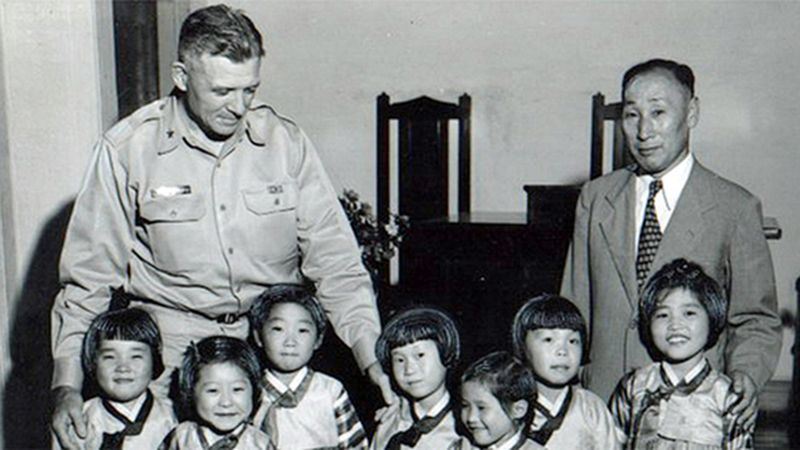
The most notable visitor is John Glass (John Brewer GLASS), a descendant in the main family line of the late General Richard Whitcomb (Richard Seabury WHITCOMB), the former commander of the UN forces’ 2nd Busan Logistics Command and a U.S. Army brigadier general, who devoted his life to helping displaced people after the war and rebuilding Busan and was known as the “father of war orphans.” During the great fire at Busan Station in 1953, General Whitcomb released military supplies in defiance of military law to provide food and tents to displaced people. He is now buried at the UN Memorial Cemetery in Busan. The visit by his descendant, who is carrying on his legacy, shows that the seeds of humanity planted 70 years ago are still alive and thriving.
A special ceremony will also be held to heal historical wounds. Linda Northey (Linda NORTHEY), daughter-in-law of the late Sergeant Donald Northey (Donald NORTHEY) of the British Gloucestershire Regiment, will visit Korea. In November 2024, Northey’s identity was dramatically confirmed 73 years after he was buried as an unknown soldier, and a ceremony was held to rededicate his headstone. Sergeant Northey was killed in the Battle of the Imjin River in April 1951. The family member’s visit to pay respects at the grave of her father-in-law, whose name was finally restored after lying in an unmarked grave, is expected to be the most solemn moment of the event. Priscilla Angier, daughter of Major Patrick Angier, who was also killed in the Battle of the Imjin River, will accompany her.
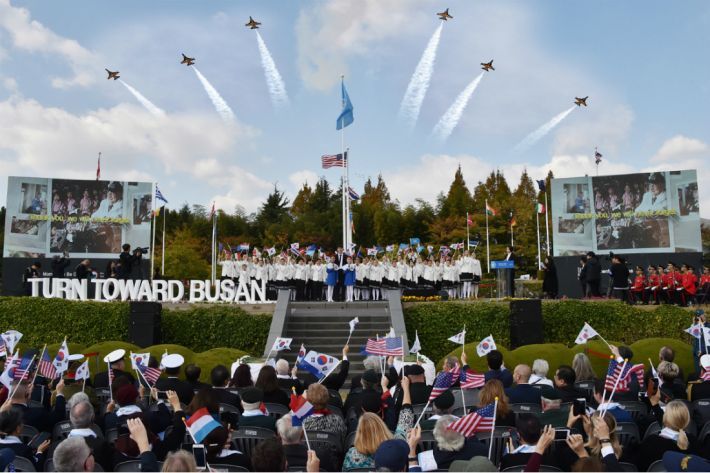
Among the veterans, Canadian veteran Corporal Vincent Courtenay (Vincent Courtenay, 92), who first proposed the annual Turn Toward Busan ceremony, when people around the world observe a moment of silence facing Busan every November 11, will set foot in Korea for this year’s 20th ceremony. Kelly McKeague, director of the U.S. Department of Defense’s Defense POW/MIA Accounting Agency (DPAA), which is responsible for recovering U.S. service members’ remains and searching for the missing, will also accompany the group, further strengthening South Korea–U.S. security and remains-recovery cooperation.
The veterans, including the oldest member of the visiting group, 97-year-old William Walsh (William James WALSH), a former sergeant in the British Army, and 93-year-old Reginald Walmer, who took part in a naval gunfire engagement on the Han River aboard the Australian Navy frigate Murchison, will attend a welcome event at the UN Peace Memorial Hall in Busan, the International Memorial Day ceremony, and a wreath-laying and a visit to pay their respects at The War Memorial of Korea in Seoul over their six-day, five-night trip. They will depart on the 13th.
Kwon Oh-eul, minister of Patriots and Veterans Affairs, said, “The remarkable growth achieved by the Republic of Korea was made possible by the noble courage of UN veterans who crossed borders and rushed here more than 70 years ago,” and stressed, “We will continue to strengthen our veterans diplomacy network so that the history of special friendship and solidarity spanning generations and borders can be carried forward as an asset for the future.”
The heroes who gave their youth 70 years ago for a small, unnamed country in the East, and the legacy they left behind, are now linked in a new historic alliance with the Republic of Korea, which has grown from a recipient of aid into a central pillar of global security.
[email protected] Lee Jong-yun Reporter