Eunma notified of an estimated recapture charge of 2.0044 trillion won; fears of project delays
- Input
- 2026-11-06 11:45:39
- Updated
- 2026-11-06 11:45:39
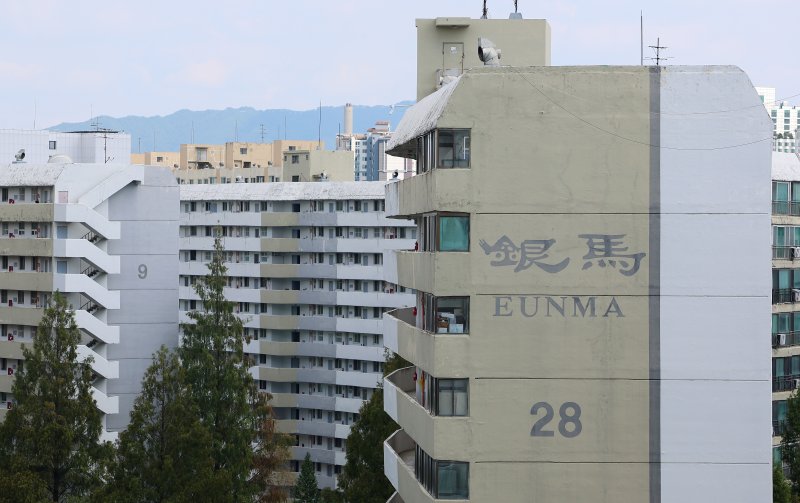
[Financial News] A provisional reconstruction charge totaling more than 2 trillion won under the Reconstruction Excess Profit Recovery System has been notified to the reconstruction association for Eunma Town Apartments in Daechi-dong, Gangnam District, Seoul. The amount is around 463 million won per person. Although this is an estimate ahead of the amount to be finalized after completion, union members are concerned that the project schedule could be affected after they were warned of a recapture charge in the hundreds of millions of won amid mounting construction costs and contribution burdens.
According to the Gangnam District Office and the Eunma Town Apartments reconstruction association on the 6th, the district office sent the union a “Notice of Assessment Criteria and Estimated Amount of Reconstruction Charges” on the 29th of last month. The notice lists the total estimated amount as 2,004,431,880,276 won. The calculation was based on 4,326 people, putting the average estimated amount at approximately 463.34 million won per person. The union informed its members of the details that day.
This notice is not a demand to pay the final charge. It follows the union’s request to the Korea Real Estate Board to verify its calculation of the reconstruction excess-profit charge, which is required for approval of the management and disposition plan. The amount is an estimate of the future burden based on materials submitted after approval of the project implementation plan. The actual amount payable will be determined after reconstruction is complete, taking housing prices, development costs and other factors into account.
Gangnam District said, “At the union’s request, the district office did confirm the amount,” adding, “However, the redevelopment project is still underway, so the size of the recapture charge could change again after completion.”
Eunma Town Apartments is pursuing a reconstruction project that will replace its existing 4,424 units with 5,850 units in buildings of up to 49 stories. The project implementation plan was approved last July, and it must still obtain approval of the management and disposition plan and go through relocation and demolition. Since construction has not yet begun, the amount of the charge could also change depending on future project costs and housing prices.
Union members appear to feel a considerable burden from the estimated amount notification alone. An official from the Eunma Town Apartments association said, “Members are struggling with the contributions, too, and many are selling their homes before the management and disposition plan is approved,” adding, “They were quite shocked by the recapture charge notification, as they hadn’t thought it would actually be imposed.” The official continued, “There are concerns that the project could be delayed because of the project costs.”
The reconstruction excess-profit recapture system collects part of the gains generated by reconstruction as a charge, after deducting normal increases in housing prices and development costs from the overall profit. Since its introduction in 2006, actual cases of charges being imposed have been limited amid repeated deferrals of implementation due to downturns in the property market and discussions about abolishing the system.
The burden of the recapture charge is also coming into view for complexes that have completed construction. Seocho District plans to issue advance notice of the charge to the Banpo Hyundai reconstruction association on the 9th. The complex, now called Banpo Centerville Asterium, was completed in 2021.
The redevelopment industry is calling for improvements to the system, saying that adding the recapture charge to increased additional contributions caused by rising construction costs could make projects more burdensome to pursue. It also argues that the system raises concerns about double taxation because it charges a levy on unrealized gains before a home is sold and imposes capital gains tax when it is sold. Since union members also bear the costs of land contributions and infrastructure installation, the argument is that abolishing the recapture system or easing its burden should be considered in line with policies to expand housing supply.
A Ministry of Land, Infrastructure and Transport official said, “We are conducting a comprehensive review of the matter, including seeking an authoritative interpretation from the Ministry of Government Legislation and obtaining legal advice,” adding, “Relief based on homeownership requirements, such as long-term ownership, is handled by the relevant union member submitting supporting evidence directly at a later stage.”
[email protected] Choi Ga-young, Kwon Jun-ho Reporter