Russia effectively strips Japan’s largest tobacco company of management control; Japanese firms on alert
- Input
- 2026-11-06 10:46:07
- Updated
- 2026-11-06 10:46:07
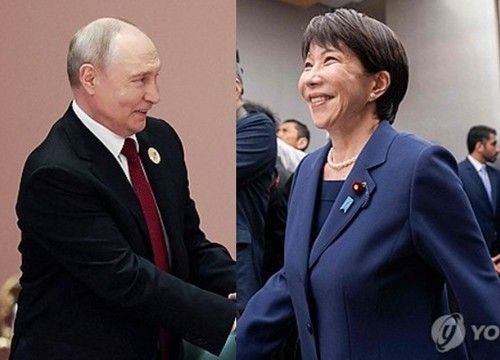
[Financial News correspondent Seo Hye-jin in Tokyo] Japanese media reported on the 6th that Russian President Vladimir Putin had signed a presidential decree placing four production sites in Russia owned by Japan Tobacco (JT)’s overseas business subsidiary under the temporary management of Russian companies. The move leaves ownership intact but effectively strips JT of management control. The Japanese government sent senior officials to demand that the measure be reversed. As the forced administration, previously concentrated in Europe, expands to Japan, about 100 Japanese companies with operations in Russia are also on alert.
According to The Nikkei and other outlets, Russian President Vladimir Putin signed a presidential decree the previous day placing four Russian entities, affiliated with JT’s overseas subsidiary, Japan Tobacco International (JTI), including JTI Donskoy Tabak, under temporary administration. Restrictions on the exercise of management control could affect JT’s performance if the administration is prolonged.
JTI entered Russia in 1999 and acquired a local manufacturer in 2018. It was the market leader last year, with a share of about 37%, and Russia reportedly accounted for about 10% of JT Group revenue.
Chief Cabinet Secretary Minoru Kihara said that Masayoshi Arai, a senior official for economic and industrial affairs, and Tomoaki Ishigaki, a counselor at the Foreign Ministry’s European Affairs Bureau, were in Russia and had protested to the Russian government and demanded the measure be withdrawn immediately. Masatake Nakamura, director-general of the Foreign Ministry’s European Affairs Bureau, also urged Russian Ambassador to Japan Nozdrev to withdraw the measure.
Finance Minister Satsuki Katayama also said, “We protested through diplomatic channels and urgently called for the measure to be withdrawn, among other things.” The Japanese government owns a 37.55% stake in JT.
Ryosei Akazawa, Japan’s minister of economy, trade and industry, said the officials’ visit to Russia was intended to protect Japanese companies’ assets, but did not disclose when they would visit. He said, “Since September, Western companies have been placed under temporary administration one after another, and we had also been on alert.”
The presidential decree did not specify the reason for the measure. Russia had previously criticized JTI’s Ukrainian factory in September and October, claiming it was producing ammunition. JT denied any involvement in military production.
Since 2023, Russia has used presidential decrees to forcibly place the assets of companies from “unfriendly countries” that joined sanctions against Russia under temporary administration. TASS reported that as of September, more than 130 companies, mainly European, had been targeted. Nestlé and French retailer Auchan were added in September this year.
Danish brewer Carlsberg recorded an impairment loss of 7 billion Danish kroner after its local subsidiary was placed under temporary administration in 2023. French company Danone, which was targeted the same year, also recognized a related loss of 1.2 billion euros and sold its business to a Russian company after the administration was lifted in 2024.
The Nikkei said the measure was intended to pressure Japan to change its Russia policy in response to its sanctions and support for Ukraine.
After Russia invaded Ukraine, Toyota and other companies withdrew production or scaled back their businesses. According to Japan’s Ministry of Economy, Trade and Industry, the number of Japanese companies with operations in Russia has fallen to about two-thirds of its pre-invasion level, but still exceeds 100. Mitsui & Co., Mitsubishi Corporation and ITOCHU Corporation are among those investing in Far Eastern energy projects such as Sakhalin 1 and 2.
Japanese companies that remain in Russia are hesitant to withdraw, considering the possibility of resuming business after the war ends and the risk of Chinese companies gaining ground in the market. Japanese expatriate employees have said, “We can’t turn our backs on neighboring Russia forever” and “A complete withdrawal would only allow Chinese companies to rise.”
In May, the Japanese government also sent officials and business executives to Moscow to seek protection for land, facilities and business funds, but the decision to place JT under temporary administration came about five months later. Russia’s Foreign Ministry also threatened last month to retaliate against areas important to Japan in response to Japan’s additional sanctions, fueling concern about further measures.
[email protected] Seo Hye-jin Reporter