“Let’s open up the Geum River, blocked for 36 years” ... South Chungcheong Province calls for a Special Act on estuary restoration
- Input
- 2026-11-06 10:02:27
- Updated
- 2026-11-06 10:02:27
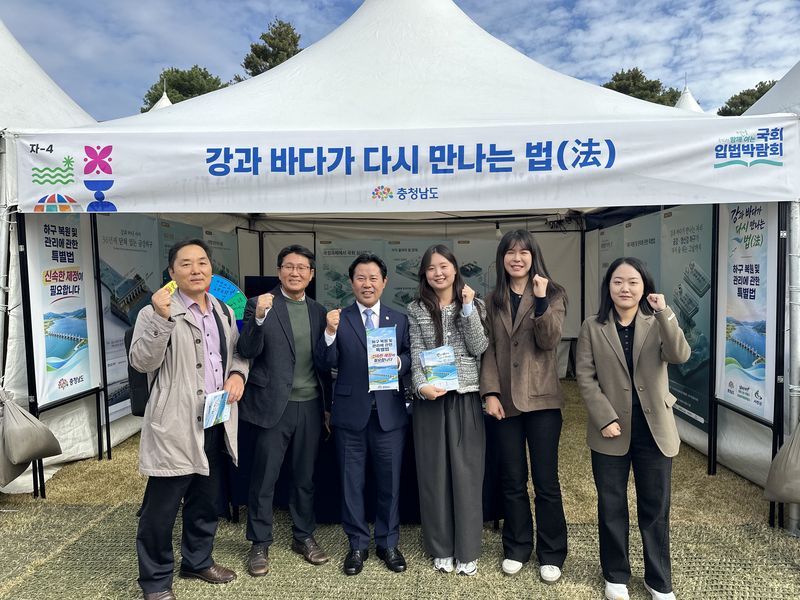
South Chungcheong Province said it took part in the 2026 National Assembly Legislative Fair, held over two days, the 5th and 6th, at the National Assembly Central Lawn Plaza and other venues, where it ran a booth under the theme “A Law That Brings Rivers and Seas Together Again” and urged the swift enactment of the Special Act on Estuary Restoration and Management.
The booth was planned to highlight the ecological value of the Geum River estuary, which had been cut off for 36 years since the Geum River estuary dam was built in 1990, as well as environmental changes, and to explain the need for a special act that would overcome the limitations of the current management system. During the event, key National Assembly officials and visitors stopped by the provincial booth and heard about the progress of ecological restoration efforts at the Geum River estuary and the rationale for enacting the law.
At the booth, South Chungcheong Province presented, from various angles, the state of the Geum River estuary and its ecological problems, progress in estuary restoration efforts, and plans for national-level planning and support systems under the proposed special act. It also offered quizzes and visual materials to help visitors easily understand the importance of estuary ecosystem restoration.
South Chungcheong Province is pursuing the enactment of the special act because estuary management is divided among multiple ministries and local governments, making comprehensive restoration projects difficult. Management responsibilities are currently divided by structure, such as estuary dams and seawalls, and there has been continued criticism that practical restoration efforts remain piecemeal because there is insufficient legal basis specifically governing estuary restoration.
The proposed special act includes plans to establish an integrated management and support system, including a National Comprehensive Estuary Plan on a 10-year cycle, a National Estuary Committee spanning multiple ministries, and direct implementation of estuary restoration projects and financial support by the national government. South Chungcheong Province plans to make ecological restoration of the Geum River estuary a key pledge of its ninth popularly elected administration and work to secure swift enactment of the bill.
A South Chungcheong Province official said, “Ecological restoration of the Geum River estuary goes beyond simply improving the estuary environment. It is about restoring the inherent value of nature where rivers and the sea meet and creating a new engine for regional growth.” The official added, “We will work actively with the National Assembly and the government to ensure that a stable national-level support system is put in place.”
Meanwhile, the feasibility and effectiveness of estuary ecosystem restoration have already been demonstrated at major river estuaries in South Korea and abroad, including the Nakdong River. At the Nakdong River estuary dam, ongoing pilot openings have produced gains in aquatic ecosystem recovery, with the movement of marsh clams and brackish-water fish such as sweetfish and tapertail anchovy confirmed. Overseas, California in the United States and major European countries are also expanding policies to improve estuary dam structures and allow seawater to flow in, as part of efforts to address climate change and protect biodiversity.
[email protected] Kim Won-jun Reporter