Jeju revises medical-cost support for hypertension and diabetes, adding points to flat-rate discounts
- Input
- 2026-11-06 09:06:45
- Updated
- 2026-11-06 09:06:45

【Financial News, Jeju = Jeong Yong-bok】 A points-based system rewarding healthy lifestyle practices will be added to the flat-rate discounts on medical and prescription costs provided to patients registered with the hypertension and diabetes program. Plans are underway to retain the existing centers’ education and counseling functions and convert them into Integrated Chronic Disease Management Centers in 2028.
According to the Korea Disease Control and Prevention Agency on the 6th, the Hypertension and Diabetes Registration and Education Centers operating in 19 regions nationwide will be gradually reorganized into Integrated Chronic Disease Management Centers. In Jeju, Jeju City is included in the existing program area.
Jeju City currently provides monthly support of 1,500 won for medical visits and 2,000 won in medication costs per disease for patients aged 65 and older with hypertension or diabetes who are registered with local clinics. The program provides up to 42,000 won a year for one disease, or up to 66,000 won for patients receiving treatment for both.
The government plans to convert these flat-rate subsidies into incentives for practicing a healthy lifestyle. Participants can earn points by measuring their blood pressure and blood sugar and taking part in health-management activities such as exercise, education and counseling, with up to 80,000 points available per year. One point is equivalent to one won.
Unlike the existing medical-cost discounts, however, the amount provided will vary depending on participation requirements and health-management activities. Participants must draw up an individual management plan and use related services at a clinic taking part in the Ministry of Health and Welfare’s Primary Care Chronic Disease Management Program.
Accumulated points can be used to pay medical bills at participating clinics, among other things. To make the system easier for older people to use, the government has streamlined the process so they can pay medical bills with their points without having to obtain a separate card.
The education and counseling functions of Jeju City’s Registration and Education Center will be maintained for the time being. The Korea Disease Control and Prevention Agency has designated 2027 as a preparation period for transitioning the existing centers and plans to assess program performance and transition preparations by the end of the year, with a view to operating them as Integrated Chronic Disease Management Centers starting in 2028.
During this period, the centers will continue to use their existing names and provide services such as individual health counseling, reminders of scheduled medical visits and alerts about missed treatments.
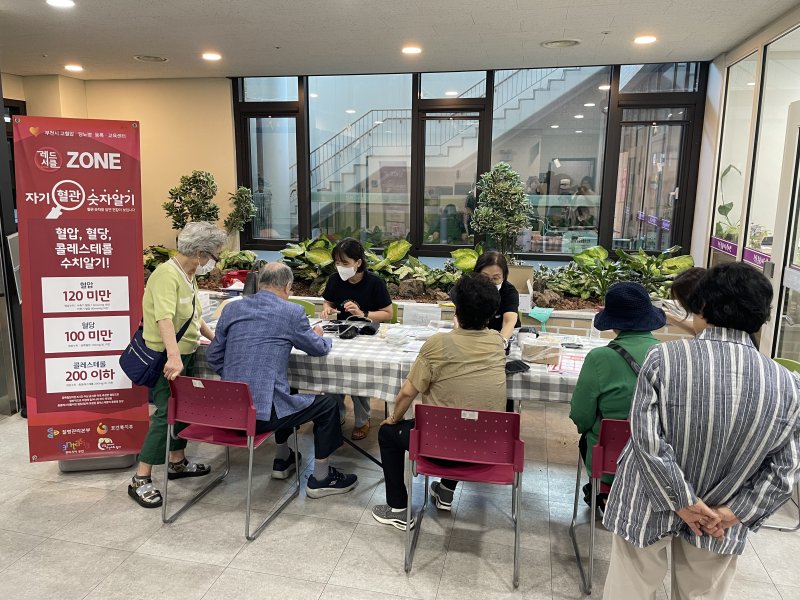
The program is also set to expand nationwide. The Hypertension and Diabetes Registration and Management Program currently operates in only 19 of the country’s 226 basic local governments. The program has been available in just 8.4% of regions, resulting in disparities in support across regions.
The Korea Disease Control and Prevention Agency plans to select new program areas through a call for proposals in the first half of 2027 and launch Integrated Chronic Disease Management Centers in July. It also plans to expand the target group, which has primarily consisted of people aged 30 and older, to all age groups and gradually include other chronic conditions, such as dyslipidemia, in addition to hypertension and diabetes.
Ensuring that older patients can conveniently use the revised support system is also a challenge. Previously, they received discounts on part of their medical and prescription costs at registered medical institutions and pharmacies. Under the revised system, they will have to register with a participating clinic, take part in health-management activities, and go through the process of earning and using points.
The government cited the early exhaustion of the medical-cost support budget and concerns about regional equity as reasons for the changes. With support concentrated in the 19 regions running the existing program, only about 6.6% of people aged 65 and older with hypertension nationwide are currently registered and receiving care under it.
The Korea Disease Control and Prevention Agency plans to develop measures for transitioning the program and informing patients through a consultative body involving the Ministry of Health and Welfare, the National Health Insurance Service, local governments and the medical community, among others.
Korea Disease Control and Prevention Agency Commissioner Im Seung-kwan said, “This reform is highly significant because it will establish a chronic disease management system for people of all ages in more regions,” adding, “We will communicate with those on the ground and work to ensure the program becomes firmly established.”
[email protected] Jeong Yong-bok Reporter