Hyundai Glovis expands car-carrier fleet on back of Chinese finished-vehicle exports... “Operating profit to rise 12% next year”: Shinhan Investment & Securities
- Input
- 2026-11-06 08:44:39
- Updated
- 2026-11-06 08:44:39
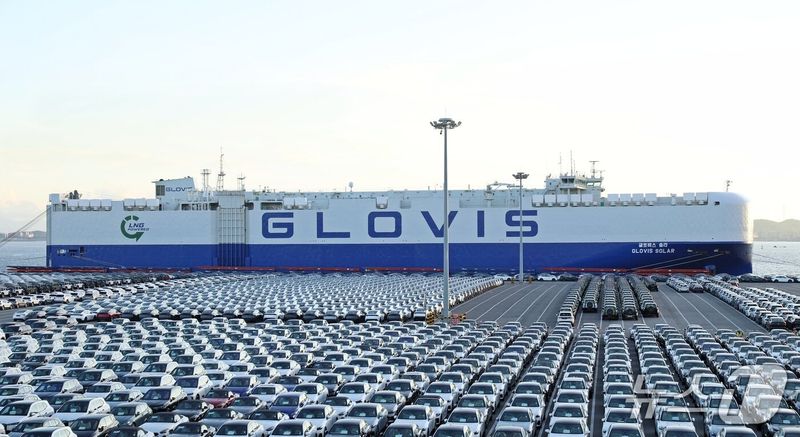
[Financial News] Hyundai Glovis is set to increase its deployment of large car carriers in response to rising Chinese finished-vehicle exports, prompting forecasts that its operating profit will grow by a percentage in the teens next year compared with this year. After raising its forecast for this year’s shipments of non-affiliated finished vehicles from China from 450,000 at the start of the year to 510,000, Hyundai Glovis plans to take delivery of 14 large newbuilds from the fourth quarter of this year through next year and deploy them to carry higher-rate cargo.
Choi Min-gi, an analyst at Shinhan Investment & Securities, said in a report on the 6th that Hyundai Glovis is rapidly expanding its newbuild fleet, which has a cost advantage thanks to advance orders, boosting the visibility of future earnings.
Analyst Choi said Hyundai Glovis is reflecting strong freight rates by signing short-term and spot contracts with Chinese automakers. “As Chinese automakers’ local sales overseas are increasing, it is difficult to view the rise in exports as simply a push to offload vehicles,” he said. “China’s finished-vehicle exports are expected to reach 11 million units this year, up 32% from the previous year, and continue to grow next year and beyond.” He added that there is also room to expand the share of high-rate, large and heavy cargo—such as construction equipment, commercial vehicles and gas turbines—which currently stands at about 6%, compared with double-digit shares at European shipping companies.
Hyundai Glovis is due to take delivery of four newbuilds capable of carrying 10,800 vehicles each in the fourth quarter of this year and 10 next year. The annual average fleet size, measured in vessels with capacity for 6,500 vehicles, will increase from 104 this year to 123 next year and 139 in 2029. Even after the newbuilds are delivered, owned vessels and long-term charters will account for about 60% of the fleet, allowing the company to respond to a future market slowdown by reducing short- and medium-term charters, according to the analysis.
Oil price trends are a short-term variable. Choi said fuel costs are reflected in revenue through fuel surcharges with a lag of about two months. “In the third quarter, the recovery of earlier fuel-cost increases was partly offset by further oil price rises during the quarter. The recovery effect is expected to be reflected in earnings in a quarter when oil prices stop rising,” he said.
Choi forecast that Hyundai Glovis would continue to post strong results in the fourth quarter. Revenue and operating profit are estimated at 8.8576 trillion won and 561.7 billion won, respectively, up 18.5% and 10.5% from the same period a year earlier. “In overseas logistics, the impact of higher rates under freight-forwarding contracts signed in the second half will continue into the fourth quarter,” he said. “For domestic logistics, we expect support from the peak season for finished vehicles and the launch of new models.”
[email protected] Jung Won-il Reporter