15 Years of Support for Medical Costs for Children with Disabilities Totals 15.3 Billion Won; Miral Welfare Foundation Holds Results-Sharing Meeting
- Input
- 2026-11-06 08:45:22
- Updated
- 2026-11-06 08:45:22
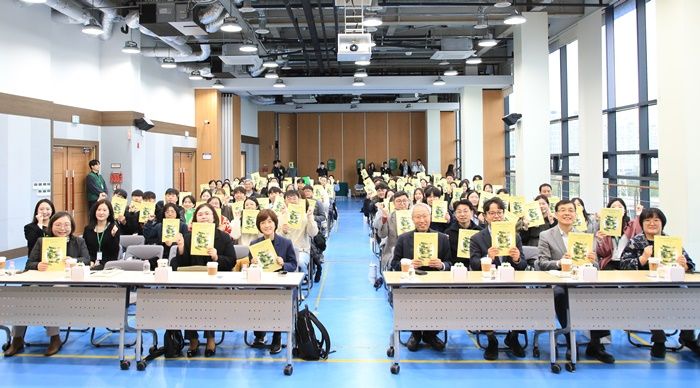
According to Miral Welfare Foundation on the 6th, the results-sharing meeting for the Medical Expense Support Program for Children with Disabilities was held the previous day at Gangnam Seum Welfare Center in Seoul. The event featured the findings of a survey on the program’s results, lectures by medical and social welfare experts, and a screening of interview videos with families receiving support.■ Medical Expense Support and Its Effect on Treatment ContinuityThe foundation has provided medical expense support to children and adolescents with disabilities in low-income families who have difficulty continuing rehabilitation treatment due to financial hardship. Depending on the type of disability and developmental status, it has covered rehabilitation treatment and medical consumables. As of April this year, support totaled 7,309 person-counts and approximately 15.3 billion won. The person-count figure includes repeat support to the same child.
To assess the effect of support on treatment continuity, the foundation surveyed 301 guardians of children who had received medical expense support for at least five years between June and September this year. A total of 96.3% of responding families said the support had enabled them to avoid stopping or reducing treatment for financial reasons.
However, a review of children whose support had ended found that some had stopped rehabilitation treatment because of financial hardship. A remaining challenge is to establish a support system that allows them to continue necessary rehabilitation treatment after they reach adulthood.
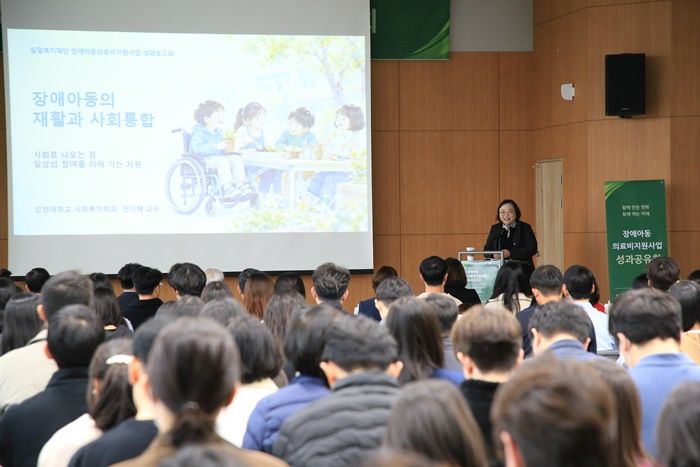
Jeon Ji-hye, a professor in the Department of Social Welfare at Incheon National University, lectured on “Rehabilitation and Social Integration for Children with Disabilities.” She emphasized that rehabilitation is a process that supports the daily lives and social participation of children with disabilities, going beyond restoring physical function. Time was also set aside to share the voices of families through interview videos featuring those who had received medical expense support.
The publicly funded Developmental Rehabilitation Service provides vouchers for rehabilitation services, including speech, auditory, sensory, and motor development, to children under 18 and others who meet requirements such as income and disability type. For those enrolled in school, support may be extended through age 20, depending on eligibility.
Based on this analysis, the foundation plans to explore ways to support rehabilitation treatment in adulthood and strengthen support for families, including guardians and siblings.
The foundation’s executive representative, Jeong Hyeong-seok, said, “Over the past 15 years, together with many donors, we have worked to support the healthy growth of children with disabilities and reduce families’ medical expenses.” He added, “This results-sharing meeting is an opportunity to assess those changes quantitatively and explore how we can address gaps and build on the progress.”
[email protected] Jang In-seo Reporter