From CRT TVs to AI... National Museum of Modern and Contemporary Art, Korea Opens 'Nostalgia for Technology'
- Input
- 2026-11-06 06:00:00
- Updated
- 2026-11-06 06:00:00
According to the National Museum of Modern and Contemporary Art, Korea, on the 6th, its special exhibition of new media works from the collection, 'Nostalgia for Technology,' opens that day at the National Museum of Modern and Contemporary Art, Cheongju, in North Chungcheong Province. On view through March 14 next year, it features 26 works by 23 Korean and international artists, including Nam June Paik, Park Hyun-ki, Kimsooja, Ian Cheng and Ho Tzu Nyen.■ How TVs and Video Changed PerceptionThe exhibition is organized into four sections: 'Electronic Circuits and CRT TVs,' 'The Materiality of Video,' 'Digital Transformation' and 'Generative Art.' It traces how changes in the way devices operate have affected the form of artworks and the viewing experience.
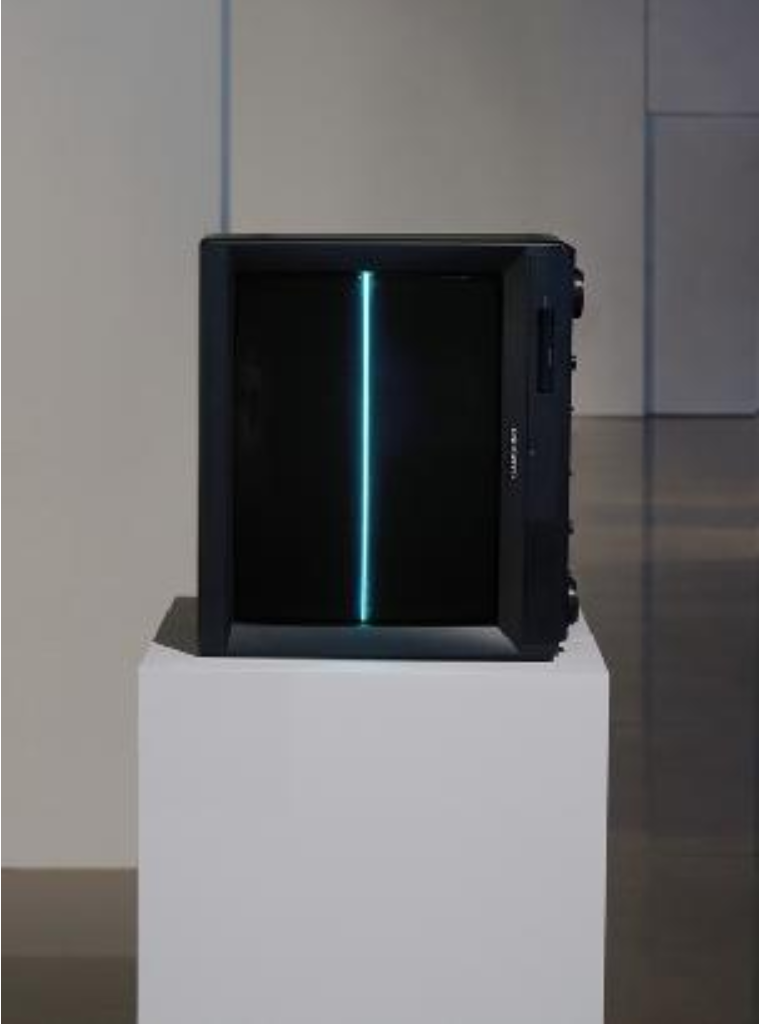
Nam June Paik's 'Zen for TV' is a work in which a broken TV displaying only a horizontal line is turned upright by 90 degrees, making the line vertical. It was first shown in 1963, and the work on display was recreated in 1995. By exposing the machine's defect, it transformed the TV from a receiver of information into a tool for meditation.
Park Hyun-ki's 'Untitled' (1979) is an installation in which natural stones are stacked together with a TV monitor showing images of stones. The real stones and those on the screen overlap, prompting questions about the boundary between reality and illusion.
Kimsooja's 'Bottari Truck - Migrateurs' (2007) depicts a truck carrying bundles as it travels from the outskirts of Paris to the city center. The artist, seen from behind sitting atop the bundles, is set against the changing landscape.
The bundles contained clothing and bedding collected through Emmaüs, a French organization. The truck heads to Saint-Bernard Church in Paris, a symbol of undocumented migrants' struggle for their rights.
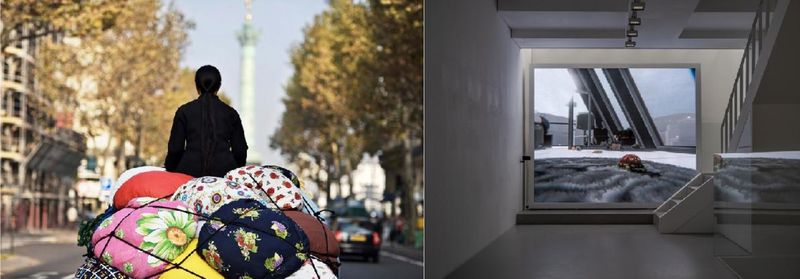
Kim Heecheon's 'Sleigh Ride Chill' (2016) explores anxiety over personal data leaks. Passersby’s faces are replaced by the artist’s, and Gwanghwamun Square and Seoul Plaza become tracks in a car-racing game.
Ian Cheng's 'Thousand Lives' (2023) is a real-time AI simulation in which a virtual turtle adapts to its environment and decides how to act. The turtle searches for food, rests, and responds to obstacles in the room and interference from its owner. Rather than playing predetermined scenes, the story changes according to the AI's decisions.
Ho Tzu Nyen's 'Phantoms of Endless Day' (2025) is a four-channel video that uses AI to reconstruct original footage shot for an unfinished film. Characters in Singapore in the final days of World War II intersect with characters in the artist's other works, creating a new narrative.
Visitors can compare old TVs and AI videos side by side and explore how viewing practices differ by medium. Admission is 2,000 won.
[email protected] Jang In-seo Reporter