Physical AI demonstrations: Proposal for a “standard special contract clause” specifying data use and accident liability [Legislative and Policy Proposal Contest]
- Input
- 2026-11-08 16:12:10
- Updated
- 2026-11-08 16:12:10
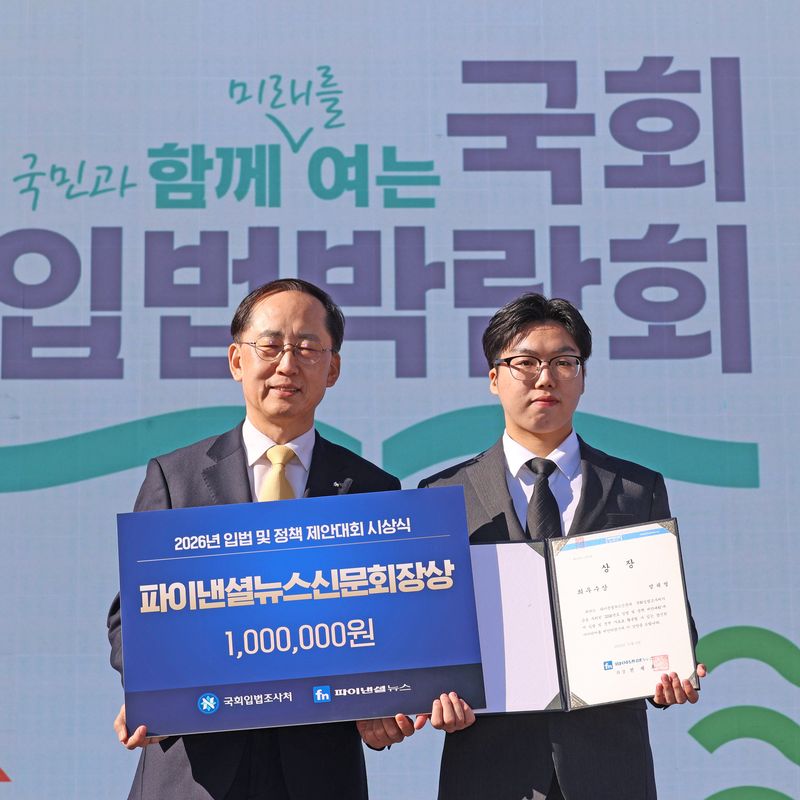
Yang Hae-ryeong, who received the top prize (the Financial News Chairman’s Award) at the 2026 Legislative and Policy Proposal Contest, co-hosted by Financial News and NARS on the 6th, explained that this was the rationale behind the proposal.
Yang, who is enrolled in the integrated bachelor’s and master’s program in the Department of Law at Kunsan National University, proposed introducing a “standard special contract clause for physical artificial intelligence (AI) demonstrations.” The proposal stemmed from the view that contractual uncertainty between AI suppliers and manufacturers needs to be reduced to validate technology on manufacturing floors.
“I came to think that how to divide risks before a transaction begins is just as important as determining responsibility after an accident occurs,” he said. The concern is that if AI decisions lead to robots or equipment operating, errors could escalate into production stoppages or safety issues.
The proposed standard special contract clause would set out terms on data use, accident response and disclosure of results in demonstration contracts. The two parties would agree on the terms before starting, reconfirm relevant items in the event of significant changes, and make final checks on data handling, costs and other matters when the project ends.
For process data, the permitted scope of use would distinguish between use for the demonstration and subsequent model training or use by other clients. Yang explained, “The idea is to require additional agreement for training or use by other clients that goes beyond the scope set out in the contract.”
In the event of an accident, the parties would divide the costs after considering their respective obligations and the cause of the accident, and preserve records needed to make that determination. They would also agree in advance on what information—including company names, factory names and performance figures—could be disclosed, protecting trade secrets while linking demonstration results to subsequent purchases.
Yang proposed piloting the clause starting with the government-supported manufacturing robot demonstration project in 2027. The idea is to measure contract negotiation periods, the number of disputes and subsequent purchases, among other indicators, and use them to decide whether to expand the program.
[email protected] Kim Hyeong-gu Reporter