J Black: “I thought I might actually die”... Daily life upended by panic disorder [Health Talk]
- Input
- 2026-11-06 05:00:00
- Updated
- 2026-11-06 05:00:00
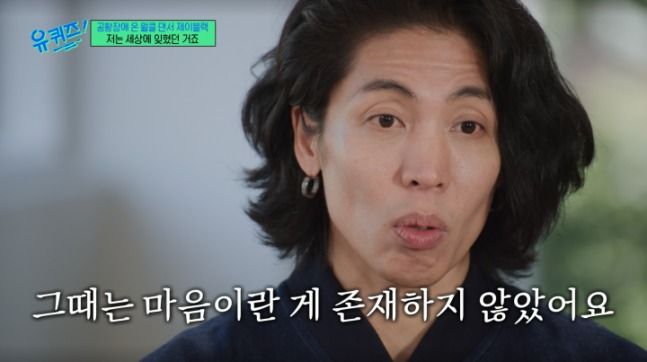
[Financial News] Dancer J Black opened up about going through a difficult period when his panic disorder left him unable to manage daily life properly. He said that when he had given everything up, he thought of his wife and started exercising, which later gave him the strength to get back to his daily routine. Panic disorder is a condition involving sudden, intense anxiety and physical symptoms, which can be managed with medication and cognitive behavioral therapy.
Dancer J Black appeared on tvN’s ‘You Quiz on the Block,’ which aired on the 4th, and opened up about mental health problems he experienced as his work declined.
J Black recalled that he had been active and earning money after an international competition held in China, but that work opportunities dwindled after COVID-19.
“I had been forgotten. My panic disorder got worse, and I wasn’t managing it or even thinking about doing so,” he said. He added, “It was a time when I had given everything up. My wife was having a hard time too, but I thought one of us had to pull ourselves together, so I started exercising.”
He said that at the time, he couldn’t even bring himself to start exercising easily.
J Black explained, “Back then, I had no will to speak of; I couldn’t make myself do anything or even think about anything.”
He added, “Thinking I might actually die, I went to the gym, and fortunately, I got a chance to think. I wondered what would happen to my wife if I were gone, and thanks to her, I came to my senses.”
J Black has continued working as a choreographer since then. He recently drew attention again by contributing to the choreography for ‘NEON’ by the group A2O Light.
Panic disorder: sudden racing heart and difficulty breathing
Panic disorder is a condition in which intense fear and anxiety recur in unexpected situations. A sudden, intense anxiety response is called a “panic attack.”
According to the U.S. National Institute of Mental Health (NIMH), a panic attack can cause a rapid heartbeat or cold sweats, as well as trembling in the hands and feet or difficulty breathing.
Chest pain, dizziness, nausea, and numbness in the hands and feet can also occur. In severe cases, people may experience a fear of dying or feel unable to control their own bodies.
Panic attacks can occur suddenly even when there is no particular danger. Symptoms can also begin while a person is asleep.
Symptoms generally last from a few minutes to several dozen minutes, and patients may worry that another attack could occur even after the attack has ended.
However, experiencing a panic attack once does not mean that everyone will be diagnosed with panic disorder.
The NIMH explains that panic disorder may be diagnosed when unexpected panic attacks recur and, for at least one month afterward, the person continues to worry about further attacks or engage in avoidance behavior.
Why daily life can become difficult
People with panic disorder may struggle with daily life not only because of the attacks themselves but also because they fear that another attack might occur.
According to the UK’s National Health Service (NHS), people with panic disorder may avoid places or situations where they have previously experienced an attack.
Some are reluctant to use public transportation or go to crowded places, and may even reduce how often they leave home.
In severe cases, the condition can also affect their work or relationships with others.
Panic disorder can occur alongside depression or other anxiety disorders. If symptoms are severe enough to make daily life difficult, any co-occurring mental health problems should also be assessed.
However, it cannot be concluded that all of the lethargy and cessation of activities J Black described on the show were caused by panic disorder. Details of his symptoms and treatment course have not been made public.
Why exercise can help ease anxiety
J Black recounted going to the gym during a difficult period with panic disorder. Regular physical activity may help reduce anxiety and stress.
The NHS recommends regular exercise as part of lifestyle management for people with panic disorder. Exercise can help relieve stress and tension, and activities such as yoga and Pilates can also be used for relaxation.
The U.S. National Institute of Mental Health also describes getting enough sleep, exercising regularly, and eating a balanced diet as healthy lifestyle habits that can help manage panic disorder.
However, exercise alone cannot treat panic disorder. The NIMH emphasizes that healthy lifestyle habits may help manage symptoms but cannot replace professional treatment.
During exercise, a racing heart or shortness of breath may feel similar to the physical symptoms of a panic attack. If this triggers anxiety, it is important to consult a healthcare professional about adjusting the intensity and type of exercise.
Treating panic disorder with medication and cognitive behavioral therapy
Medication and cognitive behavioral therapy are the main treatments for panic disorder.
The NIMH describes cognitive behavioral therapy as a leading psychotherapy shown to be effective for panic disorder.
Cognitive behavioral therapy helps people examine how they interpret and respond to the physical reactions that occur during a panic attack, and change the thoughts and behaviors that intensify their anxiety.
It may also include training to help people regulate their response when they experience symptoms such as a racing heart or dizziness, rather than immediately interpreting them as a serious danger.
Medication treatment may involve antidepressants such as selective serotonin reuptake inhibitors (SSRIs) and serotonin-norepinephrine reuptake inhibitors (SNRIs).
According to the NIMH, these medications can help reduce panic disorder symptoms, but it may take several weeks for them to take effect.
Benzodiazepine anti-anxiety medications can quickly relieve acute anxiety symptoms, but long-term use can lead to dependence. They are therefore used on a limited basis at the discretion of healthcare professionals.
The NHS advises people being treated for panic disorder not to stop taking their medication on their own without consulting a doctor, even if their symptoms improve.
Family support also matters during treatment
J Black said that his wife’s presence played a major role in helping him endure a difficult period.
Support from family and others can help people with panic disorder during treatment and their recovery of daily life.
The NIMH advises that helping someone with panic disorder involves understanding the symptoms and treatment options, and talking with them so they feel comfortable discussing their condition.
People with panic disorder often feel that they cannot control their symptoms on their own. It is not appropriate for family members to dismiss the symptoms as a simple lack of willpower or force the person into anxiety-provoking situations.
The NIMH explains that panic disorder is a condition whose symptoms can be managed and quality of life improved with appropriate treatment and support from others. It recommends seeking an evaluation from a mental health professional if anxiety symptoms persist to the point that they interfere with daily life, including work or relationships.
[email protected] Han Seung-gon Reporter