Sewol disaster records added to UNESCO Asia-Pacific register ... Why the mixed reactions?
- Input
- 2026-11-05 20:32:35
- Updated
- 2026-11-05 20:32:35
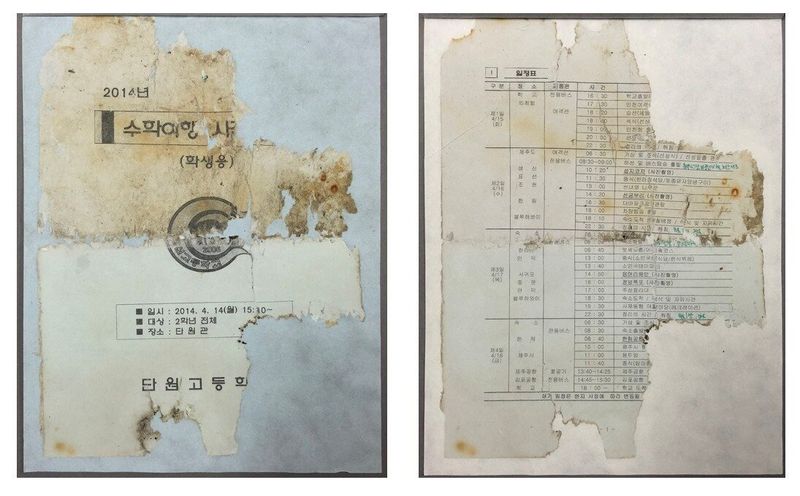
[Financial News] A total of 235,220 items documenting the Sewol disaster have been added to UNESCO’s Memory of the World Asia-Pacific Regional Register, but reactions are somewhat divided. Civic groups have welcomed the decision while also urging the government to release more related records.
In a statement on the 5th, the civic group 4·16 Solidarity said, “We pay deep tribute to the efforts made over the past 12 years by the 4·16 Memory Archive, victims’ families and citizen archivists.”
However, it said, “Even now, with the records of victims and citizens taking their place among the world’s documentary heritage, state records remain closed,” adding, “A substantial portion of the records held by the military and police have not been disclosed, on the grounds that they are military secrets or that the records do not exist.”
It went on to stress, “Now that the international community has recognized the value of these records, the state must respond in a way that matches their significance,” adding, “Restoring victims’ right to know the truth about the disaster is the true way to commemorate the records’ inclusion on the Memory of the World regional register.”
According to the National Heritage Administration, the inclusion of the “Danwon High School 4·16 Archive” on the regional register was finalized at the 11th General Meeting of the UNESCO Memory of the World Committee for Asia and the Pacific (MOWCAP), held that day in Jakarta, Indonesia.
The Memory of the World Asia-Pacific Regional Register is a program that identifies and preserves documentary heritage from the Asia-Pacific region with significant historical and cultural value.
The “Danwon High School 4·16 Archive” comprises 235,220 items documenting the everyday lives of Danwon High School students who died in the 2014 Sewol disaster, public acts of commemoration, and the recovery efforts of bereaved families and survivors.
It also includes materials showing the students’ everyday lives before the disaster, such as calendars they used and school-trip itineraries.
Separately, the traditional cookbooks “Suunjapbang and Eumsik Dimibang” were also added to the Asia-Pacific Regional Register at this meeting. Suunjapbang was recognized for its historical value as the first cookbook written by a private individual and was designated a Treasure in 2021.
Eumsik Dimibang is the oldest surviving Korean-language cookbook preserved in complete form, written by a woman from a yangban family. It is documentary heritage that shows how women’s culinary knowledge was passed down.
In September last year, the National Heritage Administration applied to have the “Danwon High School 4·16 Archive” and “Suunjapbang and Eumsik Dimibang” added to UNESCO’s Memory of the World Asia-Pacific Regional Register. With this inclusion, Korea’s Memory of the World entries increased to 28 in total: 20 on the International Register and eight on the Asia-Pacific Regional Register.
[email protected] Yoo Seon-jun Reporter