China: U.S.-China $30 billion tariff cuts must be implemented simultaneously to expand imports of U.S. agricultural products
- Input
- 2026-11-05 19:05:17
- Updated
- 2026-11-05 19:05:17
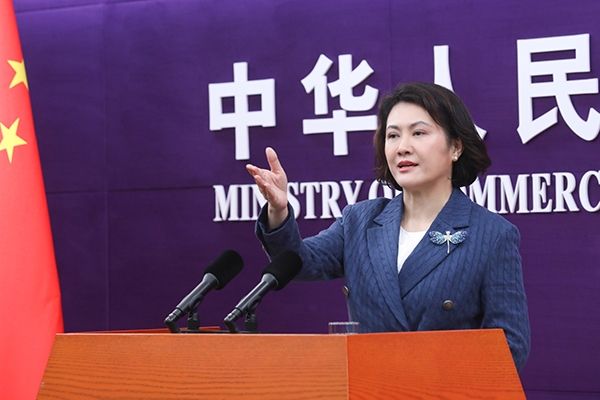
[Financial News] MOFCOM said the $30 billion (about 40 trillion won) reciprocal tariff cuts agreed to by the United States and China must be implemented before China would increase its purchases of U.S. agricultural products.
At a briefing on the 5th, MOFCOM spokesperson Huang Ling responded to reporters’ questions about what had been agreed following the meeting on the 2nd between Li Chenggang, China’s representative for international trade negotiations, and a U.S. agricultural trade delegation. “China has consistently maintained an open attitude toward expanding its purchases of agricultural products from the United States. The prerequisite, however, is that both sides implement the ‘$30 billion for $30 billion’ reciprocal tariff cuts,” she said.
Huang added, “We hope the United States will work with China to create more favorable conditions for agricultural trade between the two countries through measures such as mutual tariff cuts, reducing non-tariff barriers and expanding market access.”
At a summit in Beijing in May, the United States and China agreed to discuss a plan under which each country would select products of interest worth at least $30 billion and lower tariffs on them.
In September, MOFCOM said the two countries had agreed on a list of products for reciprocal tariff cuts under a “$30 billion for $30 billion” arrangement, among other things, at the eighth round of economic and trade negotiations held in New York and Washington, D.C.
The goods on which China would cut tariffs included U.S. agricultural products, personal care products, medical devices and coal, while the United States agreed to lower tariffs on about $30 billion worth of Chinese goods, including toys, home appliances, baby products, kitchen and bathroom products, and holiday gift items.
At the time, the two countries agreed to implement the tariff cuts simultaneously after each had completed the procedures required under its domestic laws.
[email protected] Lee Seok-woo, International Affairs Correspondent Reporter