Two items, including the 'Danwon High School 4.16 Archive,' inscribed on the United Nations Educational, Scientific and Cultural Organization (UNESCO) Memory of the World Asia-Pacific Regional Register
- Input
- 2026-11-05 18:53:12
- Updated
- 2026-11-05 18:53:12
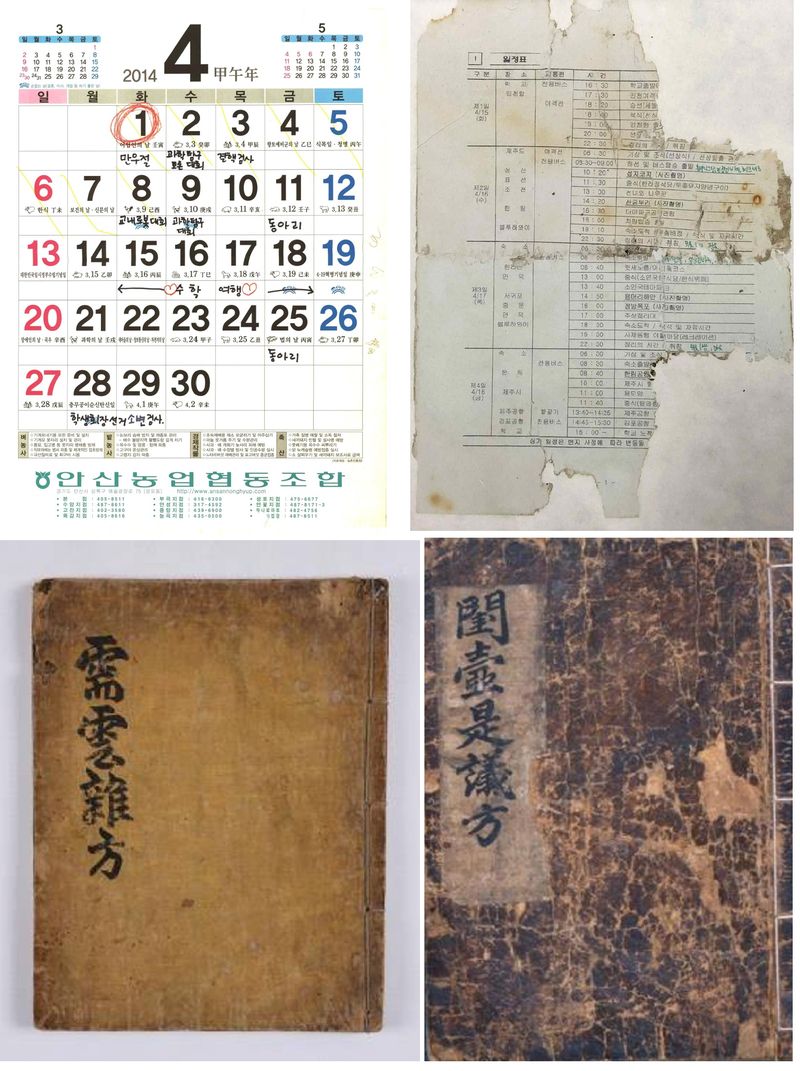
According to the Korea Heritage Service on the 5th, the 'Danwon High School 4.16 Archive' and 'Suunjapbang and Eumsik Dimibang' were finally inscribed at the 11th General Meeting of the UNESCO Memory of the World Committee for Asia and the Pacific (MOWCAP), held that day in Jakarta, Indonesia.
The 'Danwon High School 4.16 Archive' comprises 235,220 items documenting the everyday lives of students from Danwon High School who died in the 2014 Sewol disaster, the public's commemorative activities, and the recovery efforts of bereaved families and survivors.
The collection includes paper materials such as a calendar from Danwon High School's 4.16 Memory Classroom, as well as a school-trip itinerary found in mud after MV Sewol was salvaged. The April 2014 calendar has the school-trip schedule handwritten on it.
A distinctive feature is that these are records created by members of the public, written from the perspectives of bereaved families, survivors, and citizens who witnessed the disaster and the response to it. They document the pain and recovery of individuals, families, and local communities—experiences that are difficult to capture in government or corporate records. The archive was recognized as important because the process of collecting the records is itself a process of healing the pain of disaster and restoring the community.
'Suunjapbang and Eumsik Dimibang' was inscribed as a single entry bringing together two books containing traditional culinary knowledge. Suunjapbang is the earliest cookbook used among the general public and, in 2021, became the only cookbook designated a Treasure. This manuscript in Classical Chinese, written by Kim Yu and his grandson Kim Ryeong, contains 121 recipes, including instructions for making alcoholic beverages and food.
Eumsik Dimibang was recognized for its value as the oldest surviving cookbook written in Hangul to remain in complete form. Jang Gye-hyang wrote it in the 1670s to pass on to her descendants recipes handed down in her family or developed by her herself. It contains 146 recipes, including those for noodles and rice cakes, fish and meat dishes, preserving ingredients, and making alcoholic beverages and vinegar.
The two books also show how culinary knowledge was passed down through marriages and exchanges between families. Although they were written about 130 years apart, they share recipes for six types of alcoholic beverages and one dish. Foods and drinks featured in the books are still recreated today and used in regional tourism and industry.
After consulting experts and the Korean Committee for the Memory of the World on records submitted through a public call in 2024, the Korea Heritage Service selected the two items for nomination. It submitted the nomination documents to UNESCO in September last year.
With these inscriptions, Korea now has a total of 28 items on the Memory of the World registers: 20 on the international register and 8 on the Asia-Pacific regional register. Launched by UNESCO in 1992, the Memory of the World Programme aims to preserve documentary heritage and expand public access to it.
Separate from the international register, which includes items such as Hunminjeongeum and the Annals of the Joseon Dynasty, the Asia-Pacific regional register reviews and inscribes documentary heritage of significance to the Asia-Pacific region.
[email protected] Jang In-seo Reporter