Hu Deok-juk, a Chinese cuisine master with 58 years in the kitchen: “A chef’s basic duty is to stay in the kitchen” [Let’s Read a Book]
- Input
- 2026-11-05 18:29:10
- Updated
- 2026-11-05 18:29:10
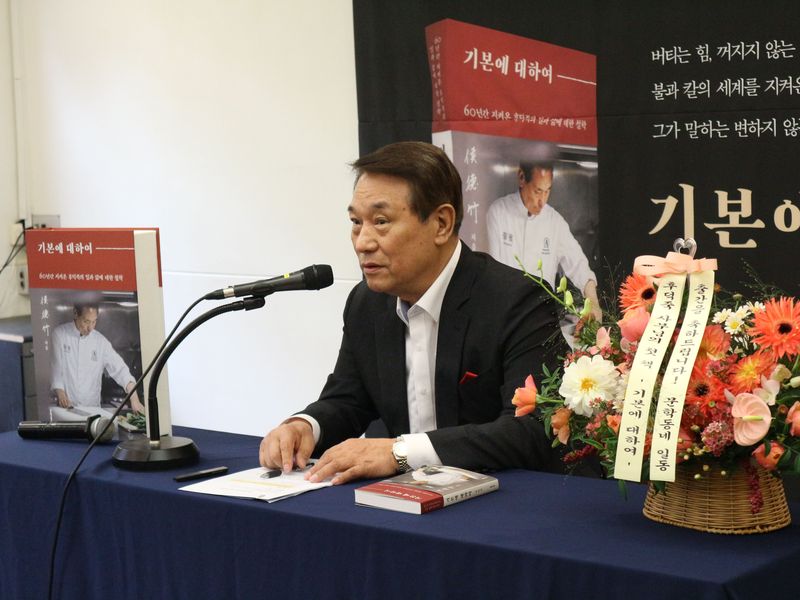
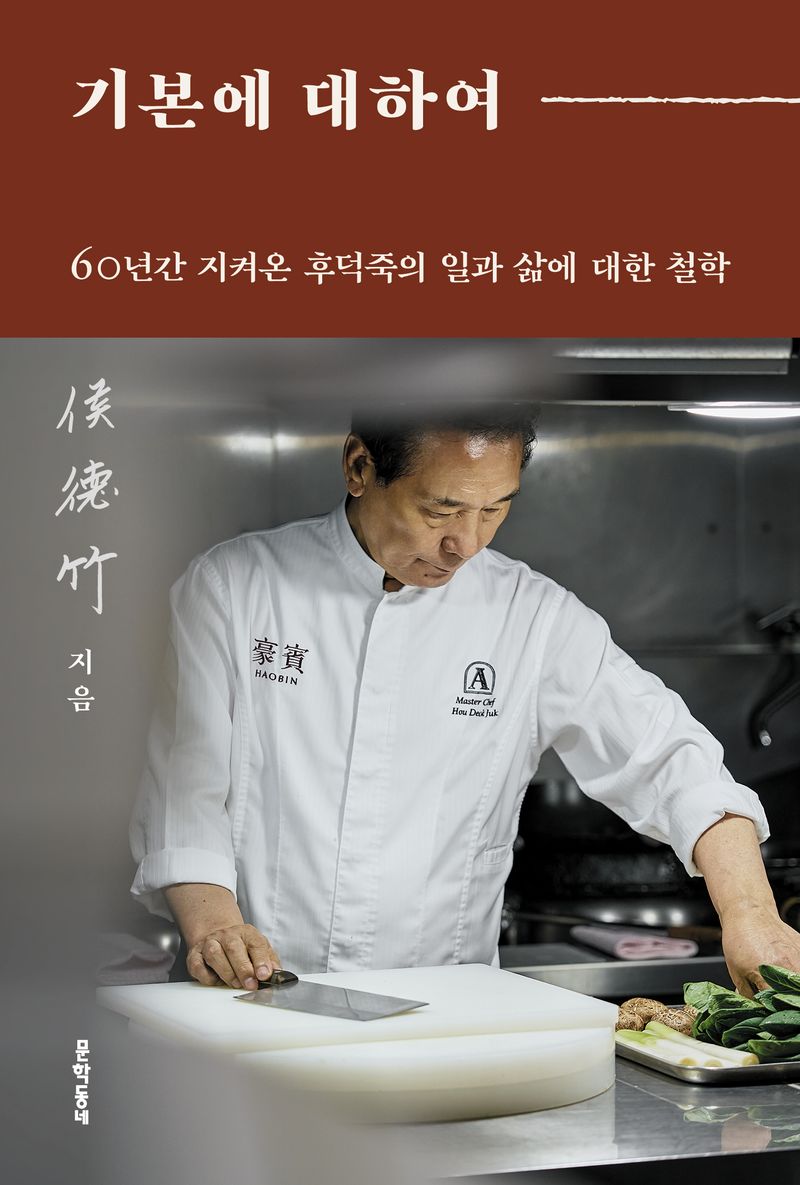
Building skill takes time in workplaces where results are expected quickly. As their careers progress, people also find themselves thinking about how to balance focusing on their own work with leading colleagues. Chef Hu Deok-juk’s first essay, ‘On the Basics’ (Munhakdongne Publishing Group), reflects on these questions faced by working people. Drawing on four pillars—grit, direction, curiosity and people—the book lays out principles he learned through experience on the job.■ Building skill and trust by sticking to the basicsHe began cooking at the UN Center Hotel in 1968 and, in 1994, became the first person with a background as a chef to rise to an executive position at Hotel Shilla. He still works on the front lines as executive chef of Ho Bin, the Chinese restaurant at The Ambassador Seoul – A Pullman Hotel. He drew attention for his considerate attitude toward junior colleagues on Netflix’s variety show ‘Culinary Class Wars 2.’
He still remembers the first time he baked bread. At a conference celebrating the book’s publication held on the 29th of last month, he said he was fascinated by the sight of the dough rising in the oven. He added that whenever work gets difficult, he recalls that moment to renew his resolve.
The grit he emphasizes is the strength to try again after failure and make a skill second nature. He wrote that it is “a process in which tools and people shape each other over a long time and eventually become one,” adding that “there is no shortcut to reaching that level.” In other words, repetition builds skill.
The basics are standards of work that must be upheld even when one’s position changes. When he was a managing director at Hotel Shilla, he would head to the kitchen as lunchtime service approached, even if he was attending a morning executive meeting. He believed that welcoming guests was his duty. His fellow executives, initially puzzled, gradually understood and accommodated him.
Even when he considered changing his food style in response to Michelin Guide evaluations, his customers remained his guide. Believing he could not disappoint those who had enjoyed his food for years, he stayed the course with his existing approach to cooking.
He continues to learn to this day. He exchanges ideas with chefs overseas and learns new flavors, believing that he needs to experience unfamiliar things to keep pace with younger colleagues. He stresses, “Speed improves efficiency, but it cannot replace the basics.” He believes that the ability to adapt to change also comes from a solid foundation.
At the heart of this is a leader’s responsibility: employees should be empowered to do their jobs boldly, while the leader takes final responsibility. In the book, he emphasizes, “‘Responsibility’ is mine to bear as the leader.”
The story he told about an intern shows how he treats people. When a student who had spent two months doing difficult tasks came to say goodbye on the final day, he personally made the yangjangpi the student had said they wanted to eat. He recalled that he was, in turn, moved when he later read the student’s account remembering the incident. The confidence that junior colleagues can do the job was passed on in the form of a meal.
In Chinese cuisine, ‘sabu,’ meaning head chef, is also a mentor in life. He wrote, “I am still becoming a senior colleague,” and, “Since junior colleagues are the ones who give a senior their authority, I keep thinking about what it means to be a senior.” Passing on to junior colleagues the sincerity he brings to his skills and food is the second dream he holds. The basics the book speaks of are building the ability to do one’s own job well and nurturing people who can carry it on together. 296 pages, 22,000 won.
[email protected] Jang In-seo Reporter