[Editorial] Hacking is infiltrating everyday life, from finance to refrigerators
- Input
- 2026-11-05 18:17:35
- Updated
- 2026-11-05 18:17:35
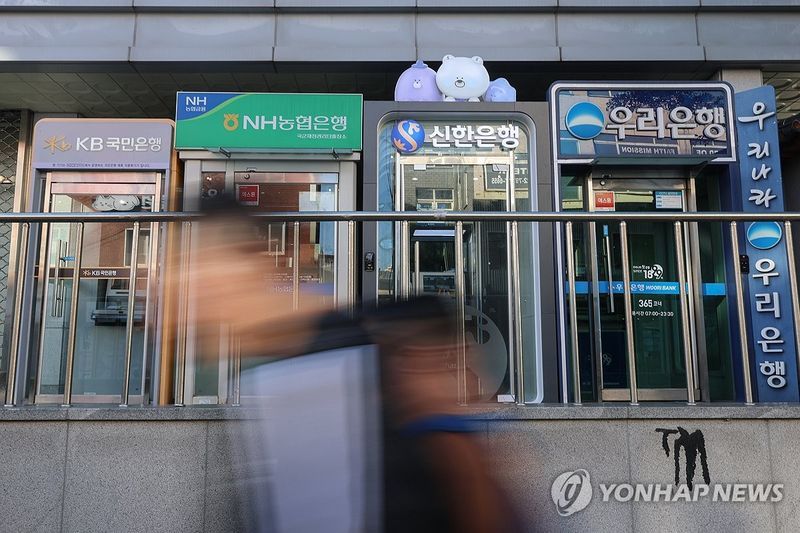
According to the Financial Services Commission, from the first hack confirmed on September 30 through the 3rd of this month, attacks struck banks, financial investment firms, insurers and savings banks, as well as cryptoasset companies, with no industry spared. The leaked information included customers’ names, resident registration numbers and account numbers. Although no leaks of information that could be directly exploited in financial transactions, such as account passwords, have yet been confirmed, precautions are needed against secondary harm such as voice phishing. The stolen money consisted of company-managed funds at small crypto exchanges and similar firms; it is fortunate that customers did not suffer losses.
The authorities have begun a comprehensive inspection of around 580 financial firms. They said they would hold executives accountable if serious management failures or inadequate responses are uncovered. Substantive follow-up measures are needed to ensure the response does not stop at warnings repeated after every incident.
Cyberattacks are threatening everyday life overseas. Last month in France, an attack that raised supermarket refrigerator temperatures to 50 degrees Celsius led more than 700 stores to discard large quantities of food. Similar attacks spread across Europe. There was also an attempt at a French blood center to change the temperature of plasma storage freezers. The U.S. Department of Defense is also investigating the possibility of a cyberattack in connection with an incident last August in which freezers in at least six shops at military bases stopped working.
South Korea is no exception. In 2021, wall pads in more than 400,000 apartment units were hacked, leaking footage from inside the homes, and more than 120,000 home IP cameras were breached last year. Last September, some refrigerators belonging to a major company stopped working because of an error in a remote software update. Although it was the manufacturer’s mistake, the damage could be far greater if remotely connected devices become a gateway for hackers.
Cyberattacks are no longer limited to stealing financial information or demanding money. They now directly target distribution networks, medical facilities and household devices in an attempt to paralyze social functions and cause disruption. There are also concerns that the long-standing practice of treating security as a cost has increased vulnerabilities. Financial firms neglected the management of peripheral systems, while Europe’s refrigeration control equipment was outdated and no longer received security updates.
We are never free from the threat of cyberattacks from North Korea. North Korea carried out the March 20 cyberattack, which paralyzed the computer networks of broadcasters and financial firms in 2013, and the 2019 theft of Ethereum from Upbit, among other attacks. More recently, North Korea was also named as being behind the incident in which $6.3 billion was withdrawn without authorization from Binance, the world’s largest crypto exchange. Since funds obtained through hacking could be used to develop nuclear weapons and missiles, cyberattacks are a national security threat that goes beyond crime.
The government is considering establishing a government-wide cybersecurity body to oversee and coordinate currently dispersed security functions. The aim is to overhaul response systems divided among ministries and build a defense network spanning the public and private sectors. For the new body to be effective, it will need substantive authority and a budget, as well as support from private-sector experts. Companies, too, must see security as a matter of survival rather than a cost. Above all, the digital defense system must be further strengthened to counter attacks targeting a hyperconnected society.