AI predicts the right mix for batteries and cosmetics... Kookmin University develops AI to predict material properties
- Input
- 2026-11-05 17:22:19
- Updated
- 2026-11-05 17:22:19
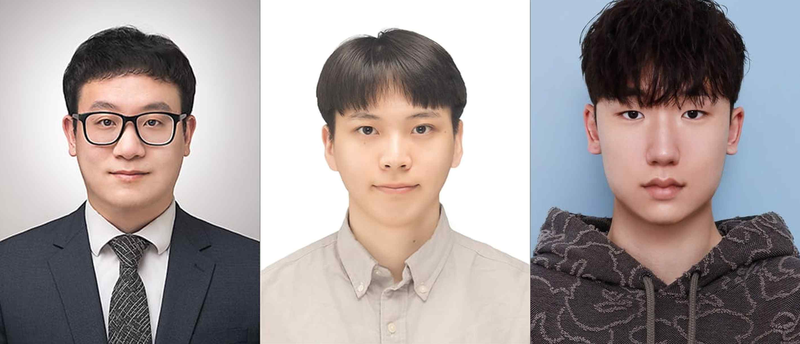
[Financial News] An artificial intelligence (AI) technology has been developed that can accurately predict, without experiments, the properties of new materials made by mixing multiple chemicals, such as battery electrolytes, eco-friendly solvents and cosmetics. It is expected to dramatically cut the complex process of testing different mixtures, greatly reducing the time and costs of materials research and development (R&D) in industry.
Kookmin University said on the 5th that a team led by Professor Jeong Jun-young of its Department of Chemistry had developed an AI model, MEMo, that accurately predicts the properties of mixtures, which vary depending on the proportions of the chemicals. The findings were published in the Chemical Engineering Journal, a leading international journal in the field of chemical engineering.
Many things we encounter in everyday life, including electrolytes in batteries, cosmetics, medicines and automotive fuels, are mixtures of multiple substances. But even the same substances can have very different properties depending on their proportions, so until now researchers have had to conduct experiments one by one to find the optimal combination.
Existing AI technology, too, had been limited to learning only the properties of each individual substance and then calculating an average. It was like tasting each ingredient separately and estimating the overall flavor instead of tasting the finished dish, which meant it could not accurately grasp the interactions that occur when molecules are mixed.
The research team addressed this problem by designing an algorithm that enables AI to learn from the outset both the mixing information—“which substances are mixed, and in what amounts”—and the interactions between molecules.
When the research team tested the model using at least 860,000 data points from the U.S. National Institute of Standards and Technology (NIST), the MEMo model showed greater predictive accuracy than existing AI in four of five properties: density, speed of sound, vapor pressure, refractive index and surface tension. It also performed well with mixtures featuring strong interactions between molecules, such as ionic liquids and aqueous salt solutions, and even when the mixture included molecules the model had not previously learned about.
Professor Jeong said, “We can now quickly determine the properties of mixtures at various proportions without conducting experiments ourselves.” He explained, “This will help reduce the time and costs involved in materials development across a range of industries, including the design of battery electrolytes, the development of eco-friendly solvents and the search for materials to capture carbon dioxide.”
To help expand the research ecosystem, the team made the evaluation data and AI model code it had developed freely available worldwide.
[email protected] Kim Man-gi Reporter