From temporary shelter setup to first aid... Hope Bridge Korea Disaster Relief Association trains local governments in disaster relief
- Input
- 2026-11-05 16:19:19
- Updated
- 2026-11-05 16:19:19
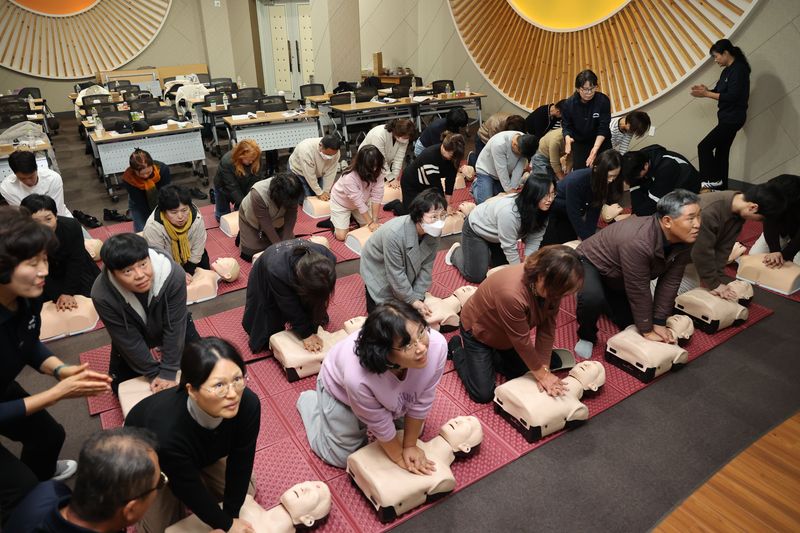
According to Hope Bridge Korea Disaster Relief Association on the 5th, the “2026 Disaster Relief Specialist Training Program” was organized to strengthen local governments’ initial response and on-site recovery capabilities in preparation for extreme rainfall and major wildfires.
Around 40 officials in charge of disaster relief and on-site support personnel took part in the in-person training at Muju County Office. Participants reviewed procedures for setting up and operating temporary housing facilities and managing relief supplies, and practiced chest-compression CPR and the Heimlich maneuver in preparation for emergencies such as cardiac arrest and airway obstruction.
Temporary housing facilities are spaces where disaster victims who have lost their homes or can no longer live in them can stay. The Ministry of the Interior and Safety advises using communal facilities such as gymnasiums and school auditoriums as initial shelters, and setting up tents inside to protect privacy.
The remote training, attended by 15 Gyeongsan City officials in charge of disaster relief, covered the roles of local governments in light of changes to the disaster management system and the Disaster Relief Act. Participants shared support standards for natural and social disasters, procedures for operating local relief centers, and key cases of conflict that arose during public-private cooperation.
The training also covered the “Look·Listen·Link” approach to supporting victims’ psychological well-being in the early stages of a disaster.
“Since disaster response conditions vary from one region to another, we developed a tailored curriculum optimized for each local government’s circumstances,” said Kim Hee-yoon, head of the Relief Fundraising Bureau at Hope Bridge Korea Disaster Relief Association. “We will continue to expand practical, hands-on training that goes beyond theory and can be applied immediately in the field, strengthening local governments’ capacity to respond to disasters and provide relief.”
[email protected] Jang In-seo Reporter