Lee Hyoung-il Reviews Impact of U.S. Midterm Elections on Financial Markets
- Input
- 2026-11-05 15:33:54
- Updated
- 2026-11-05 15:33:54
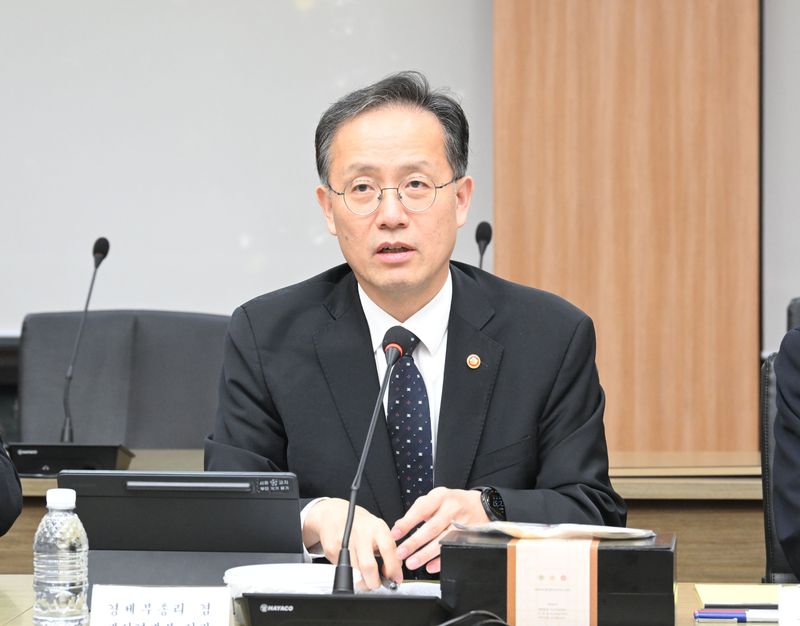
[Financial News] The government has decided to closely monitor the impact of policy changes following the U.S. midterm elections on South Korea’s financial markets and real economy. Since uncertainty over the election results has led to volatility in financial markets, the government plans to step up monitoring of external factors and prepare for market instability through coordination among relevant agencies.
On the 5th, Lee Hyoung-il, Deputy Prime Minister and Minister of Economy and Finance, held a joint market conditions review meeting with relevant agencies at the Export-Import Bank of Korea and examined the impact of the U.S. midterm election results on domestic and global financial markets.
The meeting discussed global financial market movements in response to the vote count in the U.S. midterm elections, held on the 3rd (local time), and changes in the composition of Congress.
Global financial markets saw sharp fluctuations during the vote count, particularly in U.S. stock index futures and the equity markets of major Asian countries such as Japan and Taiwan. Volatility increased as U.S. Treasury yields also fell, but market swings gradually subsided as the election results became clearer.
South Korea’s financial markets also reacted sensitively to the possibility of policy changes in the United States. On the 4th, domestic stocks fluctuated sharply throughout the trading day, but as some election-related uncertainty eased, they turned higher late in the session and closed with a slight rebound. Volatility continued, however, as stocks fell again on the morning of the 5th amid weakness in U.S. semiconductor shares.
Bond markets strengthened amid falling global oil prices and other factors. Korean Treasury bond yields declined, reflecting the continued impact of reduced government bond issuance and expectations that the sharp drop in global oil prices would ease inflationary pressures.
The government also focused on what changes might emerge in fiscal, trade and industrial policy as the composition of Congress shifts following the U.S. midterm elections. It judged that the impact on South Korea’s financial markets and real economy could vary depending on whether the policy direction actually changes, as well as on the specific content of any policies and the pace at which they are pursued.
Accordingly, the government plans to closely monitor not only U.S. AI industry policy, regulatory conditions and tariff policy, but also developments in the war in the Middle East. It plans to maintain close coordination among relevant agencies to prepare for the possibility of increased financial market volatility and support stable growth of the Korean economy amid changes in the external environment.
[email protected] Kim Chan-mi Reporter