11-year dispute over second airport... Jeju begins designing process to gather residents’ views
- Input
- 2026-11-05 15:23:41
- Updated
- 2026-11-05 15:23:41
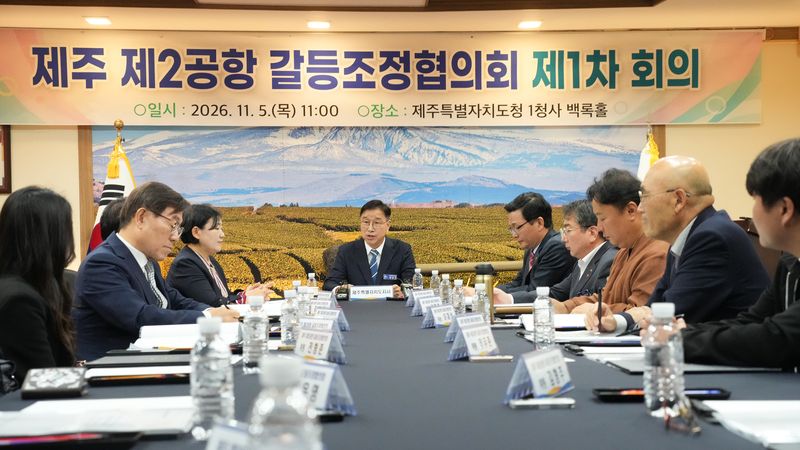
【Financial News, Jeju = Jeong Yong-bok, reporter】 A conflict mediation council tasked with establishing a process for gathering residents’ views on the Jeju Second Airport, the subject of an 11-year dispute between supporters and opponents, has been launched. The Ministry of Land, Infrastructure and Transport (MOLIT) said it plans to submit a draft environmental impact assessment report in December and will accept the method for gathering residents’ views requested by Jeju Province.
According to Jeju Special Self-Governing Province on the 5th, the first meeting of the Jeju Second Airport Conflict Mediation Council was held that morning at Baengnok Hall at the provincial government office, with Jeju Governor Wi Seong-gon, MOLIT officials and council members in attendance.
The council elected Kim Hak-rin, a professor in the Department of Negotiation at Dankook University’s Graduate School of Business Administration, as chair from among its members. Kim currently chairs the steering committee for the citizen panel of the Ministry of Health and Welfare’s Medical Innovation Committee.
The council is made up of 13 members: seven conflict-mediation experts, four stakeholders and two relevant public officials. It is an advisory body—not one that decides whether the second airport will be built—and is tasked with informing residents about key issues and establishing a fair process and method for gathering their views.
Governor Wi said, “Resolving the conflict over the second airport, which has continued for the past 11 years, and uniting the residents of the province are tasks I must take on as governor.” He added, “It is the provincial government’s responsibility to establish a process for gathering residents’ views that they can trust.” He stressed that the council is not the body that will decide whether the second airport is built, and asked it to “design a process for gathering residents’ views so they can make a decision based on sufficient information.”
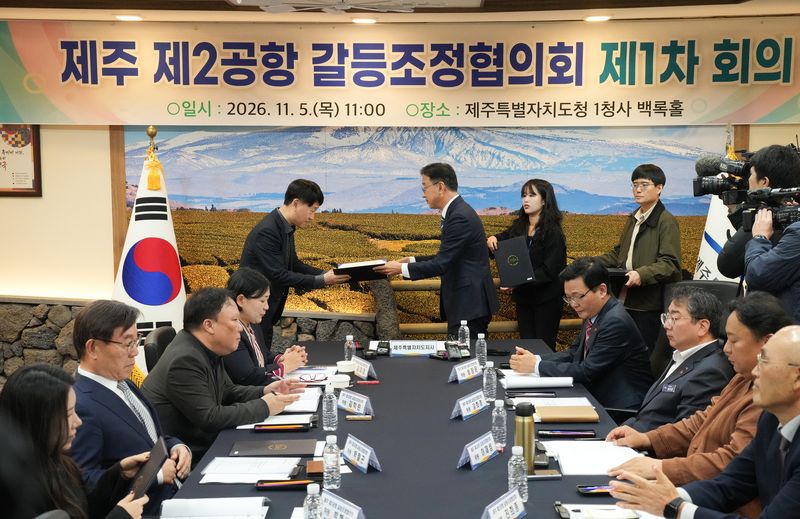
The second airport project got underway after MOLIT announced in November 2015 that an area around Seongsan-eup in Seogwipo City was a candidate site. A master plan covering approximately 5.51 million square meters was formally announced in September 2024, and follow-up procedures, including an environmental impact assessment, are now underway.
An environmental impact assessment examines the effects of airport construction on surrounding ecosystems, groundwater and residents’ living environment, among other things, and reviews measures to mitigate those effects. In Jeju, key issues raised have included bird-strike risks, sumgol ground vents and caves, and groundwater conservation.
An MOLIT official said that day that the ministry plans to submit a draft environmental impact assessment report for the second airport in December. The official also said MOLIT would accept the method for gathering residents’ views requested by Jeju Province.
However, a willingness to accept the proposed method for gathering residents’ views does not mean that Jeju Province will be given final decision-making authority over whether the second airport is built. MOLIT is the project’s implementing agency, and a separate decision will be needed on how the results of the public input process should be reflected in the subsequent stages of the national project.
The council’s representativeness and whether its findings will be accepted are also challenges. Some pro-airport resident groups, including the Jeju Second Airport Pan-Residents Promotion Committee, refused to participate. Instead, a business-sector representative recommended by the Jeju Tourism Association joined the council, while a representative recommended by the Emergency Residents’ Meeting to Stop the Forced Pursuit of the Second Airport joined on the opposition side.
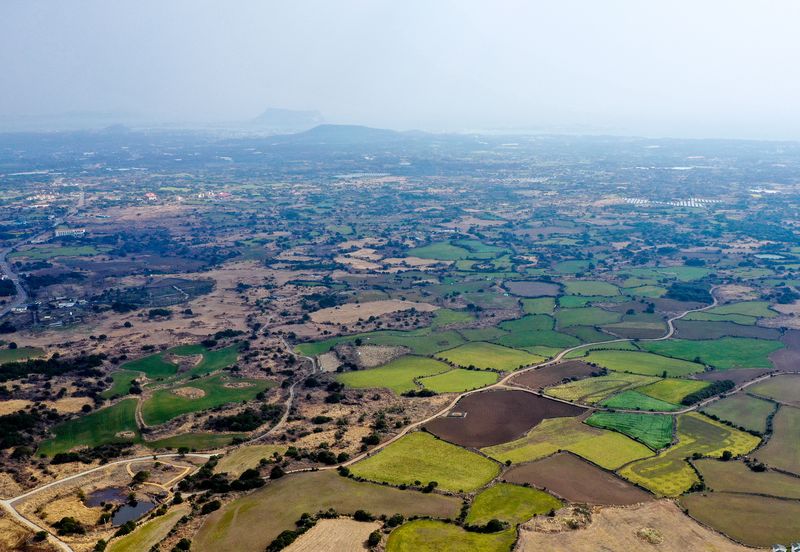
The pro-airport groups argue that creating a separate process for gathering public input on a national project whose master plan has already been announced could delay the project and trigger new conflict. The opposition groups say a fair process is needed to guarantee residents’ right to self-determination.
Council Chair Kim Hak-rin said, “Given how long the conflict over the second airport has continued, I feel a sense of responsibility.” He added, “I will work to gather the members’ views fully and establish a process for gathering residents’ views that the majority can support.”
The council plans to discuss how to provide information on key issues and how to gather residents’ views through January next year, and to deliver its recommendations to the governor sometime in February. Jeju Province plans to complete the process of gathering residents’ views in the first half of next year based on those recommendations.
The meeting’s results will be published on the Jeju provincial government website. Key issues in resolving the conflict will include how much both supporters and opponents agree with the process devised by the council, and how MOLIT incorporates the results into the actual implementation of the project.
[email protected] Jeong Yong-bok Reporter