Korea’s “world-class” education conceals widening gaps among lower-performing students and low life satisfaction
- Input
- 2026-11-05 15:18:59
- Updated
- 2026-11-05 15:18:59
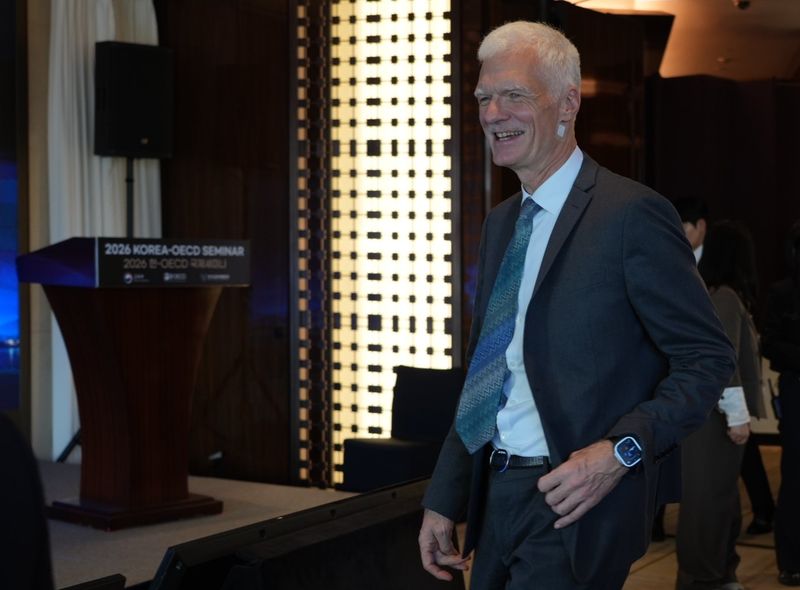
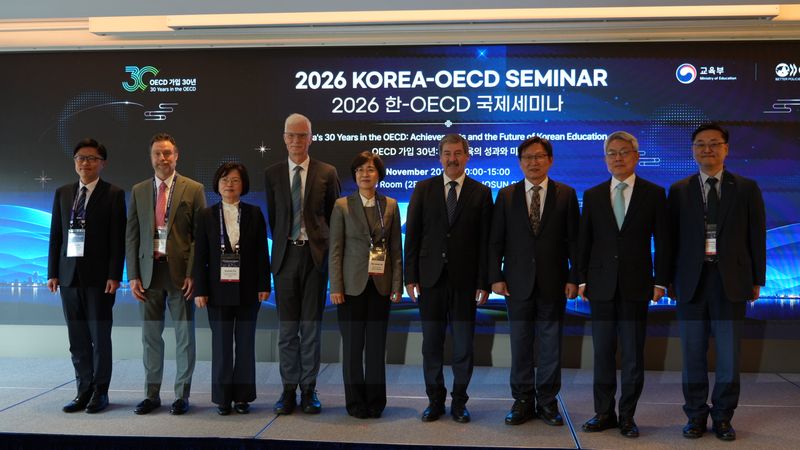
The “2026 Korea-OECD International Seminar,” held on the 5th at The Westin Josun Seoul in Jung District, Seoul, focused on the bright and dark sides of Korean education.
Lee Nan-young, Director-General for International Education Planning at the Ministry of Education, emphasized the purpose of the seminar, saying, “We need to examine with objective data the achievements Korean education has made over the past 30 years and consider how to ensure sustainable development.” Ko Young-sun, president of the Korean Educational Development Institute, added, “It is essential to foster substantive education discourse based on data amid a changing global education landscape.”
Andreas Schleicher, the OECD Director for Education and Skills, delivered the keynote address and offered a pointed assessment of the state of Korean education. Schleicher said, “Korea has consistently ranked near the top in international assessments of academic achievement, demonstrating remarkable strength.” However, he noted, “An education system focused simply on competition for rankings is placing excessive academic burdens and competitive stress on students.” He went on to stress, “In step with the digital transformation and the age of artificial intelligence (AI), we must fundamentally reshape education, moving away from rote learning and toward developing students’ social-emotional competencies and ability to collaborate.” He also emphasized that schools must become inclusive spaces where students can work together and feel emotionally secure, rather than places that simply impart knowledge.
Ko Young-sun, president of the Korean Educational Development Institute, then pointed out that Korean education had partially adopted Finland’s reform model and made changes such as shifting to sample-based assessments, but still faced governance limitations, including centralized control, a lack of teacher autonomy, and an indicator of collaboration among teachers that ranks near the bottom. Ko called for easing frontline teachers’ administrative burdens and improving the fundamentals of education through evidence-based policy design grounded in data, moving beyond ideology.
Like Schleicher, Ko emphasized the urgent need to increase autonomy in schools and bring about substantive, data-driven improvements to the fundamentals of education.
According to Kim’s analysis, Korean students continue to score among the OECD’s highest performers in reading, mathematics, and science overall, but reading achievement has declined broadly and socioeconomic gaps in mathematics have clearly widened. In particular, indicators related to social connection, such as sense of belonging at school and loneliness, have improved, but students’ “life satisfaction” remains among the highest in the OECD, prompting calls for urgent action.
Kim added, “Going forward, education policy should focus not only on achievement indicators, but also on providing carefully tailored support for lower-performing students and vulnerable groups, and improving the quality of life as experienced by students.”
[email protected] Kim Man-gi Reporter