Japan's 'Shodo' Nears UNESCO Intangible Cultural Heritage Listing
- Input
- 2026-11-05 15:16:19
- Updated
- 2026-11-05 15:16:19
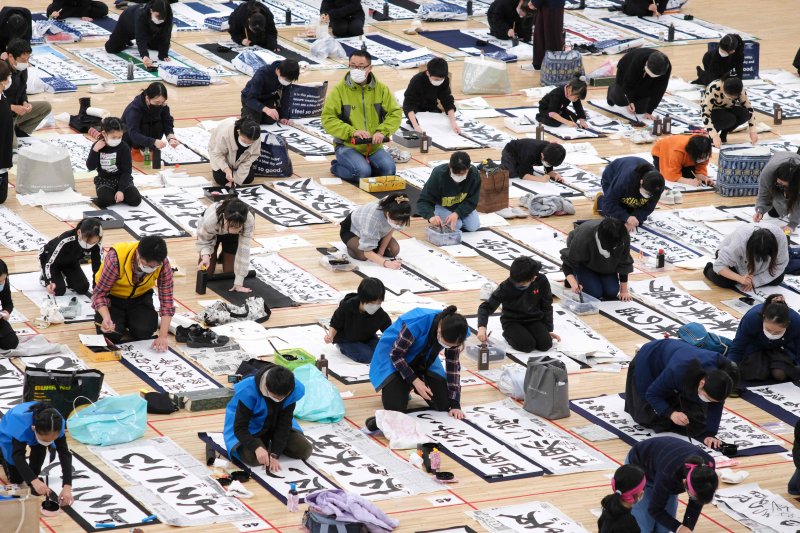
【Financial News Tokyo—Correspondent Seo Hye-jin】Japan's traditional brush calligraphy culture, known as shodo, is expected to be inscribed on UNESCO's Intangible Cultural Heritage list. It encompasses not only calligraphy as an art form but also everyday practices such as writing the first calligraphy of the New Year and writing brush calligraphy on envelopes for celebrations and condolences.
The Agency for Cultural Affairs announced on the 5th that, according to The Asahi Shimbun, Yomiuri Shimbun and other outlets, UNESCO's evaluation body had recommended shodo for inscription following a preliminary review.
The final decision on inscription will be made by the Intergovernmental Committee for the Safeguarding of Intangible Cultural Heritage, which meets in Xiamen, Fujian Province, China, from the 30th through the 5th of next month. The committee customarily accepts recommendations for inscription from the evaluation body, making inscription likely. If approved, shodo will become Japan's 24th UNESCO Intangible Cultural Heritage inscription, following Japanese cuisine, Kabuki and traditional sake brewing, among others.
Recognition extends beyond works to brush calligraphy in everyday life—and how it is passed down
The shodo that the Japanese government applied to have inscribed is a culture of writing Chinese characters and kana with traditional calligraphic techniques using a brush, ink and inkstone. The application broadly covered not only the creation of calligraphy works but also kakizome, the first brush writing of the New Year, and everyday practices such as writing with a brush on letters and on envelopes for weddings, funerals and other ceremonial occasions.
The evaluation body found that shodo meets the criteria for inscription, citing, among other things, how it is passed down through practical activities such as school classes and clubs.
Japanese shodo was influenced by Chinese calligraphy. During the Heian period, as the culture of waka, traditional Japanese poetry, flourished, Japan's own kana script also spread. Chinese calligraphy and Arabic calligraphy are already inscribed on UNESCO's Intangible Cultural Heritage list.
Japan had previously applied to have shodo inscribed in 2024, but its review was deferred after it hit the cap on the number of cases under review. Japan reapplied the following year for a review this year. In Japan, shodo was registered as the first example of a Registered Intangible Cultural Property, a category established through a 2021 amendment to the Cultural Properties Protection Act.
Japanese Prime Minister Sanae Takaichi said on X (formerly Twitter) that day, “I am very pleased that shodo, a valued part of Japanese culture, is being recognized,” adding, “We will appropriately preserve and make use of this precious culture and pass it on to the next generation.”
Inkstone- and paper-producing regions also hopeful: “An opportunity to promote them overseas”
Production areas for calligraphy supplies hope that inscription will also help traditional industries struggling with declining demand.
Ogatsu-cho in Ishinomaki, Miyagi Prefecture, a leading inkstone-producing area, was hit hard when artisans and products were damaged in the Great East Japan Earthquake. Okitsu Shunichi, chairman of the Ogatsu Inkstone Production and Sales Cooperative, said, “I'm very happy, having waited for this for a long time,” and added, “I hope interest in shodo will grow and that people will also take an interest in Ogatsu inkstones.”
Shikoku Chuo City in Ehime Prefecture, which is said to account for about 70% of Japan's calligraphy-paper market, also welcomed the news. The city hosts the Calligraphy Performance Koshien, where high school students work together to complete pieces on large sheets of paper to music.
Hinari Shimowada, captain of the calligraphy club at Mito Goryo High School in Ibaraki Prefecture, whose team won the competition in both the previous year and this year, told The Asahi Shimbun, “I'm happy that shodo, which I've practiced for a long time, is being introduced to the world as a source of pride for Japan.”
Fukushima Kokin, who teaches calligraphy at venues including the Japan Society in New York, said he expected the inscription to “give a tailwind to efforts to promote Japanese shodo.” He said brushes, ink and paper are difficult to obtain locally and that many people have only one-off experiences with calligraphy, expressing hope that the inscription would help broaden interest in shodo.
[email protected] Seo Hye-jin Reporter