“A 3 billion won plunge in Apgujeong? Monthly rent in Gangbuk is 3.5 million won right now”
- Input
- 2026-11-05 19:00:00
- Updated
- 2026-11-05 19:00:00
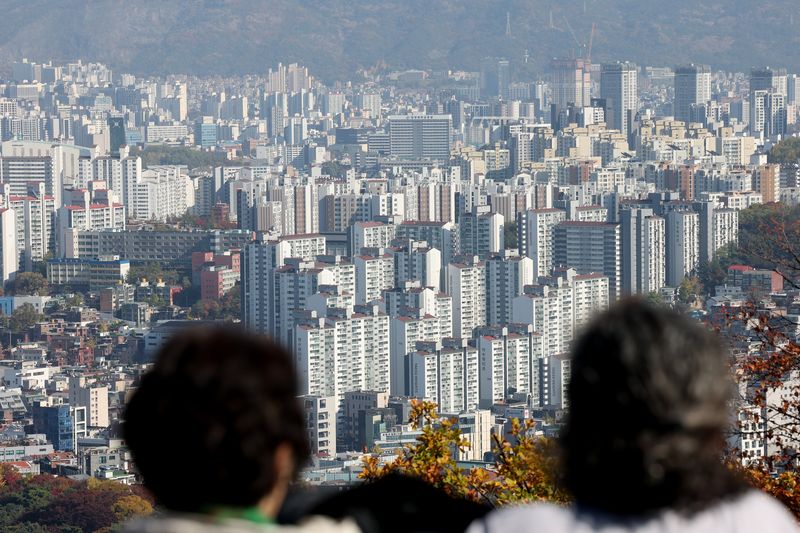
[Financial News] Newlyweds unable to bear the shortage of jeonse listings and the burden of high monthly rents are taking out loans to buy homes—a phenomenon known as “survival buying”—and this is driving up home prices on Seoul’s outskirts and in Gangbuk, according to an analysis. While prices are falling for ultra-high-end apartments in the Gangnam area as owners put them up for quick sale to avoid tax burdens, the severe jeonse shortage in more affordable residential areas is propping up home prices, deepening the polarization of Seoul’s housing market.
Institute head Kim: “Gangbuk home prices are rising because jeonse listings have disappeared and monthly rents have soared”
Kim Inman, head of the Real Estate Economics Research Institute, appeared on the Munhwa Broadcasting Corporation (MBC) radio program Kim Jong-bae’s Focus on the 5th and discussed the polarization of Seoul’s real estate market and the imbalance between housing supply and demand.
Kim cited the disappearance of jeonse listings and soaring monthly rents as the reasons for rising home prices in Gangbuk, Dongdaemun, Seodaemun, Seongbuk District, and Nodogang (a portmanteau of Nowon-gu, Dobong-gu, and Gangbuk-gu).
“During the former Moon Jae-in administration, investment demand driven by FOMO (fear of missing out)—the kind that said, ‘You still haven’t bought? You’ll be left poor overnight’—led the market,” he explained. “But there isn’t as much anxiety or investment demand like that now.”
Newlyweds can’t afford monthly rent, so they opt for “survival buying” instead
He continued, “When newlyweds can’t find a jeonse listing, they look for monthly rentals, where the going rates are a deposit of 200 million to 300 million won and monthly rent of 2.5 million to 3.5 million won. Rather than struggle to pay the rent, many are taking out loans to buy a home—a trend known as ‘survival buying.’”
He noted, “If the jeonse and monthly-rental market had been stable, there would have been no reason for home prices in Gangbuk to keep rising for so long.”
He also offered a pessimistic outlook for the jeonse and monthly-rental market. Kim explained, “For the market to stabilize, there needs to be a sufficient supply of homes for people to move into. But from 2026 to 2030, new apartment move-ins in Seoul will total only around 60,000 units, while relocation demand from redevelopment projects will reach 180,000 households.”
He added, “With relocation demand three times greater than new supply, landlords are even raising monthly rents, partly because of restrictions such as owner-occupancy requirements. Without extraordinary government measures, it will be difficult to stabilize the jeonse and monthly-rental market in the short term.”
“Taxes” behind falling Gangnam home prices... Long-term owners put properties up for quick sale
Kim interpreted President Lee Jae Myung’s recent remark that “home prices in major parts of Seoul are falling at a surprising rate” as referring to a localized phenomenon affecting some ultra-high-end apartments in the Gangnam area.
Kim said, “A 61-pyeong apartment in Apgujeong sold for 12.8 billion won last December and recently traded for 9.2 billion to 9.3 billion won. That’s a drop of about 3.5 billion won (25%) in one year, so ‘sharp plunge’ is an apt description. However, prices that were in the 6-billion-won range three years ago nearly doubled before correcting. Depending on the point of comparison, you might call it a collapse, or still think it’s expensive.”
He identified the tax burden, rather than interest rates, as a key reason for falling home prices in the Gangnam area. Kim analyzed, “Owners aren’t putting their homes on the market because they think prices won’t rise any further; it’s a rational choice in response to tax reform. With property holding taxes alone reaching tens of millions of won, and forecasts that the deduction cap for the long-term holding special deduction (up to 80%) will be reduced to 1 billion won starting in 2029, long-term owners who can no longer bear the tax burden are putting their properties up for quick sale.”
He added, “The government has granted a grace period through 2027, but people hoping to sell will finish their sales by the first half of next year. There’s a precedent from the Roh Moo-hyun administration: the market stabilized briefly for a year, then rose again. It’s too soon to assume that short-term effects mean lasting stability; it would need to continue for at least three to five years to count as genuine ‘stability.’”
“Loan restrictions hit homebuyers in the outer metropolitan area and provincial regions harder,” he noted
He also pointed to a paradoxical effect of loan restrictions. Kim explained, “In the Gangnam area, loan limits have fallen to around 200 million won, so many people buy homes using their own funds or gifted money and are relatively less affected by high interest rates. It’s newlyweds who bought homes priced at 1.5 billion won or less with 600 million won in loans, along with homebuyers in the outer metropolitan area and provincial regions who face growing interest costs while home prices stagnate, who are being hit much harder.”
Finally, he stressed, “It’s hard for the public to see tangible results at the land-compensation or permitting stage. As in the days of the second-generation new towns, the government should pool public-sale housing and hold large-scale joint sales events, like a ‘housing subscription festival,’ so newlyweds can stop overextending themselves to buy and wait to apply for homes instead.”
[email protected] An Gaeul Reporter