A Greek tragedy shaped by female pansori singers ... National Changgeuk Company of Korea’s “Oedipus”
- Input
- 2026-11-05 16:10:57
- Updated
- 2026-11-05 16:10:57
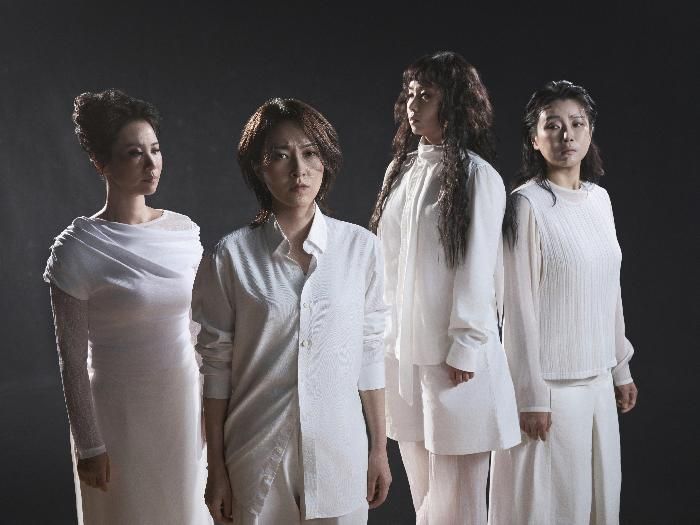
[Financial News] The National Changgeuk Company of Korea is reinterpreting an ancient Greek tragedy through the voices of female pansori singers.
The National Changgeuk Company of Korea announced on the 5th that it will present its new changgeuk production “Oedipus” at the Dal-Oreum Theater at the National Theater of Korea in Seoul from the 26th through December 5. Based on Sophocles’ tragedy “Oedipus Rex,” the production is directed by Choi Jin-a, with a script by Bae Sam-sik. Jang Seo-yun will participate as pansori composer and music director, and Jang Seok-jin will compose the music.
The original tells the story of Oedipus, who tries to evade an oracle that he will “kill his father and marry his mother,” but ultimately faces his fate. Rather than focusing on the human limitation of being unable to escape fate, this changgeuk centers on the will and choices that drive people to keep moving toward a painful truth.
A defining feature of this production is that all the roles are played by female pansori singers. Lee So-yeon plays Oedipus, and Kim Mi-jin plays Queen Jocasta. Lee Yeon-ju appears as Creon, the queen’s younger sibling, who is embroiled in a power struggle with Oedipus, while Eun Kyung Min plays the prophet Tiresias. Jo Yu-a and Seo Jeong-geum take the roles of the messenger and the shepherd, respectively.
Director Choi Jin-a won the directing award at Romania’s Babel Festival in 2017 for the play “Oedipus: The One Who Wants to Know.” Making her changgeuk debut, Choi said, “I wanted to present tragedy as a universal human story, not the experience of a particular gender.” The production draws on a characteristic of pansori, in which a single singer has portrayed multiple characters across gender and social status.
The music combines the timbres of Korean traditional and Western instruments, with pansori and traditional rhythmic patterns at its core. Jang Seo-yun, who has collaborated with the National Changgeuk Company of Korea on works including “Ongcheo” and “The Merchants of Venice,” is creating the music with composer Jang Seok-jin. A 16-member ensemble combines Korean traditional instruments—including the piri, daegeum, gayageum, geomungo, ajaeng and percussion—with violin, viola, cello, double bass and keyboard, among others, to convey the characters’ emotions and conflicts. Choral singing with divided vocal parts alternates with the characters’ solos, heightening the tension as the story moves toward tragedy.
The stage, too, is filled with contemporary imagery rather than realistically recreating ancient Greece. Stage designer Lee Tae-seop has created a space with a circular LED display and a sloped stage that allows the audience to focus on the characters’ psychology and the flow of the play. Costume designer Kim Sang-hui uses modern clothing as a foundation, varying silhouettes, materials and colors to express the characters’ personalities and changes.
[email protected] Shin Jin-a Reporter