Jeju faces airline seat shortage ... Rep. Moon Dae-rim: “Prime minister must coordinate measures to protect mobility rights”
- Input
- 2026-11-05 13:38:51
- Updated
- 2026-11-05 13:38:51
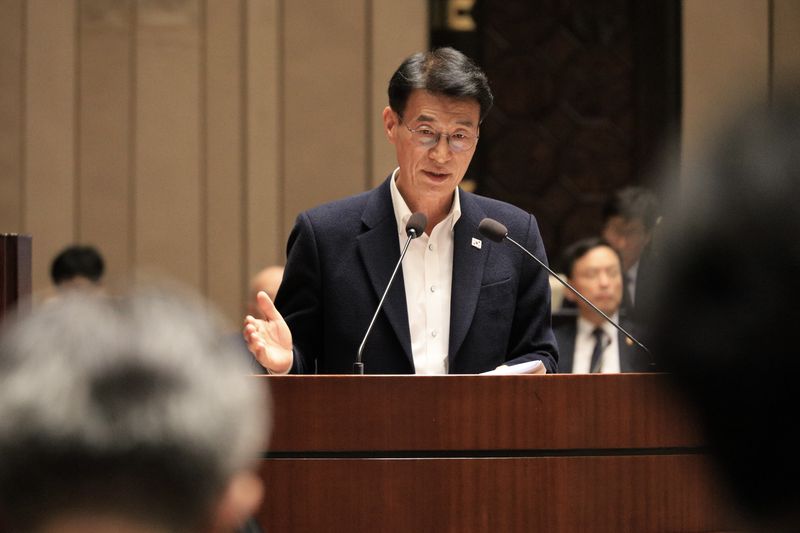
【Financial News, Jeju — Reporter Jeong Yong-bok】 A call was made in the National Assembly to put Jeju residents’ right to air travel on the official agenda of the Jeju Support Committee, chaired by the prime minister, in response to declining airline seat capacity to Jeju. There were also calls to expand the time windows for takeoffs and landings at Jeju Airport and finalize a plan to increase air traffic control staffing within the year.
According to Democratic Party of Korea lawmaker Moon Dae-rim (Jeju City A district) on the 5th, Moon urged Prime Minister Han Seong-sook the previous day to devise a comprehensive, government-wide plan to guarantee Jeju residents’ right to air travel during a comprehensive policy questioning session of the National Assembly’s Special Committee on Budget and Accounts.
Moon stressed, “The supply of airline seats should not be left to market forces alone,” adding, “Since the state has assigned Jeju the role of an International Free City, it must also take responsibility for providing a stable transportation infrastructure.”
The shortage of airline seats is linked to an actual decline in supply. According to Korea Airports Corporation (KAC), the planned domestic seat capacity at Jeju Airport for this year’s summer operating period, from March 29 to October 24, was 17,153,208 seats—651,394 fewer than the 17,804,602 seats actually supplied during the same period last year.
The average planned daily capacity also fell by 3,102 seats, from 84,784 last year to 81,682 this year. The planned capacity of Korean Air and Asiana Airlines declined by 17% and 26%, respectively.
According to Jeju Province, domestic seat capacity declined year on year for four consecutive months, from April through July this year. The decline is believed to have been influenced by airlines expanding international operations and adjusting aircraft deployment, among other factors.
For Jeju residents, air travel is an essential means of everyday transportation for visits to hospitals on the mainland, business trips and family visits. In the tourism industry, the supply of flights and airfares also affect how accessible Jeju is to visitors.
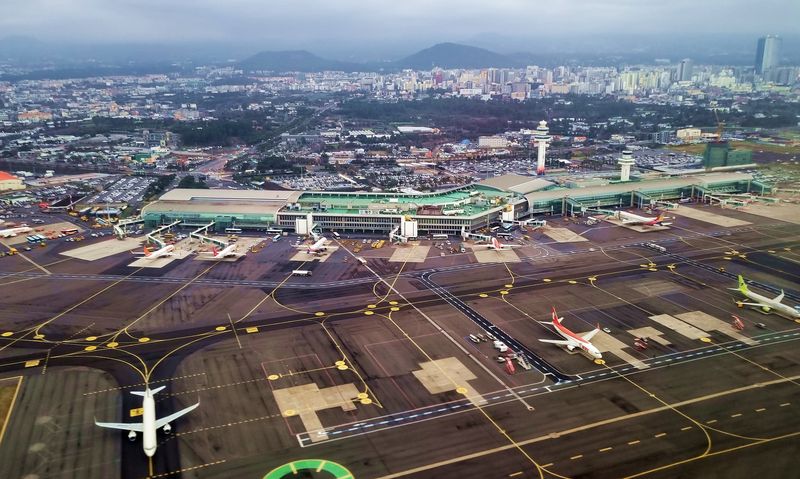
Jeju Province formed a task force to stabilize airline seat supply last August, with airlines and Korea Airports Corporation among its participants. However, slot allocation and increases in air traffic control staffing require consultations with the central government and relevant agencies.
A slot is a time window allocated to an aircraft for takeoff or landing at an airport. Even if more slots are made available, actual flight operations can only be increased if adequate air traffic control staffing, runway operations and airport safety management are also in place.
Moon called for stronger oversight of airlines’ compliance with their respective flight schedules and changes to air transport service evaluation criteria that disadvantage new routes to Jeju. He also called for adjustments to the operating hours of customs, immigration and quarantine (CIQ) services and increased staffing at relevant agencies.
Moon stressed that a phased schedule for expanding slots at Jeju Airport and a plan to increase air traffic control staffing should be finalized within the year, and that measures should be devised to secure seats for essential trips to the mainland, such as emergency medical care and attending family events.
Moon also asked the government to cooperate in securing funding for related research and in passing legislation concerning the right to air travel.
Moon proposed the Jeju Support Committee as a government-wide response body. Chaired by the prime minister, the committee deliberates on major policies concerning the development of Jeju Special Self-Governing Province and the creation of an International Free City.
Moon called for the mobility issue to be formally placed on the Jeju Support Committee’s agenda so the prime minister can directly coordinate aviation policies divided among government ministries, and for the Office for Government Policy Coordination to draw up an integrated plan involving the relevant ministries.
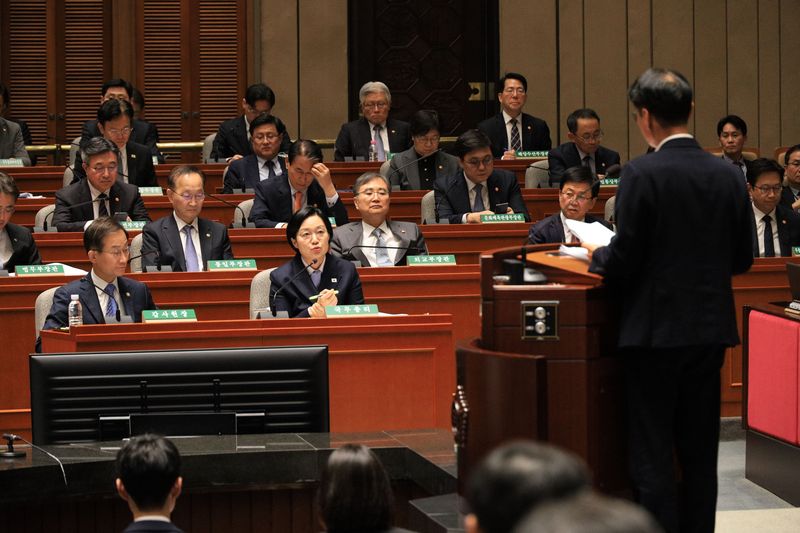
The issue of airline seats to Jeju was also raised at Prime Minister Han’s confirmation hearing in the National Assembly last June. At the time, when Rep. Kim Han-kyu (Jeju City B district) called for more domestic seats to Jeju, Han said she would look into possible solutions.
During this committee’s questioning session, Prime Minister Han Seong-sook said, “I will take a comprehensive look at the issues raised, including guaranteeing Jeju residents’ right to air travel and improving airport operations, and provide a separate explanation on the relevant matters.”
The maritime mobility rights of Chujado Islands residents were also raised during the National Assembly questioning. The company operating the Santa Monica, which serves the Jindo–Chujado Islands–Jeju route, notified Jeju Province that it planned to end service on December 31 this year, citing financial difficulties.
The Santa Monica is a necessary means of transportation for Chujado Islands residents to travel to Jeju’s main island, attend medical appointments and take care of administrative matters, and return the same day. Even if another passenger ferry operates, its schedule may make a same-day round trip difficult.
Moon asked the prime minister to step in and coordinate efforts by the Ministry of Oceans and Fisheries and the Ministry of the Interior and Safety to devise measures guaranteeing Chujado Islands residents the ability to make necessary trips and return within a day, including securing a replacement vessel.
Moon also called for expanded support for surviving victims of the Jeju April 3 Incident. The proposal is to shift medical expenses for surviving victims, currently covered by local funds, to the national budget and for the government to support revisions to the Jeju 4.3 Special Law to establish the legal status of the Association for the Bereaved Families of the April 3 Victims and a basis for supporting it.
Moon said, “I will work to ensure that Jeju residents’ right to air travel, the right of Chujado Islands residents to maintain their daily lives, and national recognition for the victims of the April 3 Incident lead to meaningful institutional improvements and budgetary support.”
[email protected] Jeong Yong-bok Reporter