Japan on edge after Trump's crushing defeat, wary of being sidelined and of pressure over defense spending [U.S. midterm elections]
- Input
- 2026-11-05 13:11:40
- Updated
- 2026-11-05 13:11:40
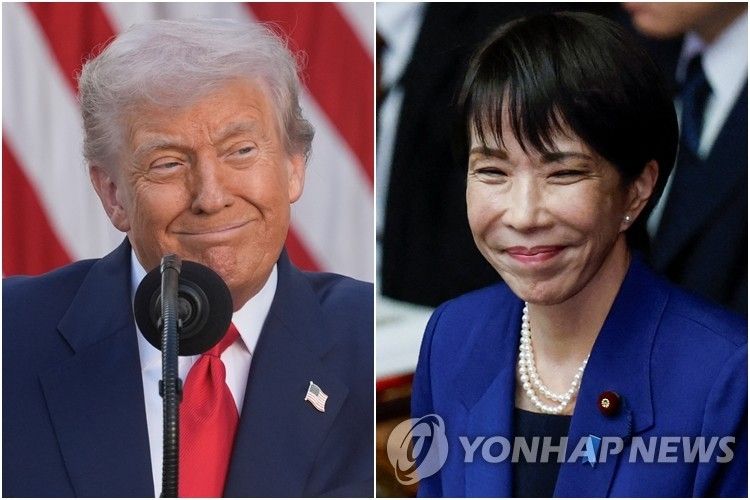
【Financial News, Tokyo—Correspondent Seo Hye-jin】After the governing Republican Party suffered a crushing defeat in the U.S. midterm elections, the Japanese government is closely watching President Trump's diplomatic moves. There are concerns that, as Trump faces stronger checks from Congress and rushes to secure foreign policy gains, he could strike deals with China, Russia and North Korea while leaving Japan out. Japan is also wary of pressure to increase its share of defense spending and the costs of stationing U.S. forces in Japan, and is moving quickly to communicate with the United States.
“Deals without Japan would be a problem”: Fears North Korea's nuclear and abduction issues will be sidelined
According to the Yomiuri Shimbun, NHK and other outlets on the 5th, some in the Japanese government believe President Trump will try to find a breakthrough in foreign policy during the roughly two years remaining in his term. If the Democrats take control of both chambers of Congress, passing budgets and legislation will become difficult, while the president will have relatively more room to act independently on foreign policy.
The Asahi Shimbun, citing an official at the Prime Minister's Office, reported the official as asking, “If Congress stops functioning, might he not unleash his energy in other areas, such as foreign affairs and security?” NHK also reported that a senior administration official said, “We cannot predict what impact this will have on Japan.”
Japan is watching the summit diplomacy around the Asia-Pacific Economic Cooperation (APEC) summit, which will be held in China in the middle of this month. President Trump has expressed eagerness for a summit with the leaders of the U.S., China and Russia, and has also shown openness to meeting Kim Jong Un, general secretary of the Workers' Party of Korea.
Japan's position on North Korea is that the abduction of Japanese nationals and the nuclear and missile issues must be resolved comprehensively. But if President Trump prioritizes improving relations between North Korea and the United States, these issues could be pushed aside. A senior Japanese government official told the Yomiuri Shimbun, “It would be a problem if a deal were reached with Japan left out.”
Improved relations between the United States and China would also pose a burden for Japan. Japan is moving quickly to strengthen its defense posture to deter China, based on the U.S.-Japan Alliance.
The Yomiuri Shimbun noted that China's coercive pressure could intensify if the United States adopts a conciliatory stance toward China. The Asahi Shimbun also reported a Foreign Ministry official's reaction: “For Japan, whose relations with China and Russia have deteriorated, a rapprochement among the U.S., China and Russia is unwelcome.”
U.S. involvement in the Middle East is also a concern. The Asahi Shimbun noted, “U.S. attacks on Iran led to U.S. military assets being moved to the Middle East, creating a ‘power vacuum’ in the Indo-Pacific.” With the possibility of the United States resuming attacks on Iran also being discussed, Japan is wary that U.S. security engagement in the Indo-Pacific could weaken.
Defense spending and tariff burdens persist... Japan hurries to strengthen communication between leaders
There are also concerns that demands for allies to shoulder more costs will intensify. The Asahi Shimbun, citing an official at the Prime Minister's Office, reported the official as asking, “Won't he step up the pressure so he can say he got money out of Japan?”
Japan is set to revise its three key security documents this year. The Trump administration has called on allies to spend 3.5% of their gross domestic product (GDP) on defense.
Japan, for its part, is seeking Washington's understanding for an approach that would leave out of its documents a target of achieving “3.5%” over the next five years. It is also negotiating an agreement by the end of this year on Japan's contribution to the costs of stationing U.S. forces in Japan, to take effect from fiscal 2027.
It is also uncertain whether the tariff burden will ease. The Yomiuri Shimbun noted, “Even if the Democrats pass a bill to repeal the tariffs in both the House and the Senate, President Trump could veto it.” A Republican defeat alone is unlikely to soften U.S. demands on Japan.
Some in the Japanese government believe President Trump's stance toward Japan will not change significantly. The Yomiuri Shimbun reported that “some voices say this makes it all the more important to convey Japan's views to the United States.”
Prime Minister Sanae Takaichi plans to visit China for the first time since taking office, on the occasion of the APEC summit in the middle of this month. The Yomiuri Shimbun reported that “some believe she should contact President Trump ahead of the visit to China and realign their understanding of China.” NHK also reported that “Prime Minister Takaichi intends to use the international summit to reaffirm with President Trump the importance of the U.S.-Japan Alliance.”
Chief Cabinet Secretary Kihara emphasized the previous day that the U.S.-Japan Alliance is the cornerstone of Japan's foreign and security policy, regardless of the election result. The government intends to cooperate closely at every level, including between the two countries' leaders and diplomatic authorities.
[email protected] Seo Hye-jin Reporter