'Jiral' to 'ttakkari'...Rereading profanity in K-content...'NEW Yok'
- Input
- 2026-11-05 12:49:48
- Updated
- 2026-11-05 12:49:48
[Financial News] “In 2015, an out-of-the-blue theory emerged that the ‘gae’ in ‘gae××’ meant ‘fake’ rather than an animal. The claim was that ‘gae××’ referred to a child born to a woman and a man other than the child's father. After the National Institute of Korean Language (NIKL) reiterated that ‘gae××’ did indeed mean a puppy, ‘gae’ ultimately remained a ‘disgraceful prefix’ attached to the worst kind of person, one who has turned their back on humanity and morality.” (From Chapter 2, ‘Gae××: Even Though You Love Dogs So Much’)
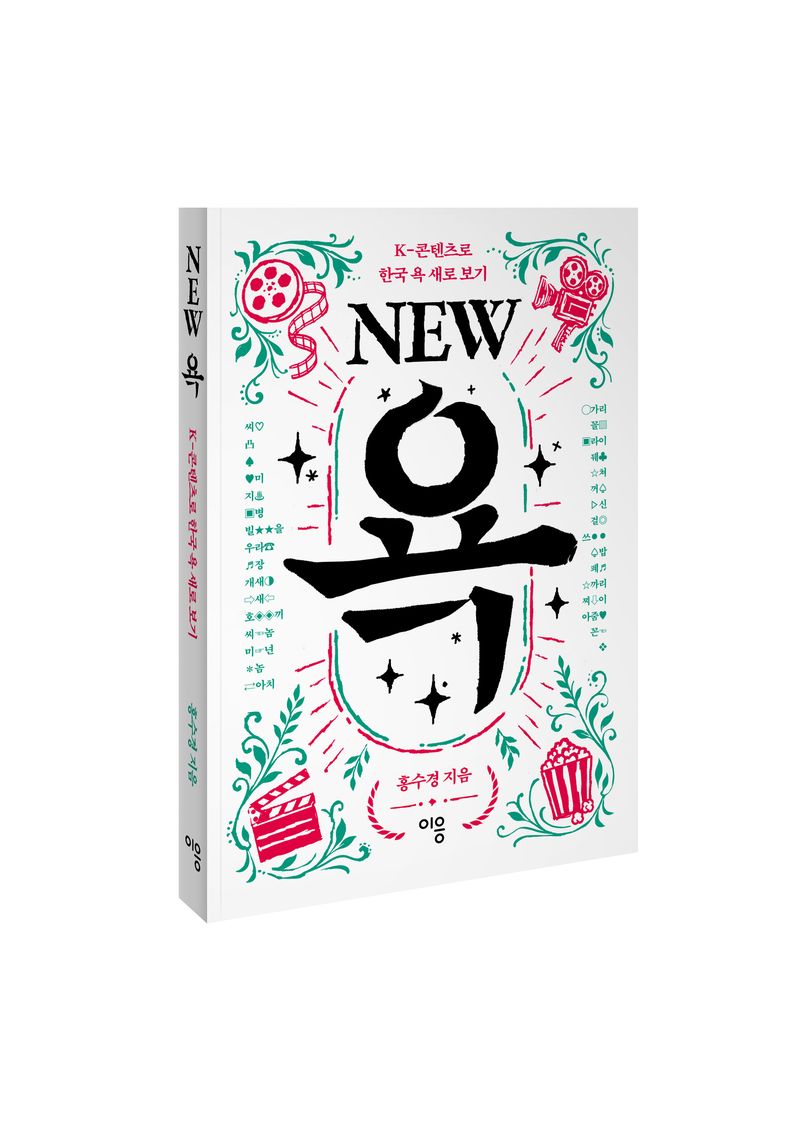
As worldwide interest in K-content continues to grow, a book exploring profanity in Korean films and dramas has been published. It is NEW Yok by Hong Su-gyeong, a former film journalist. Its subtitle is A New Look at Korean Profanity Through K-Content. The title wittily captures the idea that the author, who lives in New York, is taking a fresh look at Korean profanity.
Rereading Korean profanity through a New Yorker’s eyes
“What did you say? Didn’t you just say ‘f×ck’?” Danjong of Joseon, a man of high status, can hardly believe his ears at the blunt profanity (the film The King’s Warden), while King Sejong openly rebukes the literati who opposed the creation of Hangul: “You’re talking sh×t!” (the drama Deep Rooted Tree). An upper-class young person who treats those around him as inferior is called a “nice gae××” (the drama The Glory), while a half-baked con artist delivers a stunning assessment of a police officer who excels in every respect: “I vaguely thought you were a gae××, but specifically, a →sae←” (the film Master).There is also an intriguing contradiction in cherishing pet dogs as family while insulting people by calling them ‘gae××.’ In 2015, a theory emerged that ‘gae’ meant ‘fake’ rather than an animal, but, as the author puts it, ‘gae’ remained a ‘disgraceful prefix’ attached to people who have turned their backs on humanity and morality.
The meaning and force of profanity change over time. The verb ‘michida’ (‘to go crazy’) can now also express the passion of being deeply absorbed in something. One example is ‘-chin-ja,’ a term for someone obsessed with a particular pursuit, such as running or films. Through Somin (played by IU) in the film Dream, the book explores a character distinct from the old, rough and threatening image of a ‘michin×.’
In the film Nothing Serious, ‘ttakkari,’ a disparaging term for someone who takes care of another person’s chores and messes, becomes an unexpected source of comfort. In the story told by Ja-young’s (played by Jun Jong-seo) grandmother, no one can always live as the protagonist. Sometimes we support others, and sometimes we receive help from someone else. The book finds the force that moves life in the solidarity of many ‘ttakkari’ who sustain one another.
Conversely, ordinary forms of address can turn into discriminatory language. Through the contempt attached to ‘ajumma’ and ‘-chung,’ a suffix added to various words to turn people into bugs, the book also examines how profanity goes beyond personal feelings to stigmatize entire groups.
The book also compares Korean profanity with English swear words the author encountered while living in New York. It considers the wide range of emotions and levels of intensity conveyed by Korean curses, which are often rendered in English subtitles with just a few expressions such as ‘Shit’ and ‘Fuck.’ It also compares the Korean practice of using derogatory terms for body parts with English insults, exploring what the two languages have in common and how they differ.
The author worked as a film journalist for Premiere and Movie Week. After moving to New York in 2010, she ran a film podcast and served as the Korean Film Council’s North America representative. The book draws on the language she encountered in Korea and the United States, as well as her years of experience with film.
The publisher Ieung puts out books that introduce the beauty and uses of the Korean language. Its titles include Tasty Adverbs, a book about adverbs; Blow on It, Gobble Up a Honey Rice Cake, and Burp!, a collection of onomatopoeic and mimetic words; and The Moment Words Begin to Flow, which pairs adjectives with landscape photographs.
[email protected] Shin Jin-a Reporter