Move to curb public institutions’ arbitrary refusals to disclose information; abusive requests to be restricted
- Input
- 2026-11-05 12:00:07
- Updated
- 2026-11-05 12:00:07
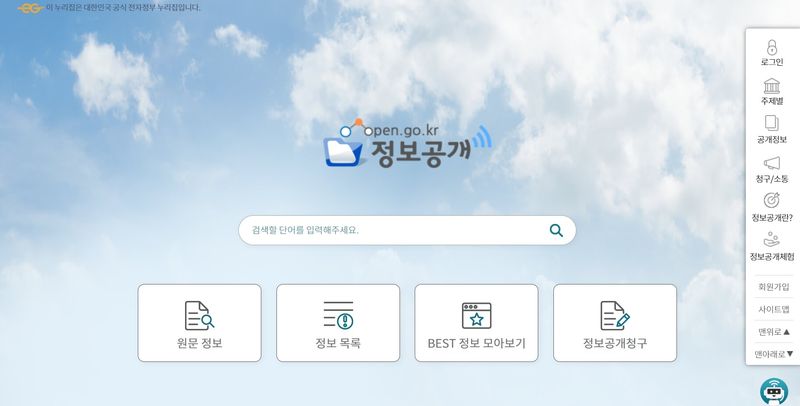
The government will clarify the criteria for withholding information to prevent public institutions from arbitrarily refusing disclosure, and expand the information they must make public without citizens having to file separate requests, including audit findings and disciplinary actions against public officials. People will also be able to appeal when disclosure is denied on the grounds that the information does not exist. By contrast, requests for information accompanied by verbal abuse or threats may be closed, and use of the information disclosure system may be restricted if abusive requests are repeated.
The Ministry of the Interior and Safety (MOIS) said it would publish for public comment, from the 6th through December 16, a bill to amend the Official Information Disclosure Act. Since December last year, the government has operated a public-private task force (TF) involving civic group activists and experts, and prepared the bill after gathering views from relevant ministries, public officials’ labor unions and others.
More information to be disclosed without a request... Audit and disciplinary results added to proactive disclosure list
The range of information that public institutions must disclose will expand. Details of budget execution at each stage, audit findings, commissioned research results related to policy decisions, and disciplinary actions against public officials will be added to the list for proactive disclosure. However, even if research results and other information are included on that list, they may be withheld if they fall under grounds for nondisclosure in the Official Information Disclosure Act.
Requesters will also be able to challenge an institution’s determination when it says it has never produced or held the information in question. The disclosure rate last year was 94.1%, remaining in the 94% range for the past three years, but that figure does not include decisions that the information does not exist. There were about 2.62 million information disclosure requests last year, roughly 100 times the number at the system’s introduction.
The grounds on which public institutions may withhold information have also been clarified. Current law allows nondisclosure for certain reasons, including national security, trials and investigations, personal information, and corporate trade secrets. In response to concerns that some institutions interpret these grounds too broadly, the government plans to specify the criteria for five categories with relatively high nondisclosure rates.
The government will make clear that information disclosure cannot be refused solely on the basis of laws stipulating general duties to maintain confidentiality in the course of one’s work. Institutions will not be able to refuse disclosure merely because information is under internal review, and information on which a decision has not yet been made will be clearly designated as subject to nondisclosure when its release could interfere with the fair performance of duties.
Lee Yu-na, head of MOIS’s Information Disclosure System Division, explained at a briefing held the previous day: “A provision stipulating a general duty of confidentiality, such as public officials’ duty to maintain secrecy under the State Public Officials Act, cannot by itself serve as grounds for withholding information. By contrast, we want to make clear that information may be withheld when a law explicitly designates specific information as confidential, as the Public Service Ethics Act does.”
The scope of disclosure for information related to trials and investigations will also expand. Exceptions will be established to allow disclosure of such information when, for example, there is no risk that it will directly affect trial proceedings or the outcome.
The criteria for withholding information on the grounds that it constitutes a corporate trade secret will also become stricter. The existing category of business and trade secrets will be specified as trade secrets under the Unfair Competition Prevention and Trade Secret Protection Act, and the standard of a risk of serious harm to a company’s legitimate interests will be refined to require a clear risk of specific losses. This means that materials a company submits to the government may be subject to disclosure if a public institution holds them. However, for information involving a third party, the institution must hear the company’s views and determine whether the information falls under statutory grounds for nondisclosure.
Requests involving verbal abuse or threats to be closed... Repeated cases may lead to suspension of system access
The bill will also add provisions to protect information disclosure officers and address requests that abuse the right to seek information. At present, the legal basis under the Official Information Disclosure Act for closing a request is inadequate, even when it contains verbal abuse, profanity or threats. The bill will allow requests containing verbal abuse, profanity, defamation, threats and similar content to be closed, and require the heads of public institutions to put measures in place to protect staff. If the number of times requests, including repeat requests, are closed exceeds a set threshold, the MOIS minister may suspend access to the information disclosure system at the request of a public institution. Requesters will be given an opportunity to explain their case, and the Information Disclosure Commission will review the matter, but the specific threshold and duration of a suspension have not yet been determined. The bill will also restrict new requests until outstanding fees are paid if someone fails to pay information disclosure costs without a valid reason. An MOIS official said, “We plan to set the criteria for repeat requests by presidential decree and decide the suspension period after gathering opinions.” [email protected] Lee Bomi Reporter