Hanoi introduces turnkey contracts for five urban rail lines and a cap on underground contract amounts
- Input
- 2026-11-05 12:11:24
- Updated
- 2026-11-05 12:11:24
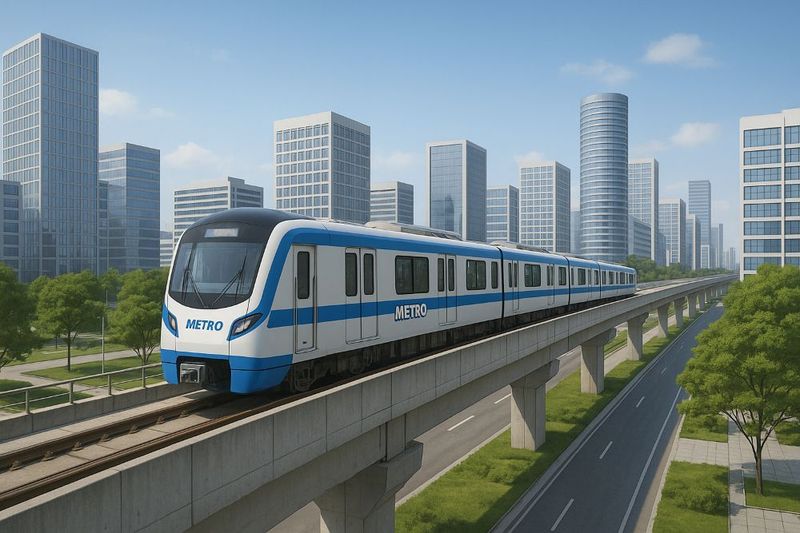
【Hanoi, Vietnam — Correspondent Kim Jun-seok】The Hanoi government in Vietnam has approved special investment mechanisms, including allowing turnkey contracts for five urban rail projects in the city and limiting contract amounts for underground sections to no more than $120 million per kilometer (about 160.4 billion won).
According to local media on the 5th, the Hanoi People's Council officially passed a resolution the previous day setting out the pilot application of certain special mechanisms and policies for investment in urban railway construction in the city. The pilot covers five lines in total—Lines 1, 2, 8, 10 and 14—and will run for five years from the resolution's effective date.
One of the resolution's key provisions allows the projects to be carried out under turnkey contracts with strategically selected contractors. Strategic contractors must be Vietnamese companies and may participate only individually or as part of a consortium. Participating companies must meet the financial capacity requirements for fulfilling the contract or demonstrate that they can secure funding legally.
In particular, for projects using turnkey contracts, contractors must ensure that the average contract price for underground sections does not exceed $120 million per kilometer (about 160.4 billion won). The cap excludes costs for providing dual-use functionality, value-added tax (VAT), compensation, support and resettlement, relocating technical infrastructure, and project management and consulting fees borne by the client.
Contract amounts will be finalized by comparison with the audit findings of the State Audit Office of Vietnam. If the audit findings are lower than the existing contract amount, the contract amount will be adjusted downward; if they are equal to or higher than the contract amount, the existing amount will be maintained.
Rules on managing advance payments will also be strictly enforced. All advance payments must be deposited into a dedicated account newly opened by the contractor at a commercial bank in Hanoi and may be used only for work within the scope of the relevant contract. If funds are found to have been used for other purposes, the client may suspend disbursements, recover the funds and terminate the contract.
The resolution also includes provisions to prevent technological monopolies and ensure independent operating capabilities. Contractors must draw up a technology transfer and localization roadmap to ensure they can independently maintain, repair and replace parts and equipment, as well as operate them. Contracts with subcontractors and technology suppliers must also clearly specify responsibility for handing over data, technical documents and the components needed to operate the system. The measure is intended to reduce reliance on particular suppliers in the operation of urban railways.
Earlier, on June 22, Hanoi held groundbreaking ceremonies simultaneously for five lines—Lines 1, 2, 8, 10 and 14. The lines have a combined length of about 253.5 kilometers, and their total project cost is estimated at about 900 trillion dong (about 47 trillion won). They will connect central Hanoi with outlying areas and the airport, with completion targeted for 2030.
[email protected] Kim Jun-seok Reporter