“U.S. tailwinds fail to stem chip sell-off”: Japan’s Nikkei falls more than 800 points intraday [U.S. Midterm Elections]
- Input
- 2026-11-05 11:23:46
- Updated
- 2026-11-05 11:23:46
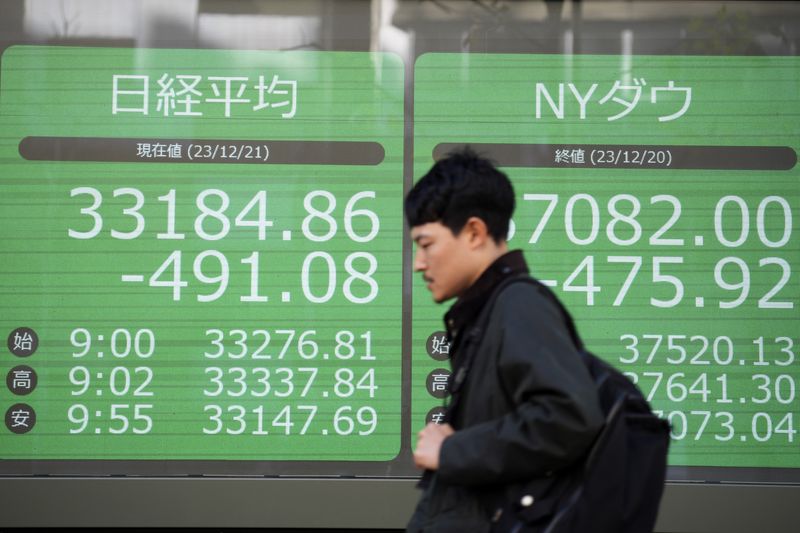
【Financial News Tokyo = Correspondent Seo Hye-jin】Japanese stocks have fallen for a second straight day amid concerns over restrictions on data center construction in the United States. The Nikkei 225 Stock Average (Nikkei 225), which opened higher after a sharp overnight rally in U.S. stocks, fell more than 800 points intraday on the 5th amid selling in AI and semiconductor shares. The yen strengthened as U.S. long-term interest rates fell amid a sharp drop in oil prices and expectations that fiscal expansion would face resistance.
Oil-price drop spurs buying, while regulation fears weigh on chips
On the Tokyo Stock Exchange, the Nikkei 225 opened at 62,384.73, up 196.10 points (0.32%) from the previous day. But as semiconductor stocks with significant weight in the index, including Advantest Corporation and Tokyo Electron, fell, losses exceeded 800 points at one point in the morning. The index later pared some of its losses as investors bought at lower prices.
Early in the session, gains on Wall Street drove buying. On the New York stock market on the 4th (local time), the Dow Jones Industrial Average rose 1,569.40 points (3.03%) to close at 53,356.12. The S&P 500 and Nasdaq also gained 1.58% and 1.44%, respectively.
The gains came as expectations for an end to the war in Iran grew with Democrats taking control of both chambers of Congress, while political uncertainty eased after President Trump said he would accept the election results and was willing to cooperate.
International oil prices also plunged. Overnight, the December West Texas Intermediate (WTI) contract fell 8.29%, from $96.09 to $88.12 a barrel, while the January Brent crude contract dropped 8.67%, from $103.60 to $94.62. Expectations that lower oil prices would reduce corporate costs helped lift at least 80% of stocks on the Tokyo Stock Exchange Prime Market around 10 a.m. that day.
Regulatory concerns weighed more heavily on semiconductor shares. Democrats won gubernatorial races in Texas, Ohio and Georgia, states with many planned data center projects. Analysts say that if the election of candidates who have called for a temporary halt to construction over electricity costs and environmental burdens delays projects, demand for semiconductors and equipment could also fall.
As a result, Nvidia and the PHLX Semiconductor Sector (SOX) each fell 3.1% on Wall Street the previous day, while data center-related companies Hut 8 and IREN dropped 23.2% and 11.2%, respectively. Microsoft and Amazon, meanwhile, rose 6.7% and 6.1%, respectively, on expectations of lower investment burdens.
Kioxia, Ibiden and Fujikura also fell in Tokyo that day.
The key factors going forward are whether construction is actually delayed and how stringent the regulations will be. Sarah Bianchi, chief strategist at Evercore ISI, said that a state-led temporary halt to construction could slow AI investment and U.S. growth.
By contrast, Matt Gertken, chief strategist at BCA Research, predicted that President Trump would veto regulatory bills that hinder AI growth. Shuji Hosoi, chief strategist at Daiwa Securities Group Inc., forecast that buying in Japanese stocks would continue, citing lower oil prices and other factors.
Yen rises as U.S. yields fall; BOJ policy and intervention also in focus
At 10 a.m., the yen-dollar exchange rate stood at 158.12–158.13 yen per dollar, up 0.05 yen from 5 p.m. the previous day, before falling to as low as 157.86 yen at one point. A decline in the exchange rate means the yen has strengthened.
Early in the session, investors who had bought yen as a hedge against political turmoil in the United States sold the currency. But buying of the yen picked up as Japanese stocks and U.S. long-term yields fell. Demand from exporters and others to sell dollars was also seen as supporting the yen’s rise.
The U.S. 10-year Treasury yield fell 0.07 percentage points, from 4.95% on the 3rd to 4.88% intraday on the 4th. Treasury buying increased as the sharp drop in oil prices eased inflationary pressure and investors expected Democrats to restrain expanded fiscal spending. U.S. yields also fell in Asian trading that morning, making the yen more attractive to investors relative to the dollar.
Demand to hedge against yen appreciation also remains over the medium to long term. Lower oil prices reduce Japan’s burden from crude oil imports, while oil prices remain higher than before the war, leaving inflationary pressure in place. This has led to expectations that the Bank of Japan (BOJ) will maintain its course of further interest rate increases.
Concerns about intervention by Japanese authorities to buy yen also persist. The Nikkei reported that “some hedge funds are buying yen call options, anticipating that the yen’s undervaluation will ease.”
[email protected] Seo Hye-jin Reporter