“I Haven’t Flown Korean Air in 11 Years”... ‘Seat Trauma’ Haunts Bobby Kim After In-Flight Disturbance [Health Talk]
- Input
- 2026-11-05 13:25:58
- Updated
- 2026-11-05 13:25:58
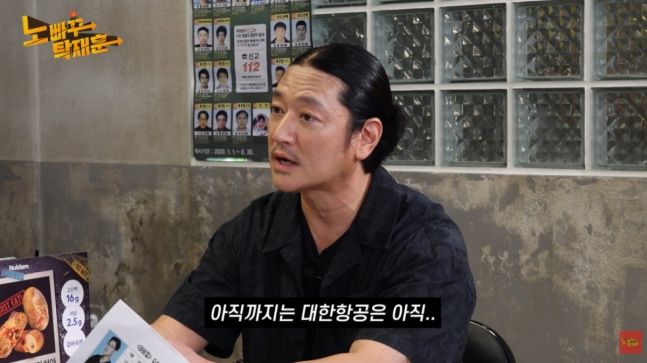
[Financial News] Singer Bobby Kim has revealed that he still suffers from extreme anxiety and heightened sensitivity about his seat following an in-flight disturbance 11 years ago, drawing attention to “trauma” and post-traumatic stress disorder (PTSD), which can cast a shadow over daily life after a shocking event.
Appearing on the YouTube channel “Noback Tak Jae-hoon” on the 4th, Bobby Kim said he compulsively checks whether he is in the right seat even when using public transportation, and confessed, “I developed PTSD and trauma.” In other words, his anxious response to a specific trigger—seat assignments—has persisted even more than a decade later.
From a Ticketing Error to Legal Punishment: What Happened to Bobby Kim?
The trauma Bobby Kim experienced stems from the so-called “Korean Air in-flight disturbance incident,” which took place in January 2015.
At the time, Bobby Kim had booked a business-class seat on a flight from Incheon to San Francisco in the United States, but an airport counter employee mistakenly issued him an economy-class boarding pass belonging to another passenger with a similar name in English. He requested a different seat, but the problem was not resolved immediately even after he boarded. Under extreme stress, he drank wine and other alcohol served on board and was booked on suspicion of causing a disturbance, including shouting and making physical contact with a flight attendant.
Although it was later established that the airline’s ticketing error was the direct trigger for the incident, a court sentenced Bobby Kim, on charges related to the in-flight disturbance—violating the Aviation Security Act and indecent assault—to a fine of 4 million won and 40 hours of sex education. Amid public criticism over the incident, he had to suspend all his broadcasting activities and spend a long time out of the public eye. The chain of events, which began with a ticketing error and led to public condemnation, legal punishment, and a halt to his career, left him with psychological trauma that was difficult to bear.
The Aftermath of the Incident: ‘Trauma’...Risk of ‘PTSD’ if It Becomes Chronic
Psychiatrists are focusing on the mechanism by which, after people experience an uncontrollable extreme crisis or intense social condemnation, the brain’s fear circuits become overactive and mistake even everyday stimuli for threats, as in Bobby Kim’s case.
Medically, “trauma” refers not only to physical injury or a threat to life, but also to a deep emotional wound left by an event that causes extreme shame or shock. Even after the physical situation has ended, the brain’s neural networks vividly remember the danger signals from that time and keep sounding the alarm.
The problem arises when this psychological shock does not resolve for a month or more and becomes chronic. At that point, the risk increases that it will develop into post-traumatic stress disorder (PTSD), which can seriously erode a person’s ability to function in daily life. This is because the amygdala, which governs the brain’s fear response, becomes overactive while the prefrontal lobe’s ability to regulate it declines, leading to repeated, hard-to-control anxiety.
A typical symptom is an “avoidance response”—an intense aversion to places or things associated with painful memories. Bobby Kim’s avoidance of the airline for no less than 11 years after the incident is a clear example.
A “state of hyperarousal,” in which a person remains on edge in anticipation of danger that could strike at any moment, can also occur. Compulsively asking and checking whether one is in the right seat, even in everyday settings such as buses or restaurants, is a typical sign of hyperarousal stemming from anxiety about possibly losing control.
When this is compounded by “intrusive re-experiencing”—the sudden, repeated return of shameful and frightening memories from the time—physical symptoms of panic can follow, including a racing heart, cold sweats, and shortness of breath.
“A Signal from the Brain, Not Oversensitivity”...Facing the Fear and Professional Treatment Are Needed
Psychiatrists warn that dismissing these trauma responses as mere “personality-related sensitivity” or “timidity” and leaving them untreated can lead to chronic insomnia, panic disorder, or depression.
To overcome the trauma, the key is “exposure” and “cognitive restructuring”: gradually facing fear-provoking stimuli in a safe environment, as Bobby Kim did when he put the incident into perspective with humor on a broadcast and said, “I’ll fly with that airline again.”
If anxiety is difficult to control through one’s own efforts alone, a specialist’s help is essential to stabilize the brain’s overactive alarm system through a combination of cognitive behavioral therapy (CBT), eye movement desensitization and reprocessing (EMDR), and medication such as anti-anxiety drugs.
[email protected] Mun Yeong-jin Reporter