“Improving Forest Road Safety and Environmental Performance” ... Second Meeting of Korea Forest Service–Environmental Groups Consultative Body
- Input
- 2026-11-05 10:56:14
- Updated
- 2026-11-05 10:56:14
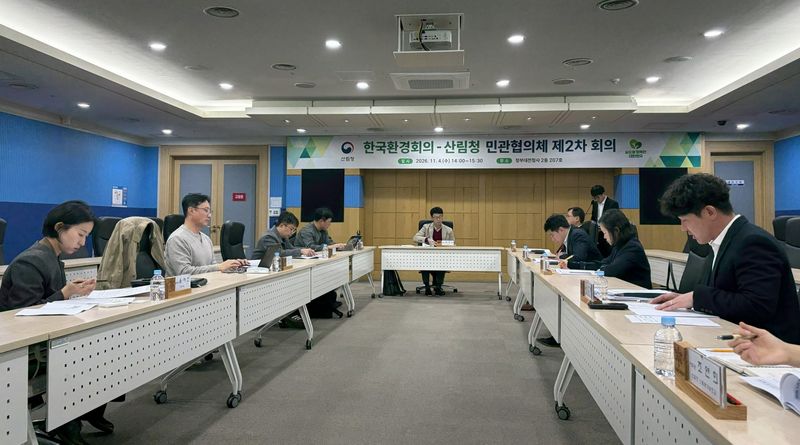
The Korea Forest Service said on the 5th that it had held the second meeting of the Korea Environmental Conference–Korea Forest Service public-private consultative body with the Korea Environmental Conference on the 4th. The meeting was organized to review key areas of cooperation for the body, which was launched last July with Park Chang-sin, co-representative of Environmental Justice, and Im Ha-su, deputy head of the Korea Forest Service, as co-chairs, and to refine its future operating framework.
At the meeting, the two sides considered a draft set of operating rules to ensure the consultative body’s continued and stable operation. The draft lays out a practical foundation for public-private cooperation, including holding regular meetings, conducting joint investigations and research into major forest-related issues, and reflecting the outcomes of consultations in actual policy.
In particular, the meeting focused on the results of a working task force on subordinate regulations under the Forest Road Act, involving the Korea Forest Service, environmental groups, and outside experts. The task force has been reviewing specific institutional improvements to prepare for natural disasters such as landslides, which are being exacerbated by climate change, while enhancing forest road safety, minimizing forest damage, and protecting ecological value. The results of three forums on pine forest management, held since June, were also shared.
The consultative body was launched in July this year and held its first meeting. The Korea Forest Service formed it to strengthen communication with civil society as the climate crisis increases the risk of forest disasters, including large wildfires, landslides, and forest pests and diseases, and public interest in forest management and conservation grows. The body will operate for three years and has agreed to maintain dialogue through quarterly regular meetings and consultations on current issues as needed, and to incorporate the results of discussions into the policy-making process. This second meeting was its first quarterly review since its launch.
Lee Sang-ik, director-general of the Forest Industry Policy Bureau at the Korea Forest Service, said, “It is more important than anything else to respect the diverse perspectives of the many stakeholders involved in forest policy, including forestry workers and environmental groups, and to engage in thorough discussion.” He added, “We will continue to develop forest policies that resonate with all citizens through ongoing communication and cooperation.”
[email protected] Kim Won-jun Reporter